Plizio Visual Lab

Ouaddaï Highlands

Plizio editorial teamData Sources
Mountain
—°
Ouaddaï Highlands (Chad)

Weather…

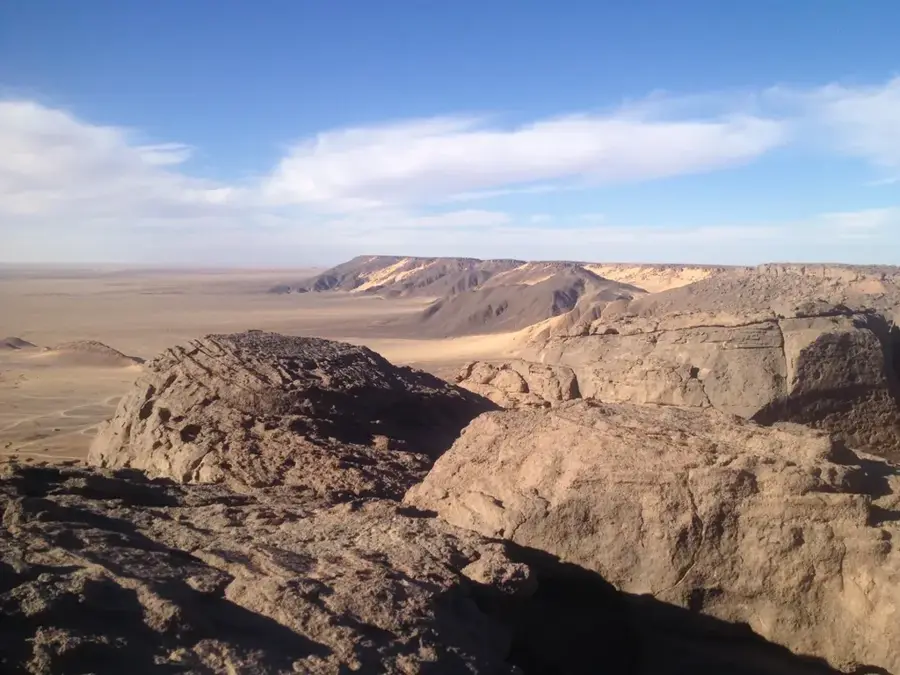
The Ouaddaï Highlands are situated in eastern Chad, forming a prominent geographical barrier between the central Chad Basin and the Darfur Plateau in Sudan. This upland landscape is primarily composed of ancient crystalline rocks like granite, which millions of years of erosion have sculpted into spectacular inselbergs and high plateaus. Its highest points reach an altitude of approximately 1,320 meters. Climatically, the highlands lie within the Sahel zone but receive slightly more rainfall than the surrounding plains due to their elevation. This moisture supports seasonal agriculture in the dry riverbeds, known as wadis, and provides essential grazing grounds for the livestock of nomadic communities. Historically, the Ouaddaï Highlands were the center of the powerful Ouaddaï Empire, an inheritance that remains central to the region's cultural identity today. The flora is characterized by acacias and thorny shrubs, while the fauna includes specialized species such as gazelles and various birds of prey. The rugged topography has served as a natural fortress for centuries, deeply shaping the lives of its inhabitants.

Best time to visit & climate

The most pleasant time to visit is Feb, Mar, Nov.

JanFebMarAprMayJunJulAugSepOctNovDec
Avg °C141822283234333331272116
Rain mm000051030000

📋 Practical info

🧭
Getting there
Access to these eastern highlands usually involves a long drive from major cities like N'Djamena, requiring a well-equipped 4x4 vehicle. Roads are mostly unpaved and can be rough, so hiring a local driver familiar with the routes is wise.
📅
Best season
The cooler, dry winter months from November to February are generally the best time to explore the hilly region. Summer months can be intensely hot, while the brief rainy season can wash out the primitive dirt tracks completely.
⛰️
Terrain & paths
The landscape consists of a dry, hilly mountain environment with sparse vegetation and rocky outcrops. The terrain is largely uneven and rocky, meaning walking paths are informal and require careful navigation over loose stones.
🎒
What to bring
Robust hiking boots are essential to protect your feet against the rocky, uneven ground of the highlands. High SPF sun protection, a wide-brimmed hat, and carrying a significant amount of your own drinking water are absolute necessities.
🅿️
Parking
Travelers generally park their vehicles in nearby settlements or safe zones designated by local authorities. There is virtually no formal tourist infrastructure, so securing your vehicle with a trusted local connection is recommended.
⚠️
Safety
Travel in this remote eastern region requires careful security planning due to its proximity to international borders. Extreme daytime heat and total isolation mean visitors must travel in convoy and be entirely self-sufficient in emergencies.
⏱️
Time needed
Exploring these highlands typically involves a multi-day journey, given the vast distances and difficult driving conditions involved. A minimum commitment of three to five days is usually required to truly experience the hilly landscapes.

Geography

Coordinates
21.50000, 13.50000

Facts

  • Elevation: up to 1,320 m
  • Location: Eastern Chad
  • Geology: Granite and crystalline rocks
  • Climate: Semi-arid Sahelian
  • Heritage: Center of the Ouaddaï Empire
  • Land use: Wadis for seasonal farming

Explore nearby

Notable places around
Route planner — Car & Motorhome

Where do you start? We build the route here, with stops and country notes along the way.

Vehicle
Only stops with (optional):

© OpenStreetMap contributors · OpenRouteService

Sights nearby

Frequently asked questions

How can the Ouaddaï Highlands be accessed?
Only with a robust 4x4 vehicle and ideally with a local guide.
Is the Ouaddaï Highlands developed for tourism?
No, it is a very remote, untouched region without significant tourist infrastructure.
What is the best time to visit the highlands?
The cooler months from December to February are best.
Are there accommodations in the region?
No, you must camp completely self-sufficiently and bring all your gear.
Is the climate in the Ouaddaï Highlands stable?
It is extremely dry, with very hot days and cool nights.
Ouaddaï Highlands: where is it located?
Ouaddaï Highlands is located in Chad.
Ouaddaï Highlands: when is the best time to visit?
The most pleasant time to visit is Feb, Mar, Nov.
Ouaddaï Highlands: why is it worth visiting?

The Ouaddaï Highlands are situated in eastern Chad, forming a prominent geographical barrier between the central Chad Basin and the Darfur Plateau in Sudan.
View on map → The Top 50 Attractions → OpenStreetMap →
Africa
Explore with Plizio Discover more places in Africa
More places in Chad →

More places