Plizio Visual Lab
Ouara Ruins
Weather…
Water temperature…
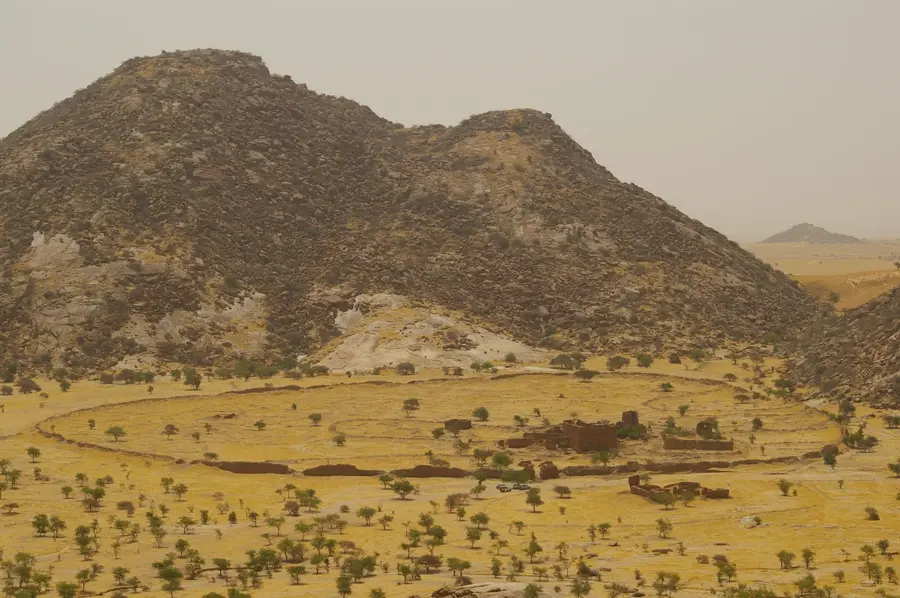
The Ouara ruins, located in eastern Chad, served as the fortified capital of the powerful Ouaddai Empire from the 17th to the 19th century. Established around 1635 by Sultan Abdel Kerim, the city was the political and religious heart of the region for over two centuries. The most prominent feature of the site is the Sultan's Palace, characterized by thick brick walls that remain standing despite the harsh desert environment. In 1850, the city was abandoned following a severe drought and the failure of its wells, leading to the relocation of the capital to nearby Abéché. The architecture displays a blend of Islamic influences and local Sahelian building techniques, particularly in its sophisticated masonry. Today, Ouara is a vital archaeological site providing insight into the feudal organization and defensive capabilities of the Ouaddai Sultanate. It has been on the UNESCO World Heritage Tentative List since 2005, representing a peak of pre-colonial central African urban development.
- Location: Chad
- Nearby: Am Zoer (17 km)
Best time to visit & climate
The most pleasant time to visit is Jan, Nov, Dec.
| Jan | Feb | Mar | Apr | May | Jun | Jul | Aug | Sep | Oct | Nov | Dec | |
|---|---|---|---|---|---|---|---|---|---|---|---|---|
| Avg °C | 23 | 26 | 29 | 31 | 32 | 31 | 28 | 25 | 26 | 27 | 25 | 23 |
| Rain mm | 0 | 0 | 0 | 1 | 10 | 30 | 118 | 191 | 65 | 10 | 0 | 0 |
📋 Practical info
Geography
Facts
- Ouara was established around 1635 as the capital of the Ouaddai Empire.
- The city was abandoned in 1850 due to the drying up of local water sources.
- The Sultan's Palace walls reach heights of up to 8 meters in some sections.
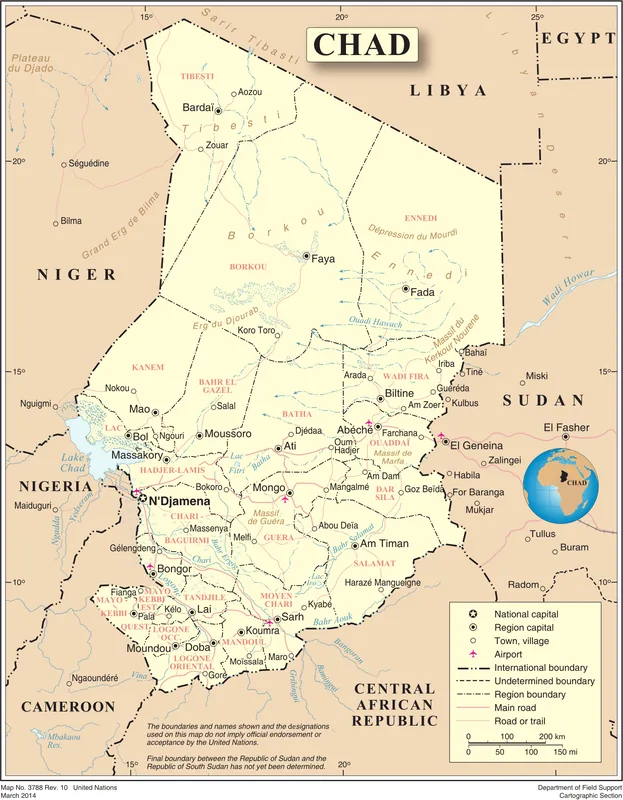
- The site is located approximately 60 kilometers northwest of the city of Abéché.
- It was added to the UNESCO World Heritage Tentative List in 2005.
- Ouara was a major hub for trade routes connecting the Nile Valley to Lake Chad.
Explore nearby
Notable places around
Route planner — Car & Motorhome
Where do you start? We build the route here, with stops and country notes along the way.
© OpenStreetMap contributors · OpenRouteService
Sights nearby
Frequently asked questions
What are the Ouara ruins?
Are they a tourist attraction?
Do you need a guide for the visit?
How to reach Ouara?
When is the best time for a visit?
Ouara Ruins: where is it located?
Ouara Ruins: when is the best time to visit?
Ouara Ruins: why is it worth visiting?

Nearby cities
History & landmarks
More places