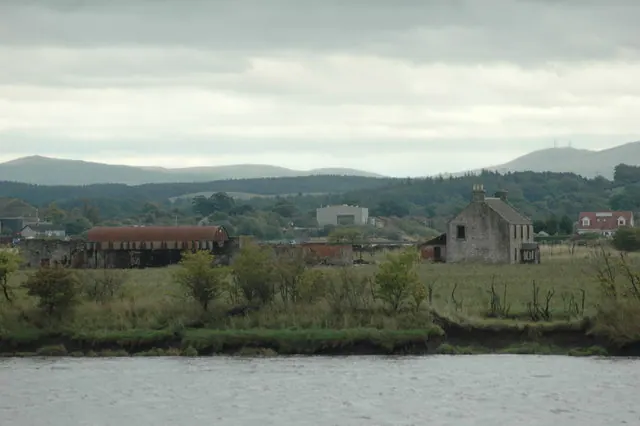
Alloa Inch
Alloa Inch is a tranquil and ecologically significant island situated in the tidal waters of the River Forth, just south of the town of Alloa in Scotland. Managed as a nature reserve by the Scottish Wildlife Trust, this low-lying island is primarily composed of extensive reed beds, saltmarshes, and rough grassland. Historically, the island was farmed, and the ruins of an old farmstead can still be seen today, adding a touch of historical intrigue to the natural landscape.
The island is particularly renowned for its rich avian life, making it a haven for birdwatchers. During the winter months, the surrounding mudflats and the island's wetlands attract large numbers of migratory wildfowl and wading birds, including pink-footed geese, wigeons, and teal. It serves as an important resting and feeding ground in the region's broader estuarine ecosystem.
While physical access to the island itself is restricted and discouraged due to the treacherous tidal mud and lack of public facilities, visitors to the area can enjoy scenic views from the riverbanks. The nearby Clackmannanshire Bridge offers an excellent vantage point for observing the dynamic changes brought by the river's tidal flows and spotting the varied wildlife that calls this isolated environment home.
Weather…
Best time to visit & climate
The most pleasant time to visit is Jun, Jul, Sep.
| Jan | Feb | Mar | Apr | May | Jun | Jul | Aug | Sep | Oct | Nov | Dec | |
|---|---|---|---|---|---|---|---|---|---|---|---|---|
| Avg °C | 3 | 3 | 4 | 7 | 10 | 13 | 14 | 14 | 12 | 8 | 5 | 3 |
| Rain mm | 91 | 71 | 70 | 60 | 71 | 93 | 105 | 114 | 76 | 106 | 92 | 87 |
Practical info
Tips
- Bring binoculars or a telescope for the best birdwatching experience.
- Wear warm, windproof clothing if viewing from the bridge during winter.
FAQ
What is Alloa Inch?
Can I walk on the island?
Where is the best place to view the island?
What kind of wildlife can I see?
Route planner — Car & Motorhome
Where do you start? We build the route here, with stops and country notes along the way.
© OpenStreetMap contributors · OpenRouteService
Attractions nearby
- Ardrossan Castle 81 km
- Ayr Harbour Lighthouse 87 km
- Achnacree Moss, Crannog 106 km
- Berwick Lighthouse 120 km
- Bamburgh Lighthouse 141 km
- Cathedral Church of St Machar 158 km