Plizio Visual Lab
Arbore
ℹ️Practical info — Arbore
▾
🌤 Weather — 5 days
📍 Nearby
Sights nearby
💡 Tips
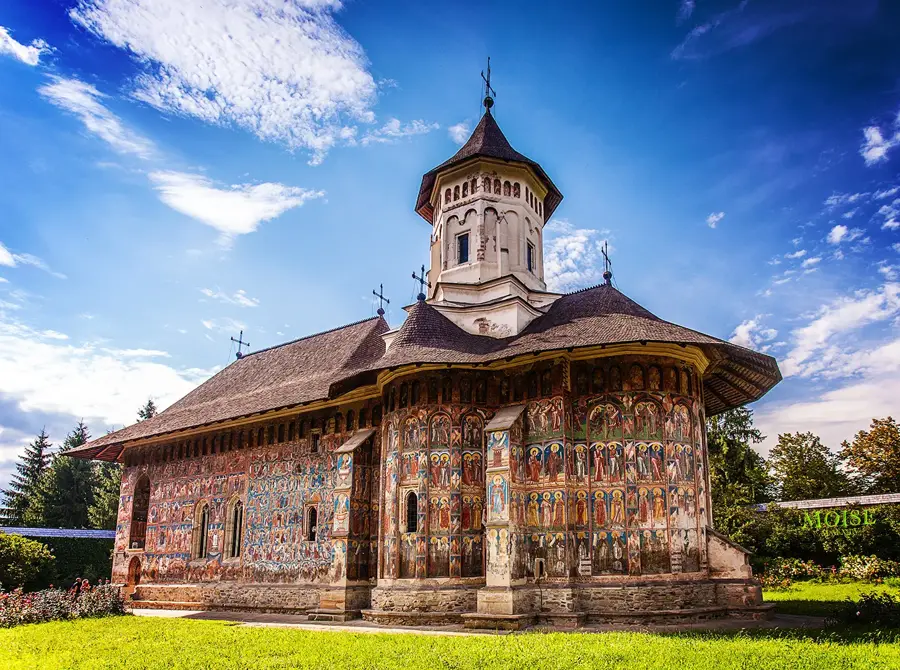
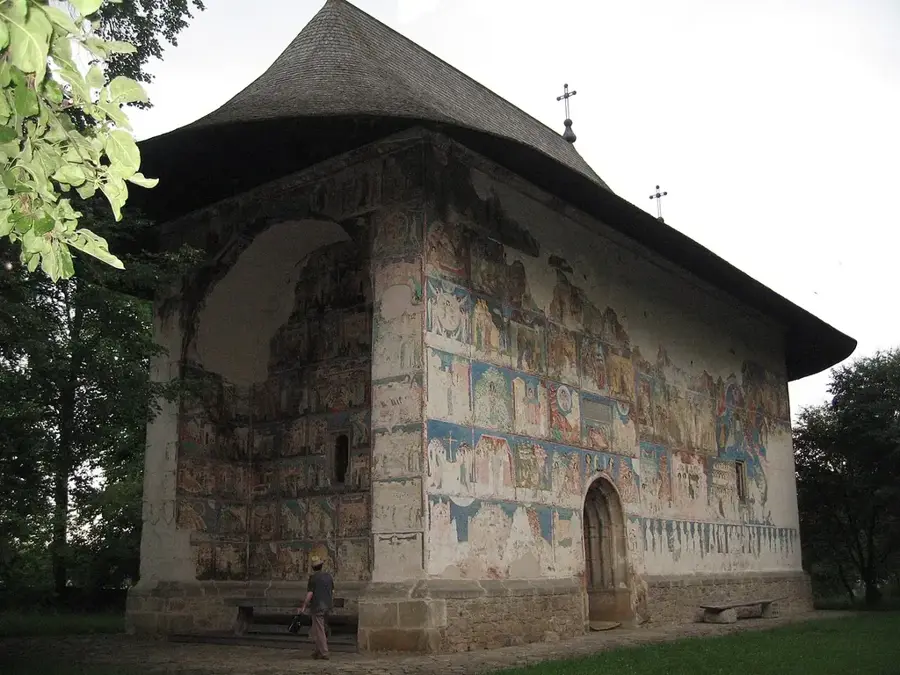
- Look for the famous 'Arbore Green' on the western wall of the UNESCO church, a unique pigment used in 47 distinct shades.
- Ensure you dress modestly (shoulders and knees covered) as the church is an active Orthodox religious site.
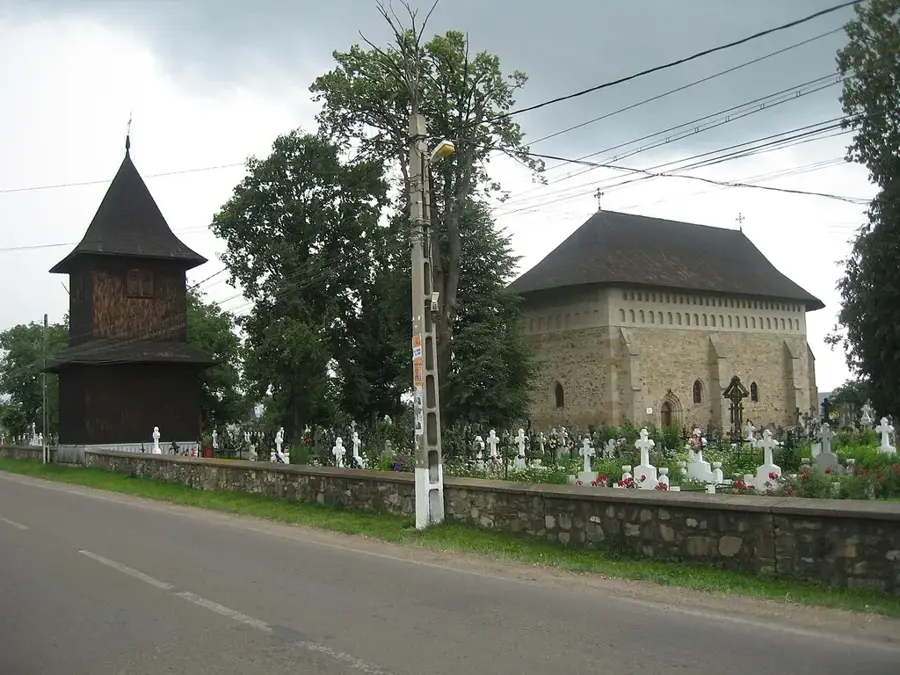
- Ask for permission to climb the 19th-century bell tower for a great view of the church grounds and the village.
- Combine your visit with the nearby village of Marginea, famous for its unique black pottery workshops.
- The church was built as a court chapel rather than a monastery, which is why it lacks a steeple, notice its elegant proportions.
🍽 Food
Porcini mushrooms from the local forests served in a rich, garlicky sour cream sauce with polenta.
Sweet cheese turnovers that are a staple dessert in the Bukovina region.
A creamy garlic and chicken soup that originated in the nearby town of Rădăuți.
🛍 Shopping · 🧘 Quiet spots
Visit the workshops in the nearby village of Marginea for unique ceramics made using a prehistoric technique.
Look for local artisans selling 'încondeiate' eggs, intricately decorated with traditional Bukovina symbols.
Find hand-embroidered Romanian blouses (Ie) or wool rugs with geometric patterns at local markets.
A peaceful and intimate garden surrounding the UNESCO site, handy for a moment of quiet reflection.
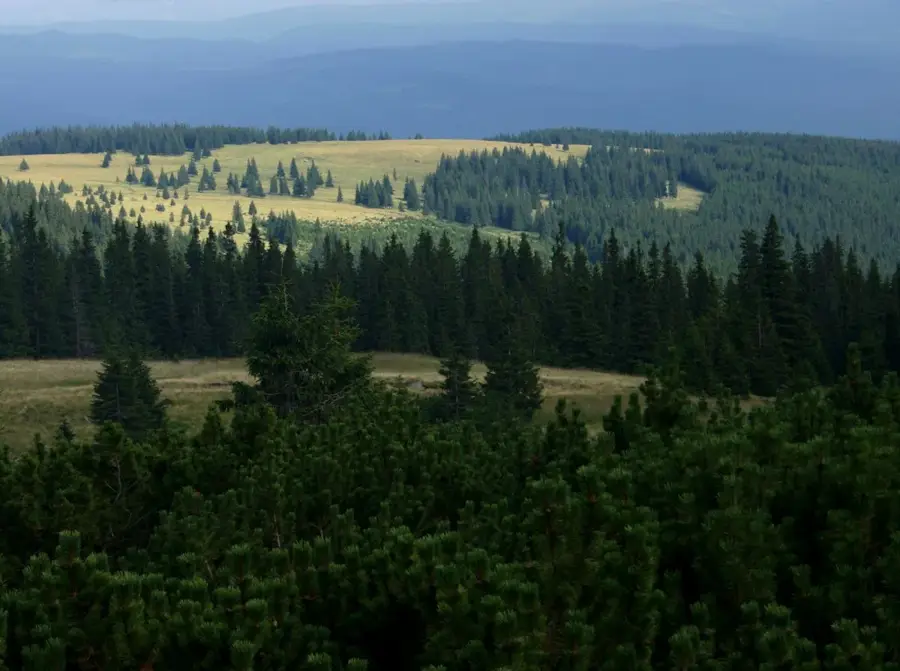
Take a walk on the outskirts of the village to enjoy the rolling green hills and pastoral Bucovina landscape.
Water temperature…
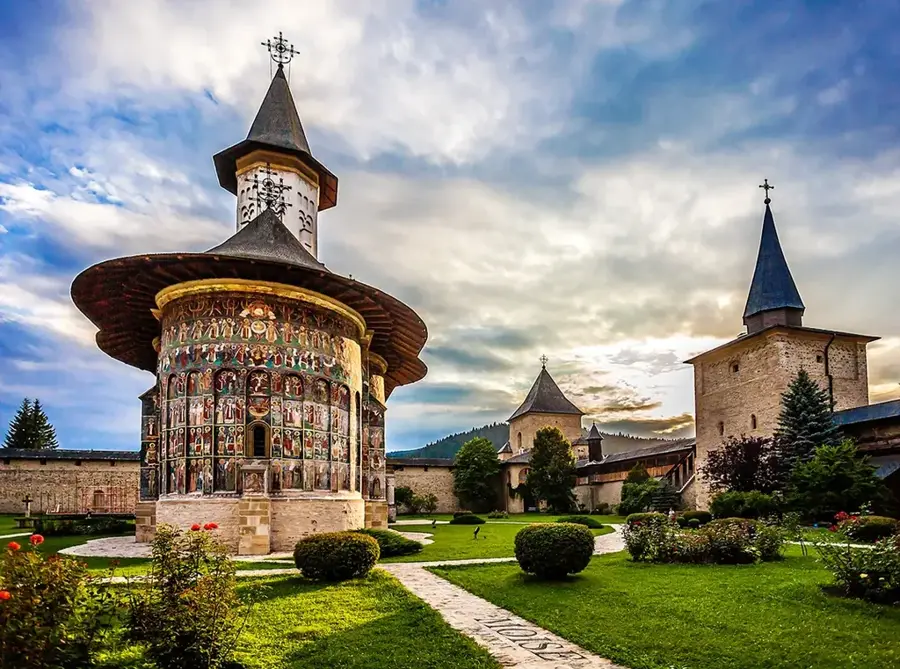
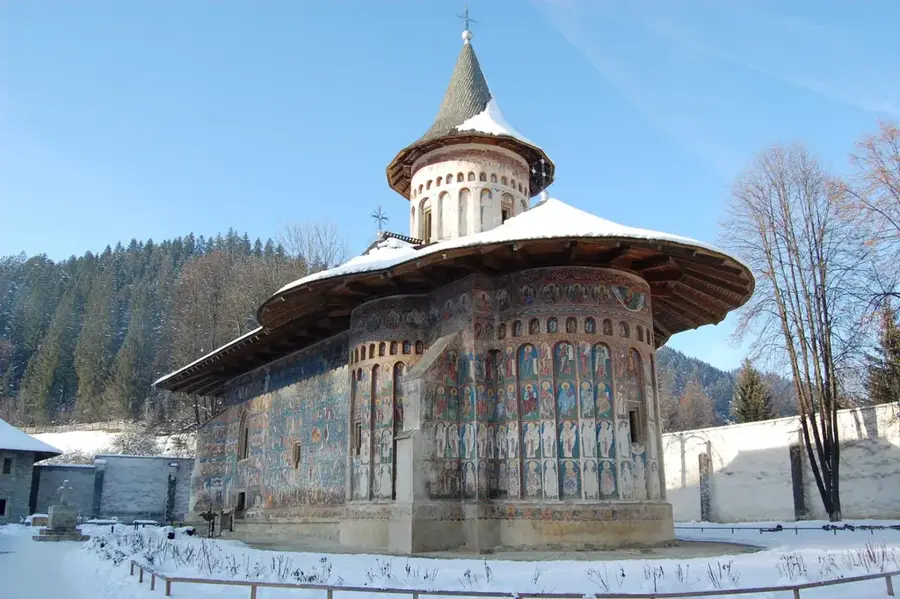
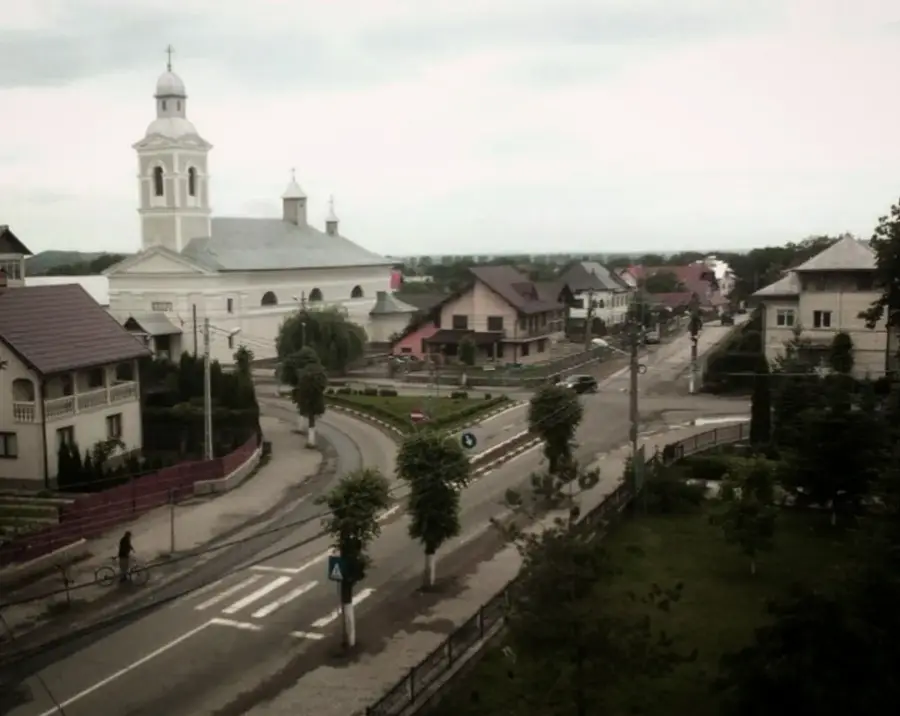
Arbore is a historically rich commune in the Bucovina region of Suceava County, famously named after the boyar Luca Arbore. Luca, a trusted advisor to Stephen the Great, founded the church of the Decollation of Saint John the Baptist here in 1502. This church is globally recognized as a UNESCO World Heritage site, primarily due to its exceptional exterior frescoes that feature a unique palette dominated by the 'Arbore Green'. The village is situated on the Suceava Plateau, surrounded by fertile lands that have supported the local community for centuries through farming and animal husbandry. Architecturally, the village preserves many elements of traditional Moldavian rural planning, with large courtyards and wooden gates. Today, Arbore serves as a vital cultural hub, blending its agricultural heritage with the growing demands of international tourism. The locals maintain a strong connection to their roots, celebrating traditional holidays with folk music and elaborate costumes. It remains a tranquil yet culturally dense location, offering a profound insight into the medieval history of the Principality of Moldavia.
- Location: Suceava, Romania
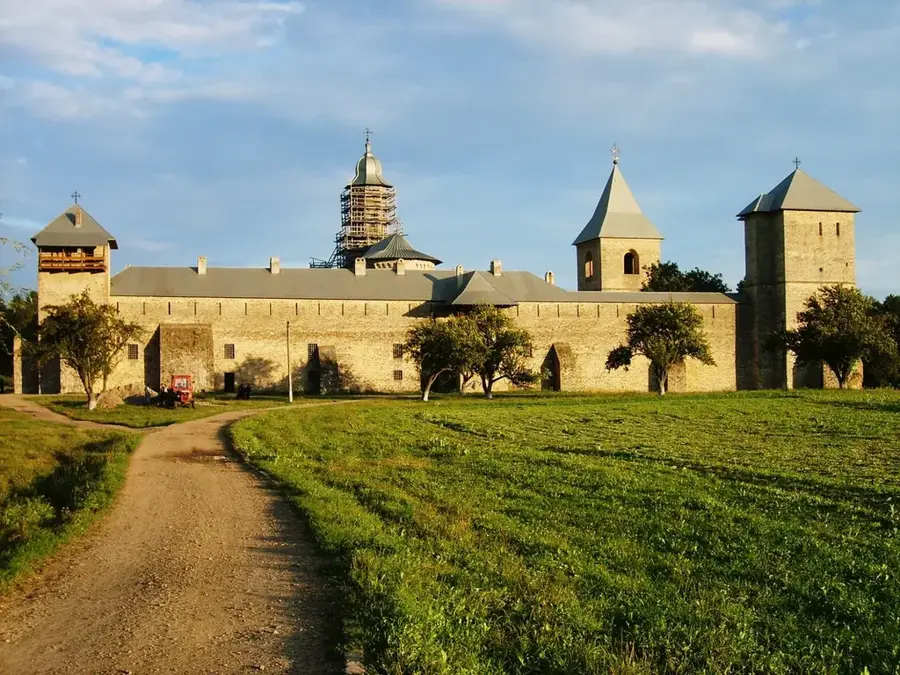
- Top sights: Arbore Monastery · Arbore Church
- Nearby: Cajvana (5 km)
- Population: ~5.379
Best time to visit & climate
The most pleasant time to visit is Jun–Aug.
| Jan | Feb | Mar | Apr | May | Jun | Jul | Aug | Sep | Oct | Nov | Dec | |
|---|---|---|---|---|---|---|---|---|---|---|---|---|
| Avg °C | -4 | -2 | 3 | 9 | 15 | 19 | 21 | 21 | 15 | 9 | 4 | -2 |
| Rain mm | 28 | 32 | 40 | 55 | 81 | 107 | 100 | 68 | 49 | 52 | 33 | 32 |
Geography
Facts
- UNESCO World Heritage church (1502)
- Founded by Boyar Luca Arbore
- Famous for unique green frescoes
- Located on the Suceava Plateau
- Rich in traditional Moldavian crafts
- Key stop on the Painted Monasteries route
Explore nearby
Notable places around
Route planner — Car & Motorhome
Where do you start? We build the route here, with stops and country notes along the way.
© OpenStreetMap contributors · OpenRouteService
Sights in the town Arbore (2)
Frequently asked questions
Why is the Arbore Church famous?
How much is the entrance fee to the church?
What are the opening hours?
Is photography allowed?
How to get to Arbore from Suceava?
Arbore: where is it located?
Arbore: what is there to see?
Arbore: when is the best time to visit?
Arbore: why is it worth visiting?

Nearby cities
History & landmarks
Nature
More places