Plizio Visual Lab
Pachacamac
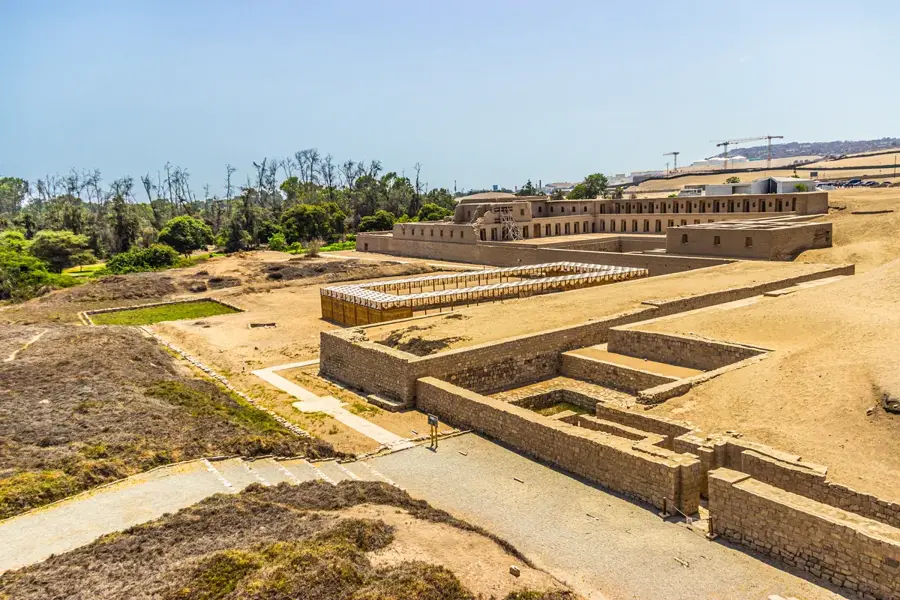
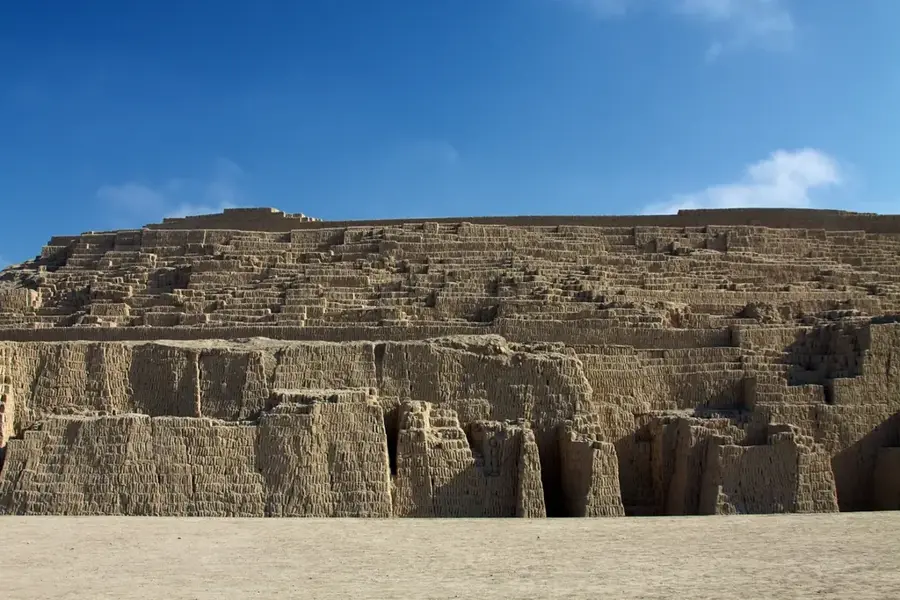
Pachacamac was the most important pilgrimage center on the central Peruvian coast for over a thousand years, serving as the home of a powerful oracle. Located just south of modern Lima, the site features massive adobe pyramids, temples, and cemeteries built by the Lima, Wari, Ychsma, and finally the Inca cultures. The name comes from the god Pacha Kamaq, believed to be the 'Earth Maker' who could predict the future and cause earthquakes. Even the mighty Incas respected the power of the Pachacamac oracle, building their own Temple of the Sun and a House of the Chosen Women (Acllahuasi) at the site. Today, visitors can walk along ancient processional avenues and see the remains of the Painted Temple, where pilgrims from across the Andes once came seeking divine guidance.
- Location: Peru
- Top sights: National Museum of Peru · Site Museum and Archaeological Sanctuary of Pachacámac · Pachacámac Monumental Archaeological Zone
- Nearby: Lima (16 km)
Best time to visit & climate
The most pleasant time to visit is Jan–Mar.
| Jan | Feb | Mar | Apr | May | Jun | Jul | Aug | Sep | Oct | Nov | Dec | |
|---|---|---|---|---|---|---|---|---|---|---|---|---|
| Avg °C | 21 | 21 | 21 | 20 | 19 | 18 | 17 | 17 | 17 | 17 | 18 | 19 |
| Rain mm | 5 | 8 | 7 | 1 | 1 | 1 | 1 | 1 | 1 | 1 | 2 | 4 |
📋 Practical info
Geography
Facts
- The main religious center on the Peruvian coast for over 1,200 years.
- The Pachacamac Oracle was one of the most powerful and feared deities in ancient Peru.
- Features structures from four different civilizations: Lima, Wari, Ychsma, and Inca.
- The 'Acllahuasi' or House of the Chosen Women is a beautifully reconstructed Inca structure.
- Located in the Lurín Valley, overlooking the Pacific Ocean and the Lurín River.
- The 'Painted Temple' still shows traces of its original red and yellow pigments.
- Hernando Pizarro, brother of Francisco, was the first Spaniard to reach and desecrate the site.
- The Pachacamac idol, a double-faced wooden carving, is housed in the site's modern museum.
Explore nearby
Notable places around
Route planner — Car & Motorhome
Where do you start? We build the route here, with stops and country notes along the way.
© OpenStreetMap contributors · OpenRouteService
Sights in the town Pachacamac (9)
Site Museum and Archaeological Sanctuary of Pachacámac🏛 museum
This archaeological museum adjacent to the monumental ruins exhibits significant ceramics and textiles excavated from the pre-Hispanic Pachacámac sanctuary.
Teatro Arena y Esteras🎭 culture
Founded in March 1992, this community theater actively promotes cultural education and social integration through its local performing arts.
Sights nearby
Frequently asked questions
What was Pachacámac in history?
Is it far from Lima?
Can you visit everything?
When is the best time to visit?
Do you need a guide?
Pachacamac: where is it located?
Pachacamac: what is there to see?
Pachacamac: when is the best time to visit?
Pachacamac: why is it worth visiting?
Nearby cities
History & landmarks
More places