Plizio Visual Lab
Wignacourt Aqueduct
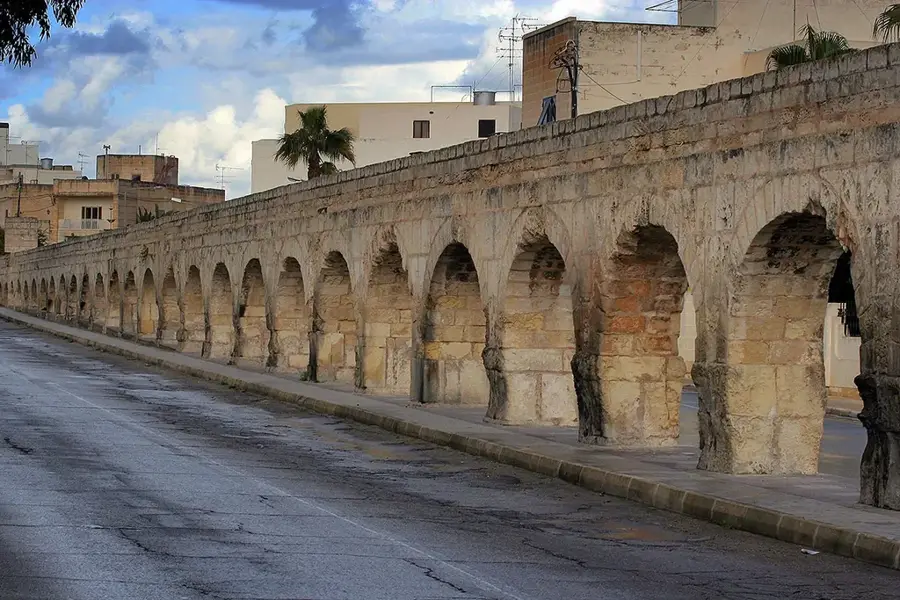
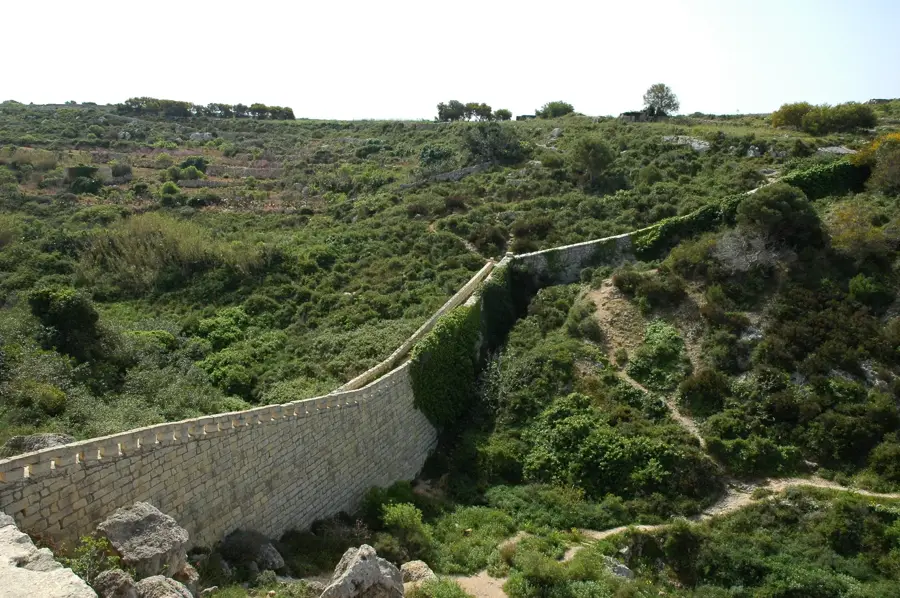
The Wignacourt Aqueduct is a monumental 17th-century engineering feat built to supply the newly established city of Valletta with fresh water. Constructed between 1610 and 1615 under the patronage of Grand Master Alof de Wignacourt, the system spanned approximately 15.6 kilometers from springs in Rabat and Dingli to the capital. While significant portions of the channel were laid underground, the visible arched sections in Santa Venera, Birkirkara, and Hamrun remain prominent historical landmarks today. The aqueduct utilized gravity to transport thousands of cubic meters of water daily, which was essential for the survival and expansion of the Grand Harbour area. It remained in active service until the early 20th century when modern pumping technologies were introduced. Today, the surviving stone arches are integrated into the urban fabric and stand as a testament to the technical prowess of the Order of St. John.
- Location: Malta
- Top sights: Baby Jesus Museum · Rosa Kwir · Gabriel Caruana Foundation
- Nearby: Floriana (4 km)
Best time to visit & climate
The most pleasant time to visit is May–Jul.
| Jan | Feb | Mar | Apr | May | Jun | Jul | Aug | Sep | Oct | Nov | Dec | |
|---|---|---|---|---|---|---|---|---|---|---|---|---|
| Avg °C | 15 | 14 | 15 | 16 | 19 | 23 | 26 | 27 | 25 | 23 | 20 | 16 |
| Rain mm | 74 | 65 | 51 | 33 | 17 | 11 | 4 | 10 | 63 | 82 | 95 | 82 |
📋 Practical info
Geography
Facts
- Built between 1610 and 1615 by Grand Master Wignacourt.
- Total length of the aqueduct system is about 15.6 km.
- Construction cost totaled approximately 155,000 scudi.
- Supplied water from Rabat to Valletta and Floriana.
- The system operated purely on gravity-fed water flow.
- Engineered by Bontadino de Bontadini from Bologna.
Explore nearby
Notable places around
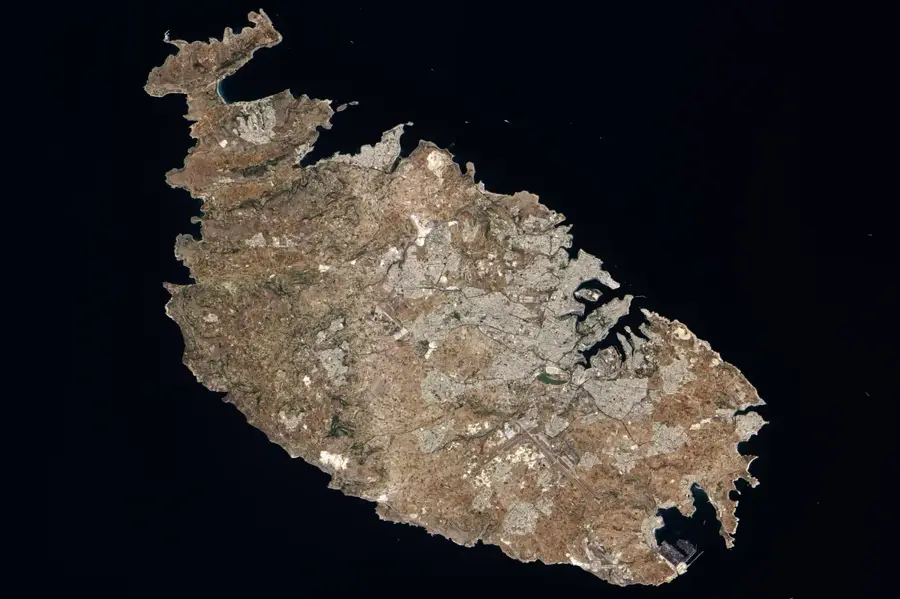
Route planner — Car & Motorhome
Where do you start? We build the route here, with stops and country notes along the way.
© OpenStreetMap contributors · OpenRouteService
Sights in the town Wignacourt Aqueduct (10)
Saint Mary's Parish Church
Church in Birkirkara, Malta, dedicated to the Virgin Mary.
Birkirkara Old Train Station🏛 museum
Former railway station in Malta, now a museum on transport history.
Good Shepherd Convent
Church building of a monastery in Ħal Balzan, Malta, dedicated to the Good Shepherd.
Parish Church of Our Lady of Annunciation
Church building in Balzan, Malta, dedicated to the Annunciation.
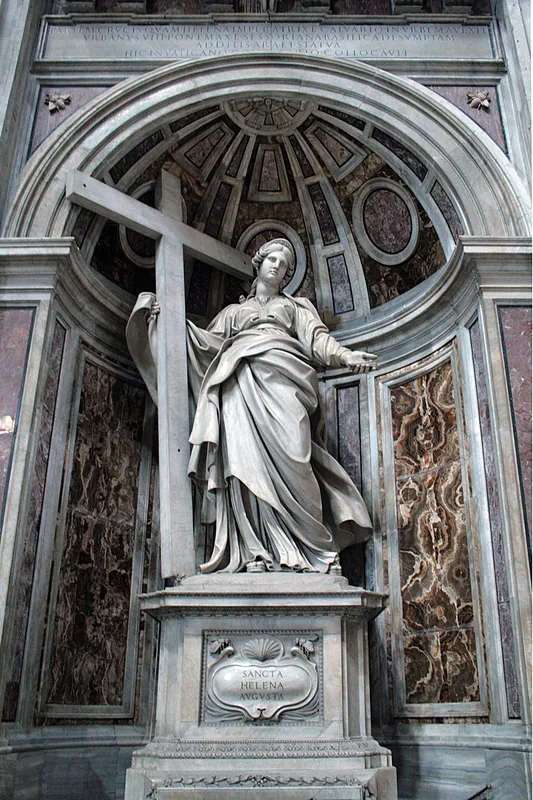
Parish Church of Saint Helen
The parish church of Birkirkara, Malta, dedicated to Saint Helen.
Madonna tal-Ħerba
Marian shrine in Birkirkara, Malta, a significant pilgrimage site.
Sights nearby
Frequently asked questions
What was the purpose of the Wignacourt Aqueduct?
Where can parts of the aqueduct still be seen today?
Who commissioned the construction of the aqueduct?
Can you walk along the aqueduct?
Is the aqueduct illuminated at night?
Wignacourt Aqueduct: where is it located?
Wignacourt Aqueduct: what is there to see?
Wignacourt Aqueduct: when is the best time to visit?
Wignacourt Aqueduct: why is it worth visiting?

Nearby cities
History & landmarks
Nature
More places