Plizio Visual Lab
Office du Niger rice fields

Weather…
Water temperature…
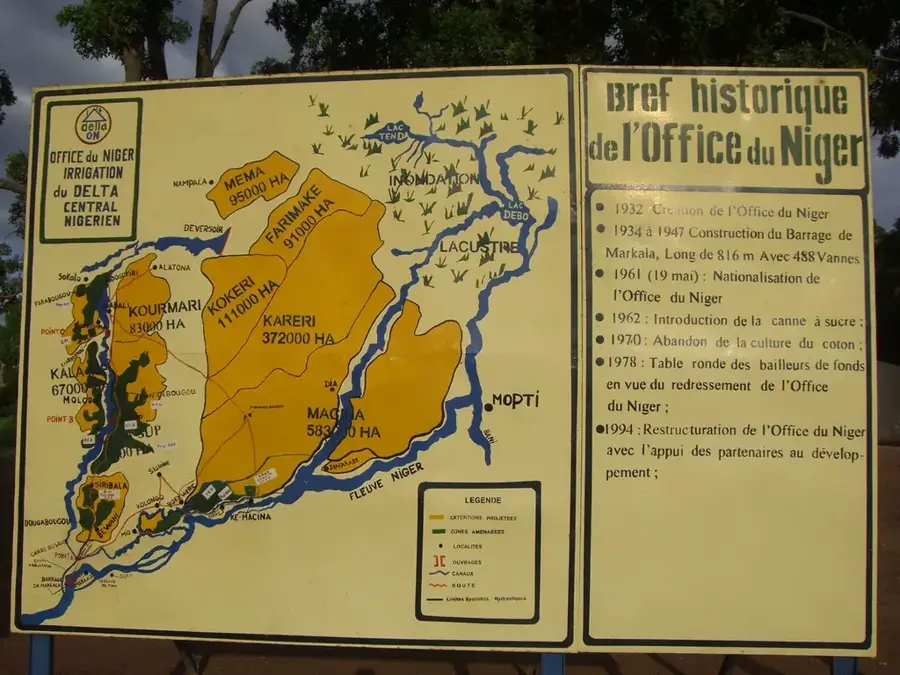
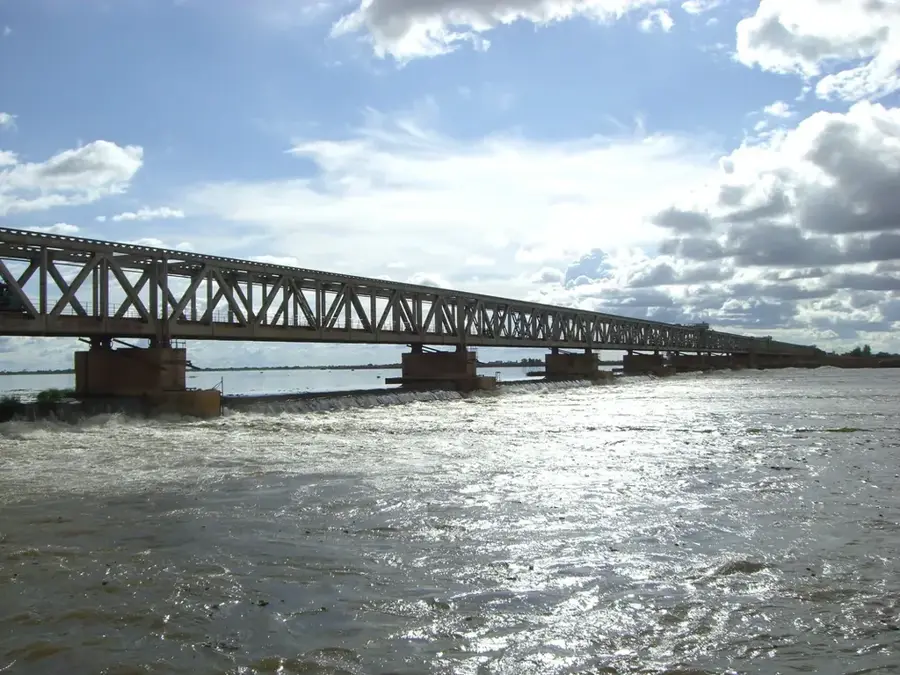
The Office du Niger, located in the Ségou Region, is one of the largest and most ambitious irrigation schemes in Sub-Saharan Africa. Initiated in 1932 during the French colonial era by engineer Emile Bélime, the project was designed to harness the waters of the Niger River for the large-scale cultivation of cotton and rice. At the heart of the system lies the Markala Dam, which diverts water into an extensive network of canals serving tens of thousands of hectares of fertile land. While the original focus on cotton eventually shifted toward rice production, the Office du Niger has become Mali's primary breadbasket, crucial for the nation's food security. The vast stretches of emerald-green rice paddies create a striking visual contrast with the surrounding semi-arid landscape, illustrating the transformative power of hydraulic engineering in the Sahel. The project supports the livelihoods of thousands of farming families and remains a vital engine for the regional economy. Today, modernizing infrastructure and ensuring sustainable water management are key priorities for its ongoing success.
- Location: Mali
- Nearby: Diabaly (10 km)
Best time to visit & climate
The most pleasant time to visit is Jan, Feb, Dec.
| Jan | Feb | Mar | Apr | May | Jun | Jul | Aug | Sep | Oct | Nov | Dec | |
|---|---|---|---|---|---|---|---|---|---|---|---|---|
| Avg °C | 22 | 26 | 30 | 33 | 35 | 33 | 29 | 27 | 28 | 29 | 27 | 23 |
| Rain mm | 0 | 0 | 0 | 4 | 19 | 64 | 147 | 198 | 94 | 17 | 1 | 0 |
📋 Practical info
Geography
Facts
- Established in 1932 by engineer Emile Bélime.
- Largest irrigation system in West Africa.
- The Markala Dam serves as its central structure.
- Primary production area for rice and sugarcane.
- Crucial for Mali's national food security.
- Canal network serves tens of thousands of hectares.
Explore nearby
Notable places around


Route planner — Car & Motorhome
Where do you start? We build the route here, with stops and country notes along the way.
© OpenStreetMap contributors · OpenRouteService
Sights nearby
Frequently asked questions
Is the area freely accessible?
When is the rice harvest?
How do you get there?
Is there a visitor center?
Why is this region famous?
Office du Niger rice fields: where is it located?
Office du Niger rice fields: when is the best time to visit?
Office du Niger rice fields: why is it worth visiting?

Nearby cities
More places