Plizio Visual Lab
Taï Forest

Weather…
Water temperature…
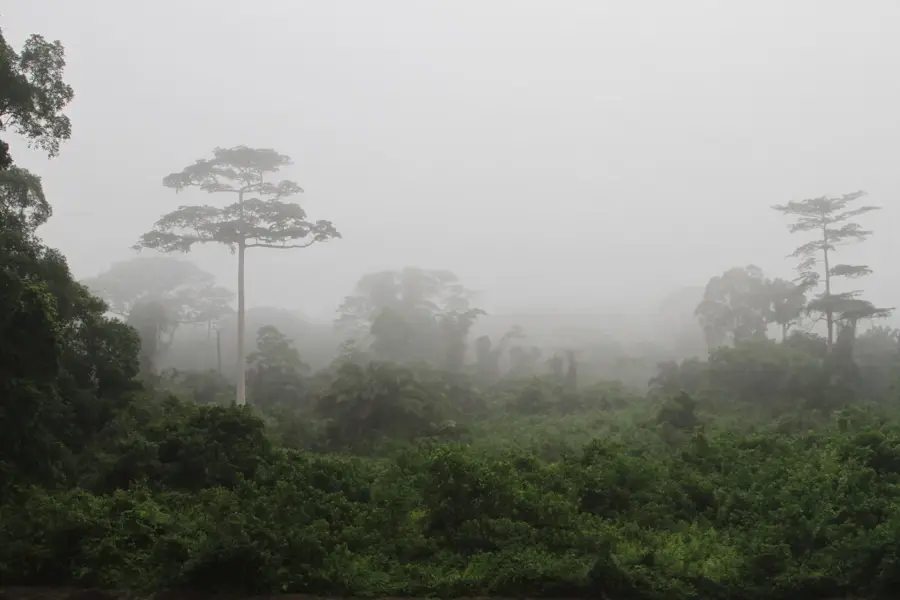
The Taï Forest in southwestern Ivory Coast is the largest remaining fragment of the original Upper Guinean rainforest in West Africa. Designated as a UNESCO World Heritage site, the area spans over 3,300 square kilometers and is characterized by immense biodiversity, including many endemic plant and animal species. The landscape features a dense network of streams, gently rolling hills, and massive primary forest trees with buttress roots. The forest is most famous for its chimpanzee populations, renowned for their sophisticated use of tools, as well as the rare and elusive pygmy hippopotamus. The climate is consistently hot and humid, with rainfall occurring throughout most of the year, fostering the growth of a multi-layered closed canopy. Despite its strict protection, the forest faces ongoing pressure from illegal farming and poaching along its borders. It remains essential for regulating the regional microclimate and serves as a vital global carbon sink.
- Location: Côte d’Ivoire
- Nearby: Soubré (79 km)
Best time to visit & climate
The most pleasant time to visit is Jan, Feb, Dec.
| Jan | Feb | Mar | Apr | May | Jun | Jul | Aug | Sep | Oct | Nov | Dec | |
|---|---|---|---|---|---|---|---|---|---|---|---|---|
| Avg °C | 25 | 26 | 27 | 26 | 26 | 25 | 24 | 24 | 25 | 25 | 26 | 25 |
| Rain mm | 22 | 62 | 112 | 134 | 176 | 244 | 138 | 160 | 207 | 209 | 104 | 48 |
📋 Practical info
Geography
Facts
- Officially listed as a UNESCO World Heritage site in 1982.
- Covers an area of approximately 3,300 square kilometers.
- One of the last sanctuaries for the endangered pygmy hippo.
- Local chimpanzees use stones as tools to crack open nuts.
- Contains over 1,300 species of vascular plants.
- The forest generates its own localized precipitation patterns.
Explore nearby
Notable places around






Route planner — Car & Motorhome
Where do you start? We build the route here, with stops and country notes along the way.
© OpenStreetMap contributors · OpenRouteService
Sights nearby
Frequently asked questions
Why is the Taï Forest so important?
What are the highlights for visitors in the Taï Forest?
Are there accommodations in the Taï Forest?
How do you reach the Taï National Park?
What precautions apply in the rainforest?
Taï Forest: where is it located?
Taï Forest: when is the best time to visit?
Taï Forest: why is it worth visiting?

Nearby cities
History & landmarks
More places