Plizio Visual Lab

Golconda Fort
Plizio editorial teamData Sources
ruin
—°17
Golconda Fort (India)

Weather…

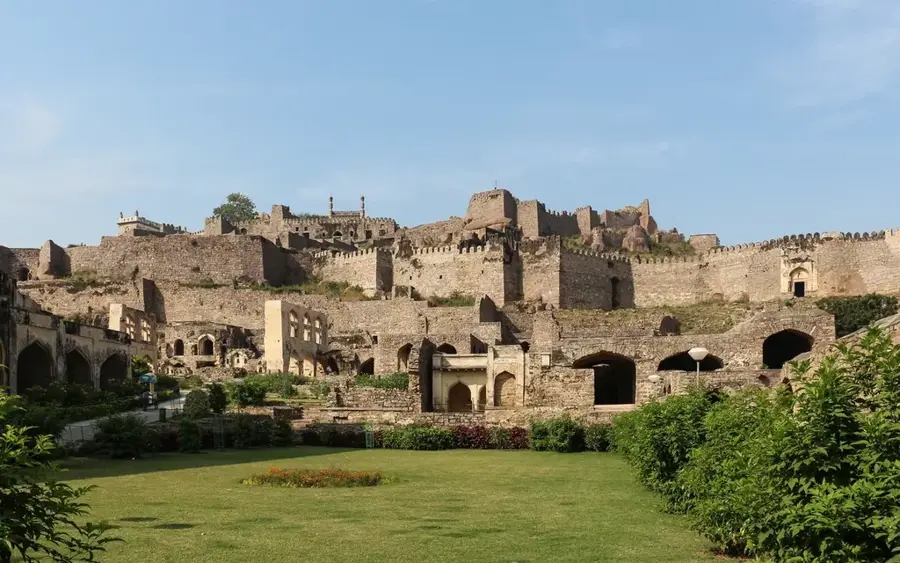
Golconda Fort, situated on the western outskirts of Hyderabad, was once the majestic capital of the Qutb Shahi Sultanate and a world-renowned center for the diamond trade. Originally a mud fort built by the Kakatiya dynasty in the 13th century, it was later expanded into a massive granite citadel with a circumference of seven kilometers. The fort is legendary for its advanced acoustic design; a clap at the main entrance, Fateh Darwaza, can be heard clearly at the Bala Hissar pavilion over 120 meters above. The complex houses four distinct forts, royal chambers, mosques, and an intricate water supply system that utilized clay pipes. Regional mines produced some of the world's most famous gems, including the Koh-i-Noor and the Hope Diamond. Despite its fall to Emperor Aurangzeb in 1687 after an eight-month siege, its ruins remain a testament to medieval Indian engineering and architectural grandeur.

Best time to visit & climate

The most pleasant time to visit is Jan, Nov, Dec.

JanFebMarAprMayJunJulAugSepOctNovDec
Avg °C222529323329272625242221
Rain mm7520243010816919015187143

📋 Practical info

🚪
Visiting
The formidable ruins of this vast citadel invite extensive exploration through its massive gates, ancient defensive walls, and dilapidated palatial structures. Visitors can hike up the uneven stone pathways to the topmost pavilion to admire sweeping panoramic views of the surrounding modern city.
🕒
Typical hours
The fortress complex generally opens early in the morning and closes shortly before sunset, following typical daytime operating schedules for historical sites. Evening access is typically restricted to ticket holders attending the popular sound and light show, which vividly recounts the local history.
📷
Photography
This dramatic site is a paradise for photography enthusiasts, offering striking contrasts between ancient stone arches and the bright open sky. Exploring different angles during the late afternoon golden hour often yields the most captivating and atmospheric images of the sprawling fortifications.
⏱️
Time needed
A comprehensive visit requires roughly two to three hours to comfortably navigate the steep inclines and explore the various architectural remnants. Those planning to stay for the evening cultural performance should expect to allocate additional time to their overall itinerary.
Combine with
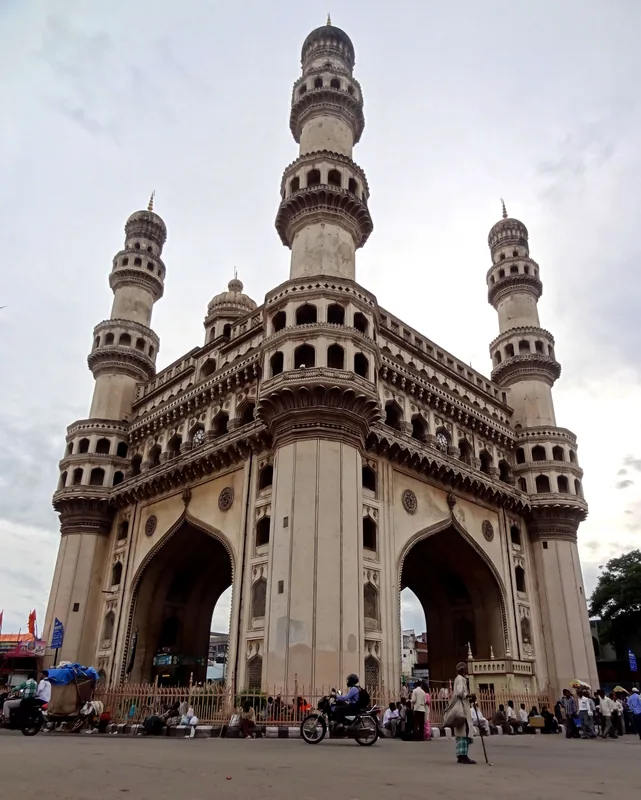
It is highly recommended to combine this trip with a visit to the nearby Qutb Shahi Tombs, an impressive necropolis featuring beautifully domed mausoleums. Exploring the bustling historic center around the Charminar provides a spirited contrast to the quiet ruins of the ancient capital.
🧭
Getting there
Situated just outside the main metropolitan center of Hyderabad, the fort is easily reachable by hiring a local cab or using convenient auto-rickshaws. The approach involves navigating some busy suburban roads, followed by a noticeable ascent toward the main entrance gates.
💡
Insider tip
Clap your hands loudly beneath the portico at the grand entrance dome to witness the remarkable acoustic engineering that once served as a historical warning system. Wearing sturdy, comfortable walking shoes is absolutely essential due to the multitude of uneven stone stairs and rocky paths.

Geography

Coordinates
17.38300, 78.40100

Facts

  • The outer boundary wall of the fort spans approximately 7 kilometers.
  • The citadel Bala Hissar sits on a granite hill 120 meters high.
  • The fort features 8 massive gates and 87 bastions.
  • The Koh-i-Noor diamond is said to have originated from the Golconda mines.
  • Mughal Emperor Aurangzeb captured the fort in 1687 after an 8-month siege.
  • The fort’s acoustic engineering served as a primitive long-distance alarm system.

Explore nearby

Notable places around
Route planner — Car & Motorhome

Where do you start? We build the route here, with stops and country notes along the way.

Vehicle
Only stops with (optional):

© OpenStreetMap contributors · OpenRouteService

Sights in the town Golconda Fort (17)

Peddamma Temple⛪ religious

A prominent temple in Jubilee Hills dedicated to the mother goddess Peddamma Thalli.

Taramati Baradari📍 landmark

A historical pavilion with two stories and twelve arches, famous for its excellent acoustics.

🕒 Mo-Su 11:00-17:00

Golconda Fort📍 landmark

A massive medieval fortress known for its ingenious acoustics and as a center of the diamond trade.

🕒 09:00-17:30

Kasu Brahmananda Reddy National Park📍 landmark

A vast urban national park featuring peacock sanctuaries and the historical Chiraan Palace within its grounds.

Botanical Gardens🌳 park

A botanical garden featuring extensive bamboo and medicinal plant sectors near Kondapur.

Biodiversity Park🌳 park

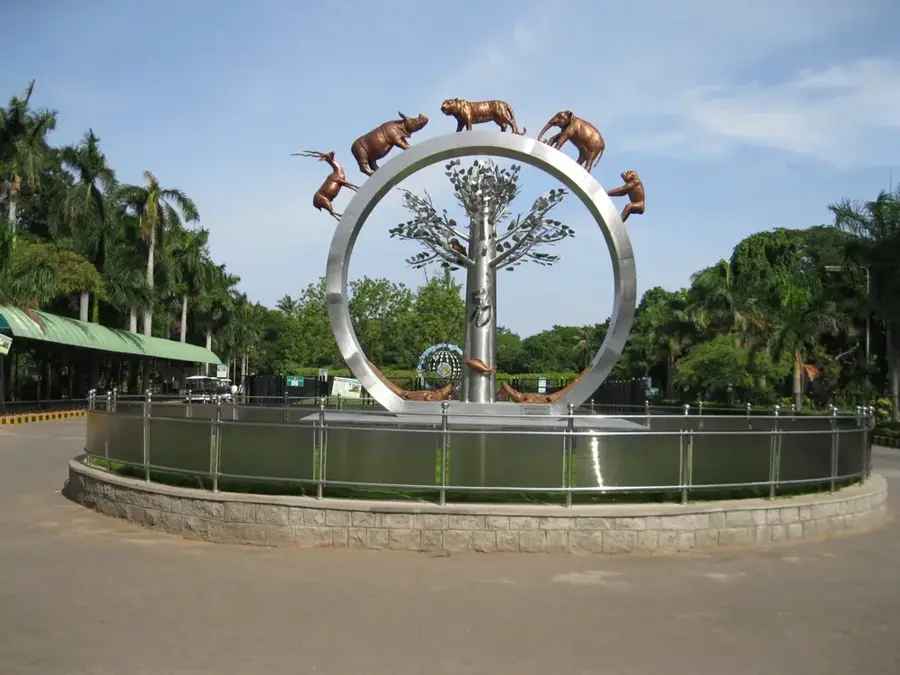
A park in Gachibowli featuring a commemorative pylon representing the evolution of species.

State Art Gallery🏛 museum

A gallery in Kavuri Hills showcasing contemporary art and traditional Indian handicrafts.

Svk art gallery🏛 museum

A local art gallery showcasing works by regional artists and rotating exhibitions.

Tanjore Paintings Art Gallery🏛 museum

A specialized art gallery exhibiting traditional South Indian paintings with gold leaf embossing.

Mushroom Rock🏺 historical

A natural granite formation in the national park that has taken the shape of a mushroom through erosion.

Golconda Jail🏺 historical

Historical prison cells within the fort where the saint Bhakta Ramadasu was imprisoned in the 17th century.

Qutub Shahi Tombs🏺 historical

These grand domed structures form a majestic necropolis for the founding rulers of the Golconda Sultanate.

SVK Amphitheater🎭 culture

A modern open-air venue used for cultural performances and university gatherings in the Hyderabad area.

Rangbhoomi🎭 culture

A bustling outdoor venue dedicated to performing arts and theatrical workshops in Gachibowli.

Aaromale🎭 culture

A creative community hub set in a refurbished villa, hosting intimate plays and cultural events.

Sri Enugula Maisamma Temple⛪ religious

A traditional Hindu temple dedicated to a local village goddess, featuring colorful carvings and a ritual courtyard.

Temple⛪ religious

A serene neighborhood shrine featuring a traditional gopuram entrance and a small prayer hall.

Sights nearby

Frequently asked questions

What is special about the acoustics in the fort?
A clap at the entrance gate can be clearly heard in the palace at the very top of the hill.
What role did diamonds play in Golconda?
Golconda was the center of the world's diamond trade; famous stones like the Koh-i-Noor originated here.
Is there a sound and light show?
Yes, an impressive sound and light show is held every evening, narrating the fort's history.
How strenuous is the climb?
The climb involves over 300 steps and can be strenuous in the heat; sturdy shoes and water are essential.
How much time should be planned?
You should allow at least 2 to 3 hours to explore the extensive fort grounds.
Golconda Fort: where is it located?
Golconda Fort is located in India.
Golconda Fort: what is there to see?
Highlights include Peddamma Temple, Taramati Baradari, Golconda Fort.
Golconda Fort: when is the best time to visit?
The most pleasant time to visit is Jan, Nov, Dec.
Golconda Fort: why is it worth visiting?

Golconda Fort, situated on the western outskirts of Hyderabad, was once the majestic capital of the Qutb Shahi Sultanate and a world-renowned center for the diamond trade.
View on map → The Top 50 Attractions → OpenStreetMap →
Asia
Explore with Plizio Discover more places in Asia
More places in India →

Nearby cities

Nature

More places