Plizio Visual Lab
Hornbjarg
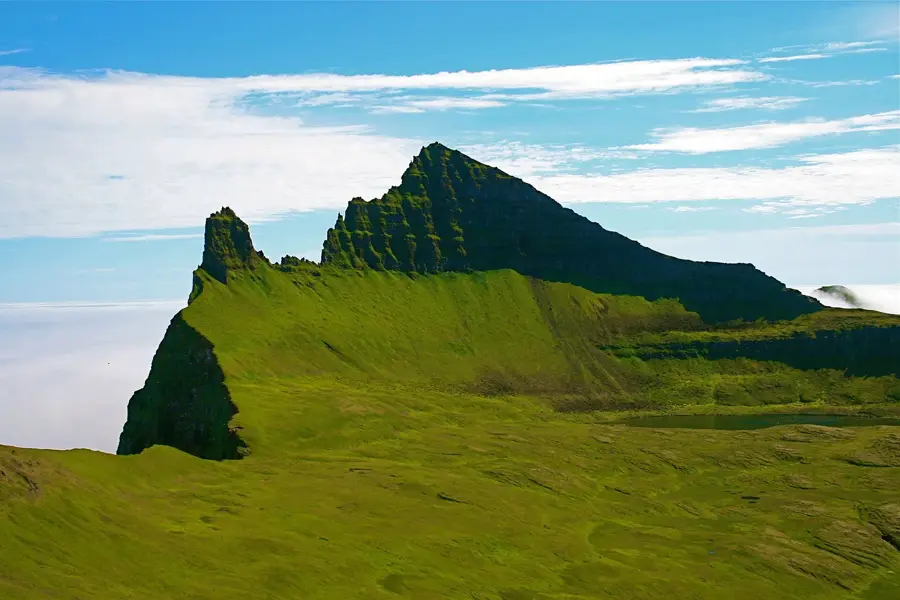
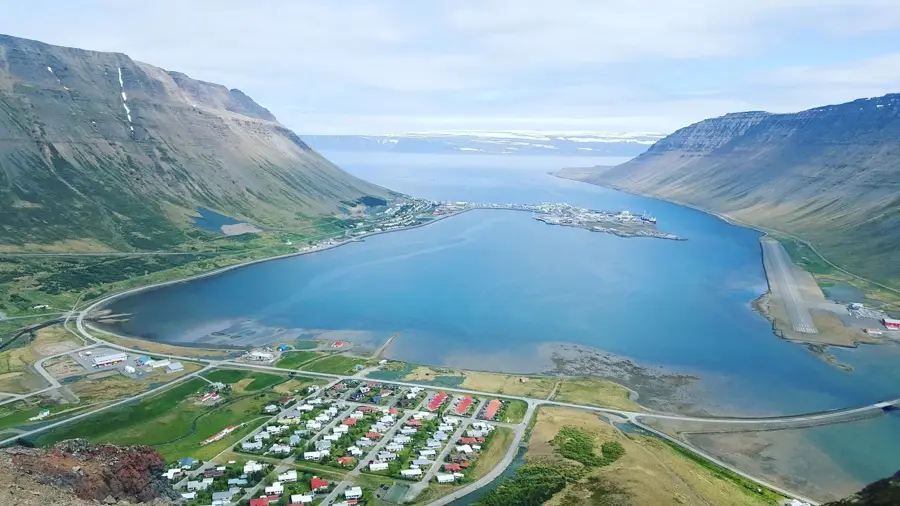
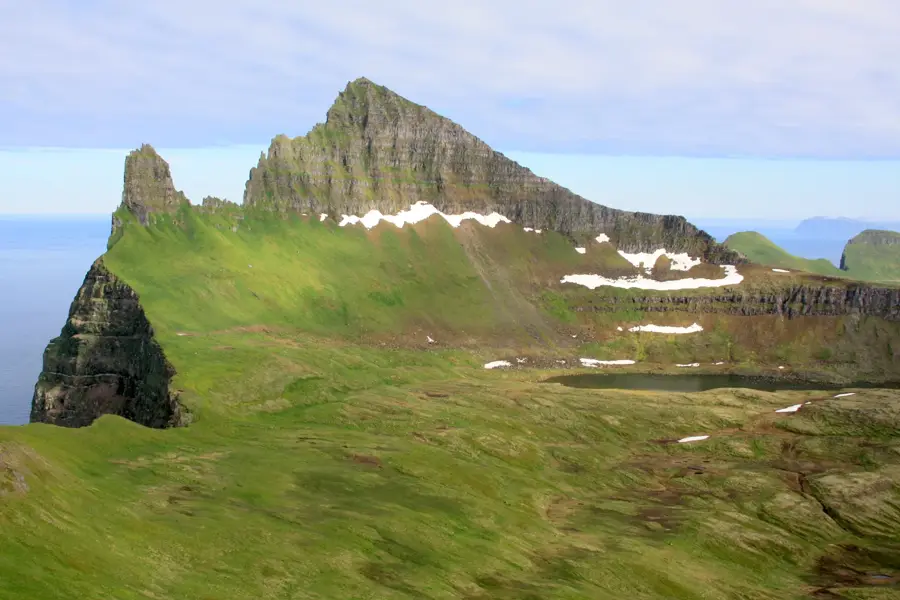
Hornbjarg is one of Iceland's most spectacular and remote bird cliffs, situated at the northern tip of the Hornstrandir Nature Reserve in the Westfjords. The cliffs reach their highest point at 534 meters, plunging almost vertically into the North Atlantic. The topography is defined by razor-sharp ridges and vast, grassy plateaus that end abruptly in sheer drops. As the area has been uninhabited since the 1950s, it has remained a pristine wilderness and serves as the primary sanctuary for the Arctic fox in Iceland. Hikers visit Hornbjarg for its isolation and dramatic vistas, though access is generally only possible by boat from Ísafjörður. During the summer, the rock faces are teeming with hundreds of thousands of seabirds, such as guillemots and kittiwakes, making it one of the region's most significant ecological hotspots.
- Location: Iceland
- Nearby: Vigur (45 km)
Best time to visit & climate
The most pleasant time to visit is Jun–Aug.
| Jan | Feb | Mar | Apr | May | Jun | Jul | Aug | Sep | Oct | Nov | Dec | |
|---|---|---|---|---|---|---|---|---|---|---|---|---|
| Avg °C | 0 | 0 | 0 | 1 | 3 | 6 | 8 | 8 | 6 | 4 | 2 | 1 |
| Rain mm | 134 | 111 | 110 | 94 | 75 | 47 | 71 | 84 | 110 | 137 | 121 | 145 |
📋 Practical info
Geography
Facts
- Highest peak reaches 534 meters above sea level
- Part of the Hornstrandir Nature Reserve
- Last permanent residents left the area in 1952
- Primary sanctuary for the Arctic fox in Iceland
- Accessible only by boat or multi-day hiking trips
- Home to massive colonies of guillemots and kittiwakes
Explore nearby
Notable places around



Route planner — Car & Motorhome
Where do you start? We build the route here, with stops and country notes along the way.
© OpenStreetMap contributors · OpenRouteService
Sights nearby
Frequently asked questions
How do you reach Hornbjarg?
Is the hike difficult?
Can you see Arctic foxes there?
Are there any services available?
When is the best time to visit?
Hornbjarg: where is it located?
Hornbjarg: when is the best time to visit?
Hornbjarg: why is it worth visiting?

Nearby cities