Plizio Visual Lab
Siwa
ℹ️Practical info — Siwa
▾
🌤 Weather — 5 days
📍 Nearby
Sights nearby
💡 Tips
- Dress modestly when walking in the town center out of respect for the deeply traditional local culture.
- Bring plenty of Egyptian pounds in cash, as ATMs are scarce and often out of service.
- The salt lakes are highly buoyant but very salty; bring a bottle of fresh water to rinse off immediately.
- A 4x4 excursion into the Great Sand Sea is a must, but ensure you go with a licensed local guide.
🍽 Food
Available in various forms at the local market.
A meat dish traditionally slow-cooked under the sand.
Try it with fresh flatbread at the town's cafes.
🛍 Shopping · 🧘 Quiet spots
Unique lamps handcrafted from local salt blocks.
Traditional, colorful embroidery on shirts and dresses.
An idyllic spot to watch the sunset amidst palm trees.
Climb the old mudbrick structures for a quiet panoramic view over the oasis.
Early mornings here are especially quiet for a relaxing dip.
Water temperature…
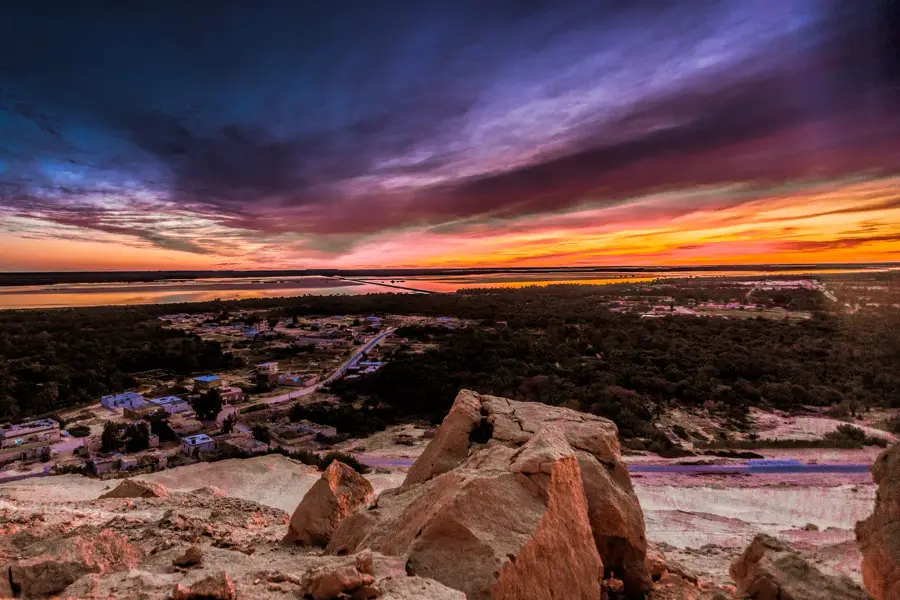
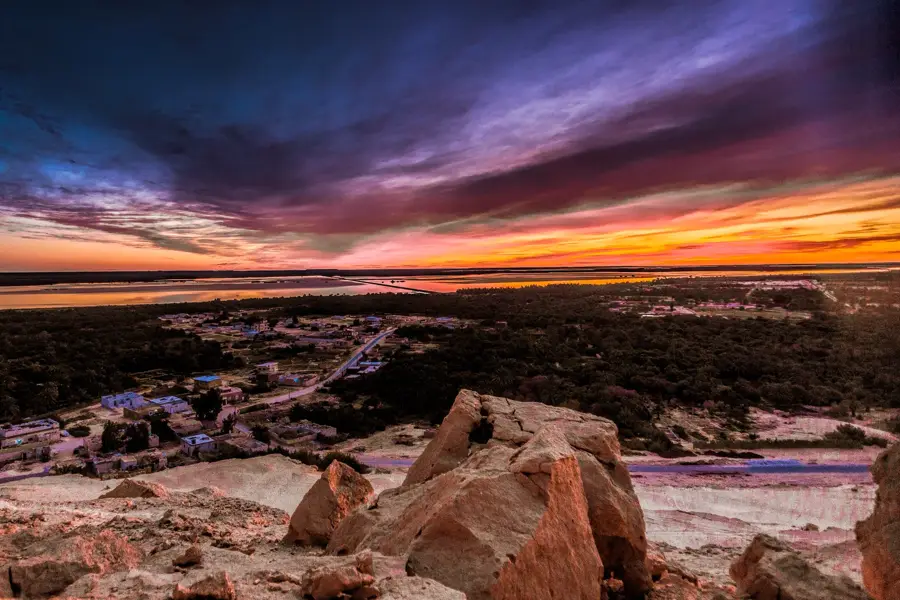
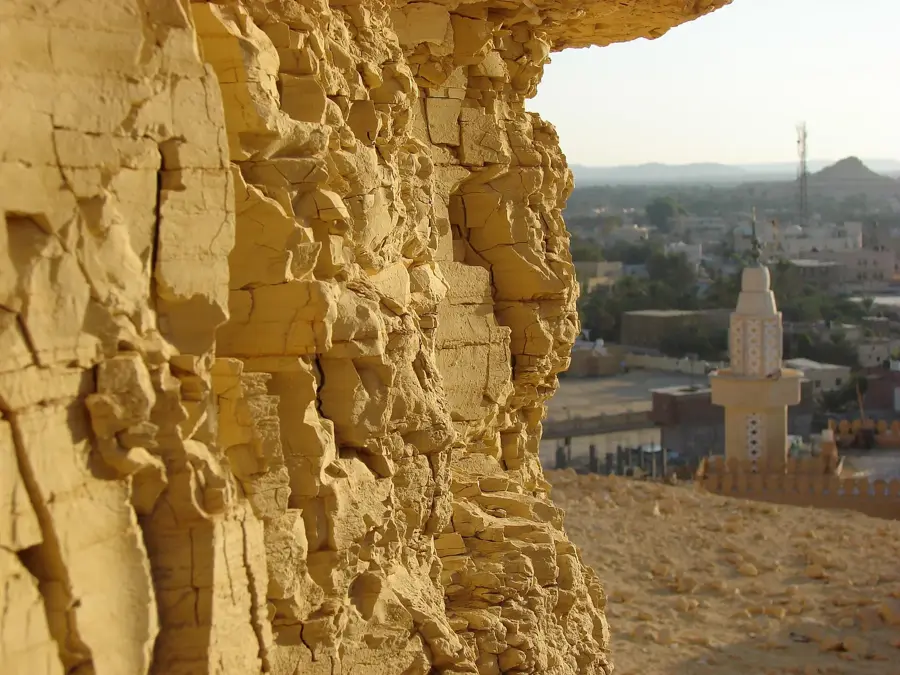
Siwa Oasis is one of Egypt's most fascinating and remote locations, situated in the heart of the Western Desert near the Libyan border. It gained fame in antiquity as the home of the Oracle of Amun, which Alexander the Great visited in 331 BC to confirm his divine lineage. The people of Siwa have preserved a unique culture and speak Siwi, a Berber language, distinguishing them from the rest of Egypt. The oasis's architecture is characterized by the use of kershef, a traditional mixture of salt, mud, and sand used to construct the impressive Shali Fortress. Siwa is also renowned for its more than 1,000 natural springs, including Cleopatra's Bath, a circular stone pool filled with clear spring water. Its economy is traditionally based on the production of high-quality dates and olives, as well as the export of mineral water. In recent years, the oasis has become a prime destination for ecotourism and wellness travelers who bathe in its therapeutic salt lakes. Its isolation has allowed traditions and customs to remain largely unchanged for centuries. Siwa features a unique blend of ancient history and sweeping desert landscapes.
- Location: Egypt
- Top sights: House of Siwa · Fort of Shali · Umm Ubaydah
- Population: ~25.031 (2023)
Best time to visit & climate
The most pleasant time to visit is Apr, Oct, Nov.
| Jan | Feb | Mar | Apr | May | Jun | Jul | Aug | Sep | Oct | Nov | Dec | |
|---|---|---|---|---|---|---|---|---|---|---|---|---|
| Avg °C | 11 | 13 | 17 | 21 | 26 | 29 | 30 | 30 | 28 | 23 | 17 | 13 |
| Rain mm | 6 | 5 | 1 | 0 | 0 | 0 | 0 | 0 | 0 | 2 | 3 | 5 |
Geography
Facts
- Siwa Oasis is located in the Western Desert, about 50 km from Libya.
- Alexander the Great visited the Oracle of Amun here in 331 BC.
- The inhabitants speak Siwi, which is a Berber language.
- Shali Fortress was built in the 13th century using salt and mud bricks.
- There are over 1,000 natural springs throughout the oasis.
- Siwa is Egypt's largest producer of high-quality dates and olives.
Explore nearby
Notable places around


Route planner — Car & Motorhome
Where do you start? We build the route here, with stops and country notes along the way.
© OpenStreetMap contributors · OpenRouteService
Sights in the town Siwa (5)
Frequently asked questions
When is the best time to visit Siwa?
How to get from Cairo to Siwa?
Can you swim in the salt lakes?
What is Shali?
Is a permit needed for the desert?
Siwa: where is it located?
Siwa: what is there to see?
Siwa: when is the best time to visit?
Siwa: why is it worth visiting?

Nearby cities