Plizio Visual Lab

Zhangjiajie National Forest Park
Plizio editorial teamData Sources
national-park
—°2
Zhangjiajie National Forest Park (China)

Weather…

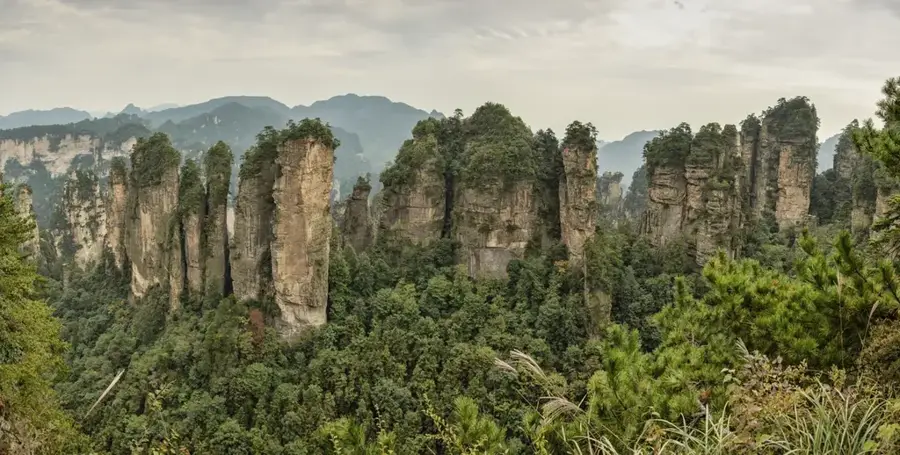
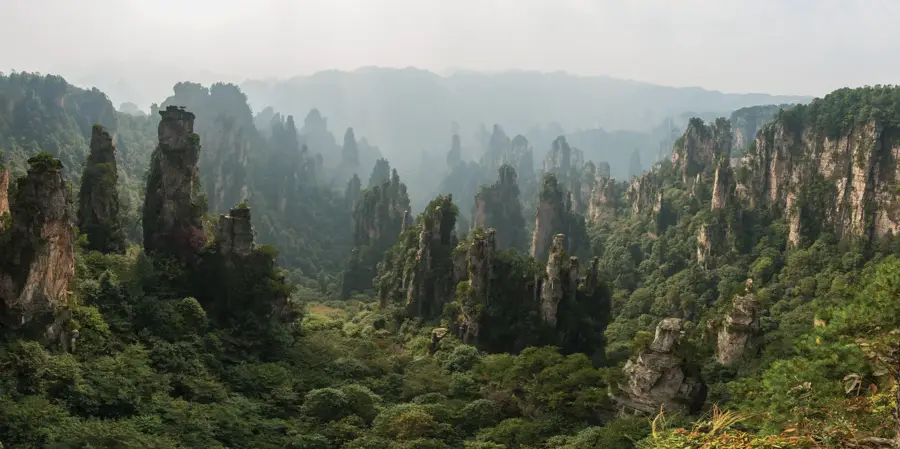
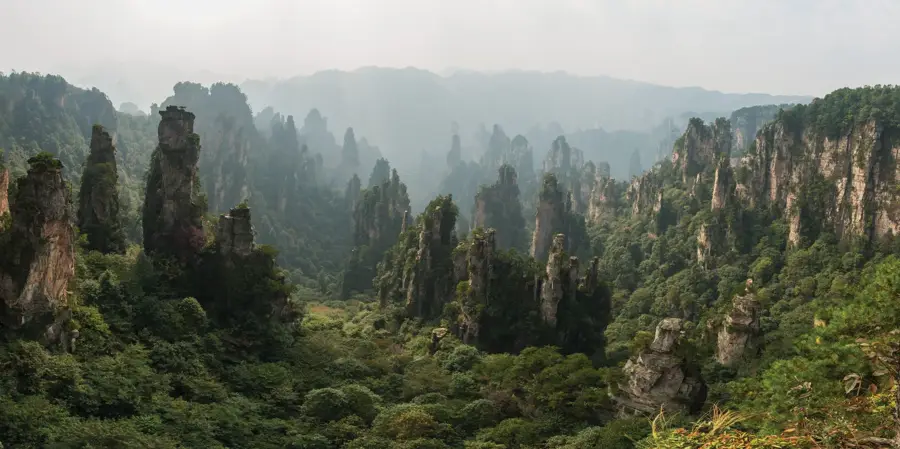
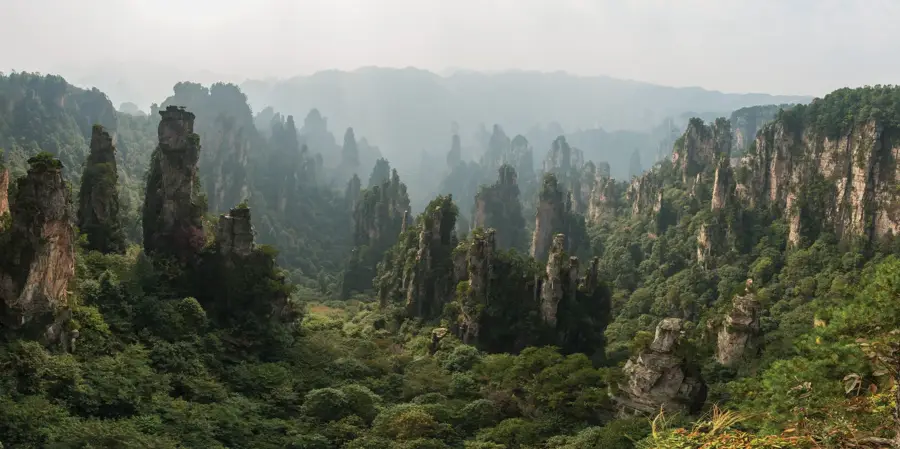
Zhangjiajie National Forest Park in Hunan Province became China's first national park in 1982 and is now a core part of the UNESCO Wulingyuan World Heritage site. The area is globally famous for its more than 3,000 towering quartz sandstone pillars, many rising hundreds of meters into the sky and often shrouded in mist. These dramatic formations served as the visual inspiration for the floating mountains in the film Avatar. An engineering marvel within the park is the Bailong Elevator, which stands 326 meters tall and is recognized as the world's highest outdoor elevator. Additionally, the park features the Zhangjiajie Glass Bridge, spanning across a deep canyon to provide a thrilling perspective for visitors. The region's biodiversity is immense, with the deep ravines offering refuge to many rare plant and animal species. Geologically, these pillars were created over millions of years through erosion caused by water and frost. The park stands as a monumental symbol of nature's power and is a premier destination for travelers in China.

Best time to visit & climate

The most pleasant time to visit is Aug–Oct.

JanFebMarAprMayJunJulAugSepOctNovDec
Avg °C251016202326252116104
Rain mm3853861422072302281571241067626

📋 Practical info

🧭
Getting there
The park is easily accessible from Zhangjiajie City, which has an airport and train station. Visitors typically take frequent shuttle buses or taxis from the city center directly to the main park entrances in Wulingyuan. Cable cars and elevators are widely used to ascend to the primary viewing platforms.
📅
Best season
The most pleasant periods for visiting are generally April through May and September through October, offering comfortable temperatures and clear skies. Summer brings intense humidity, heavy rainfall, and large crowds, while winter frequently coats the striking peaks in snow and mist, creating a beautiful but cold scene.
⛰️
Terrain & paths
The terrain features deep ravines, dense forests, and the iconic towering sandstone pillars. While the main paths and popular viewing areas are heavily developed with paved walkways and sturdy staircases, exploring deeper into the valleys involves significant elevation changes and countless stone steps.
🎒
What to bring
Comfortable, sturdy walking shoes with excellent grip are absolutely essential due to the vast number of stairs and extensive walking involved. Visitors should carry a lightweight rain jacket or umbrella, as sudden showers are common, along with plenty of drinking water and layers of clothing to adjust to changing temperatures.
🅿️
Parking
Extensive parking facilities are generally available near the main entrances in Wulingyuan, heavily utilized by large tour buses and organized groups. Private cars are typically not permitted inside the core park area itself, requiring visitors to transfer to the comprehensive internal eco-bus system.
⚠️
Safety
The steep stairways and sheer drop-offs from viewing platforms require careful attention and sensible footwear, especially when paths become slippery after rainfall. Visitors should secure food and belongings from the numerous wild macaques roaming the trails, as these monkeys can be aggressive when seeking snacks.
⏱️
Time needed
To fully appreciate the sheer scale and variety of the scenic areas without feeling overly rushed, a visit typically requires at least two to three full days. A single day is only sufficient to quickly see one or two major highlights, often resulting in a very hurried and superficial experience of the park's immense beauty.

Geography

Coordinates
29.32000, 110.47000

Facts

  • China's first national park, established in 1982
  • Home to over 3,000 distinct sandstone pillars
  • Bailong Elevator is the world's tallest outdoor lift at 326m
  • Inspiration for the Hallelujah Mountains in the film Avatar
  • UNESCO World Heritage site as part of Wulingyuan
  • Features the world's longest glass bridge of its kind

Explore nearby

Notable places around
Route planner — Car & Motorhome

Where do you start? We build the route here, with stops and country notes along the way.

Vehicle
Only stops with (optional):

© OpenStreetMap contributors · OpenRouteService

Sights in the town Zhangjiajie National Forest Park (2)

Water Winding Four Gates📍 landmark

This attraction marks the scenic junction where four mountain streams meet in a deep valley bottom.

Baylong (Bailong) elevator📍 landmark

The Bailong Elevator is the world's tallest outdoor elevator at 326 meters, built directly onto a vertical sandstone cliff.

Sights nearby

Frequently asked questions

Did these mountains inspire the movie 'Avatar'?
Yes, the striking quartz-sandstone pillars served as a model.
What is the Bailong Elevator?
The world's highest outdoor elevator, ascending a cliff face.
Should you be afraid of the monkeys?
They can be cheeky; do not show food and keep your distance.
How long is the ticket valid?
A standard ticket is usually valid for four consecutive days.
Are there glass bridges?
Yes, the famous Zhangjiajie glass bridge is located near the Grand Canyon.
Zhangjiajie National Forest Park: where is it located?
Zhangjiajie National Forest Park is located in China.
Zhangjiajie National Forest Park: what is there to see?
Highlights include Water Winding Four Gates, Baylong (Bailong) elevator.
Zhangjiajie National Forest Park: when is the best time to visit?
The most pleasant time to visit is Aug, Oct.
Zhangjiajie National Forest Park: why is it worth visiting?

Zhangjiajie National Forest Park in Hunan Province became China's first national park in 1982 and is now a core part of the UNESCO Wulingyuan World Heritage site.
View on map → The Top 50 Attractions → OpenStreetMap →
Asia
Explore with Plizio Discover more places in Asia
More places in China →

Nearby cities

More places