Plizio Visual Lab
Sbeitla
ℹ️Practical info — Sbeitla
▾
🌤 Weather — 5 days
📍 Nearby
Sights nearby
💡 Tips
- Visit the Sufetula archaeological site early in the morning to avoid the midday heat.
- Plan at least two hours to see the three unique Roman temples properly.
- Wear sturdy shoes as the terrain within the ruins is uneven and rocky.
- Sbeitla is a well-suited stopover on the route between Kairouan and the southern oases.
🍽 Food
Meat in the central region is known for being tender; try it in restaurants near the park entrance.
A slow-cooked stew made from jute powder and beef, a hearty inland specialty.
Often sold by the roadside; look for the dark forest honey of the region.
🛍 Shopping · 🧘 Quiet spots
A place to find authentic carpets and woven blankets from the Kasserine region.
Woven baskets and mats made from local steppe grass are a typical souvenir.
Away from the main temples, you can find shaded and solitary spots in the expansive site.
A quiet place for a short walk along the riverbed below the ruins.
Water temperature…
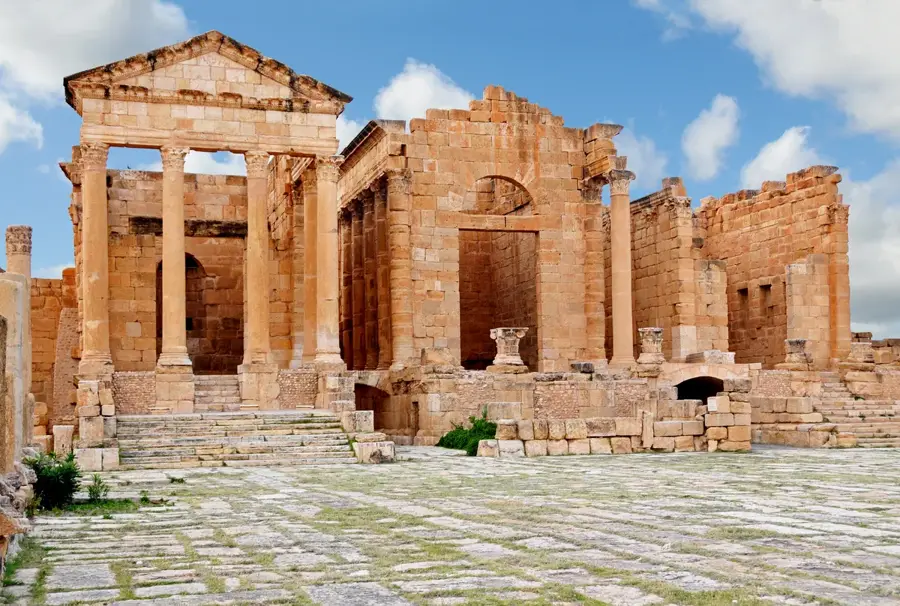
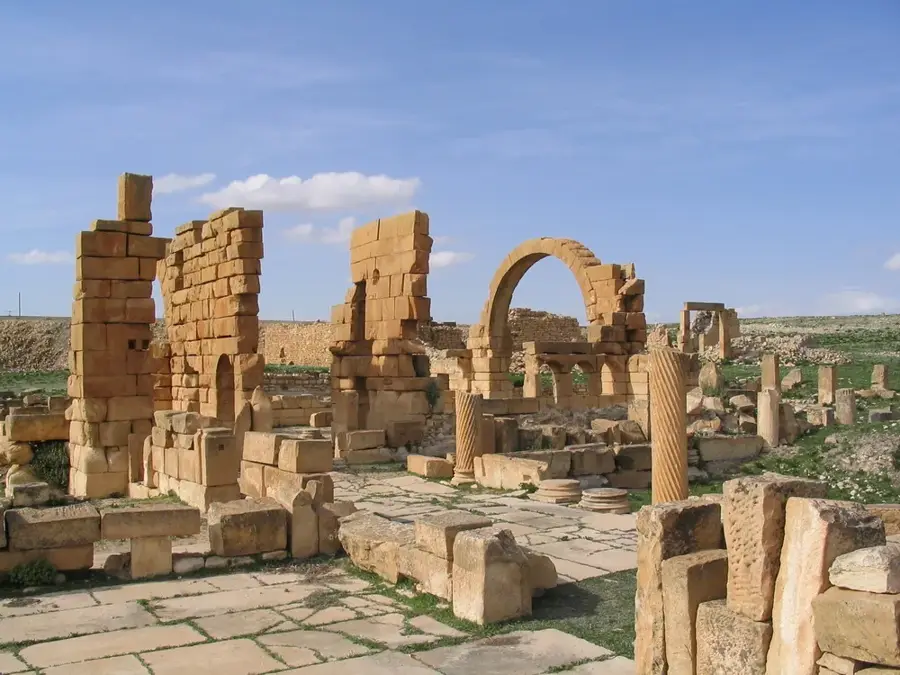
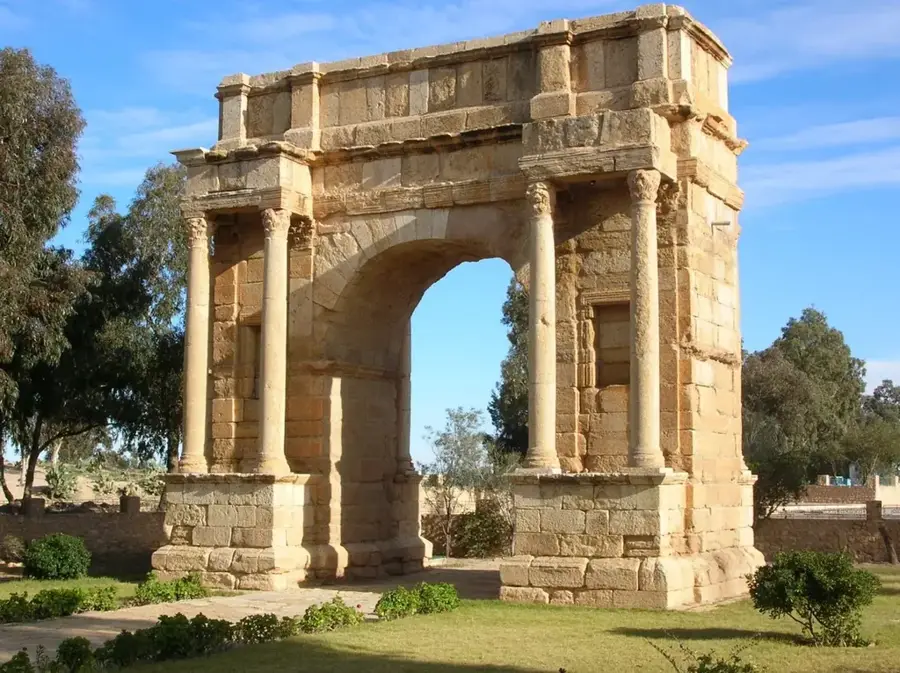
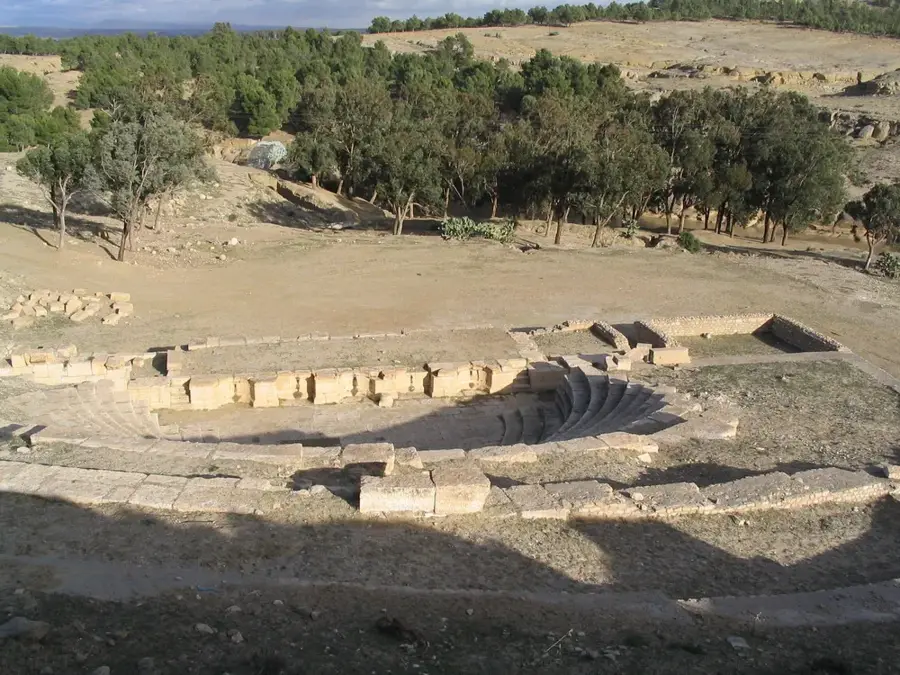
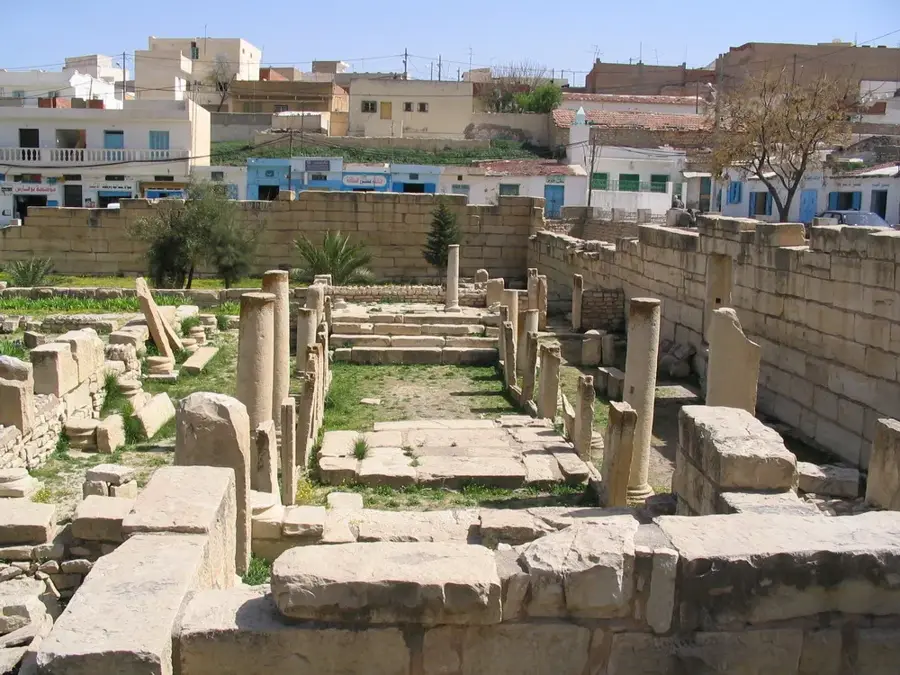
Sbeitla, the ancient city of Sufetula, stands as one of central Tunisia's most impressive archaeological sites, reflecting the region's prosperous Roman and Byzantine past. The city thrived during antiquity as a major hub for olive oil production, a wealth that is clearly reflected in its monumental architecture. Sbeitla's most distinctive feature is its Capitol, which uniquely consists of three separate temples dedicated to Jupiter, Juno, and Minerva, rather than the traditional single tripartite temple. These structures, connected by arches and overlooking a vast paved forum, remain some of the best-preserved Roman temples in existence. The city also held significant importance during the Byzantine era, serving as a regional capital and a center for early Christianity, evidenced by several basilicas with intricate mosaics. In 647 AD, Sbeitla was the site of the first major battle between the Byzantine Empire and the advancing Arab armies, a turning point that led to the eventual Islamic conquest of North Africa. Today, visitors can wander through the Arch of Diocletian, the Roman theater, and well-preserved bath complexes. Sbeitla features a quiet and profound experience for history enthusiasts, showcasing the transition from classical Roman glory to the early medieval period. Its strategic location on a high plateau makes it a striking presence in the Tunisian landscape.
- Location: Tunisia
- Top sights: Roman Ruins of Sbeitla · Theatre · Arch of the Tetrarchy
- Nearby: Thala (55 km)
- Population: ~23.764 (2024)
Best time to visit & climate
The most pleasant time to visit is May, Jun, Sep.
| Jan | Feb | Mar | Apr | May | Jun | Jul | Aug | Sep | Oct | Nov | Dec | |
|---|---|---|---|---|---|---|---|---|---|---|---|---|
| Avg °C | 6 | 7 | 11 | 15 | 19 | 24 | 28 | 27 | 23 | 18 | 11 | 7 |
| Rain mm | 35 | 21 | 40 | 31 | 31 | 19 | 9 | 20 | 38 | 32 | 32 | 35 |
Geography
Facts
- Sbeitla features the only Roman Capitol with three separate, distinct temples.
- The city's Triumphal Arch was built to honor the Emperor Diocletian.
- The first major battle of the Arab conquest of North Africa occurred here in 647 AD.
- Sufetula was one of the largest olive oil production centers in the Roman province of Africa.
- The site contains the ruins of at least seven early Christian basilicas.
- The archaeological park is situated at an elevation of about 525 meters above sea level.
Explore nearby
Notable places around


Route planner — Car & Motorhome
Where do you start? We build the route here, with stops and country notes along the way.
© OpenStreetMap contributors · OpenRouteService
Start your morning at the imposing Arch of the Tetrarchy and step into ancient history. By midday, explore the heart of Sbeitla's Roman ruins and the captivating theatre. In the afternoon, the vast public baths offer deep insights into Roman culture. The evening concludes peacefully as you wander around the ancient amphitheatre.
Arch of the Tetrarchy
Church of the Martyrs
Roman Ruins of Sbeitla
Theatre
Baths
Amphitheatre
In the morning, we seek shelter under the Arch of the Tetrarchy as the rain starts. At noon, the forum temples glisten in the wet light, but be careful on the slippery stones. In the afternoon, we explore the theatre and the baths, where the rain washes away the dust of history. In the evening, we end the day at the amphitheatre before the wind picks up across the steppe.
Arch of the Tetrarchy
Church of the Martyrs
Roman Ruins of Sbeitla
Theatre
Baths
Amphitheatre
The winter morning in Sbeitla is crisp and windy. At noon, the low sun warms the massive stones of the Capitol, perfect for photos without the summer haze. In the afternoon, temperatures drop quickly, so seek wind-sheltered areas. As the sun sets around 17:00, the tour ends in the blue hour amidst the biting cold of the steppe.
Arch of the Tetrarchy
Church of the Martyrs
Roman Ruins of Sbeitla
Theatre
Baths
Amphitheatre
Begin your morning at the main Roman ruins complex before pedaling to the Chapel of Jucundus. Midday brings you to the ancient baths and the majestic, well-preserved theatre. In the afternoon, discover the Church of the Martyrs and the grand Arch of the Tetrarchy. Conclude your ride at the impressive aqueduct bridge in the soft evening light.
Roman Ruins of Sbeitla
Chapel of Jucundus
Baths
Theatre
Church of the Martyrs
Arch of the Tetrarchy
Aqueduct bridge
A rainy day on a bike requires full concentration on the ancient paths. In the morning, we start at the ruins where the ground can get muddy. At noon, the baths and the theatre provide short shelters from the showers. In the afternoon, we pedal carefully to the aqueduct bridge as the rain turns the landscape lush. A wet but exciting adventure.
Roman Ruins of Sbeitla
Chapel of Jucundus
Baths
Theatre
Church of the Martyrs
Arch of the Tetrarchy
Aqueduct bridge
Winter cycling in Sbeitla means cold wind-chill and crystal clear views. In the morning, it is frosty at the ruins, so warm gloves are mandatory. At noon, the winter sun provides pleasant warmth for the ride between the temples. In the afternoon, the temperature drops rapidly as the sun gets lower. The tour ends at nightfall around 17:00.
Roman Ruins of Sbeitla
Chapel of Jucundus
Baths
Theatre
Church of the Martyrs
Arch of the Tetrarchy
Aqueduct bridge
Drive to the Arch of the Tetrarchy in the morning to start your journey through time. By midday, visit the ancient theatre and the central Roman ruins of old Sufetula. In the afternoon, marvel at the massive columns of the monumental temple complex. Relax at the end of the evening among the historical stones of the grand amphitheatre.
Arch of the Tetrarchy
Theatre
Roman Ruins of Sbeitla
Temple
Amphitheatre
A rainy day in Sbeitla is best explored by car. In the morning, we drive to the arch where the wipers reveal the ancient world. At noon, we park close to the ruins to keep walking distances in the rain short. In the afternoon, we visit the temples while the rain drumming on the car roof creates a cozy atmosphere. Safe and dry throughout.
Arch of the Tetrarchy
Theatre
Roman Ruins of Sbeitla
Temple
Amphitheatre
Winter comfort in the car makes visiting Sbeitla pleasant even during a frost. In the morning, we start with the heater on at the Arch of the Tetrarchy. At noon, we use the vehicle for quick transitions between the sprawling ruin fields. In the afternoon, the temperature drops noticeably, so enjoy the views from the warm cockpit. The tour ends exactly at the early sunset at 17:00.
Arch of the Tetrarchy
Theatre
Roman Ruins of Sbeitla
Temple
Amphitheatre
Sights in the town Sbeitla (3)
Frequently asked questions
How much time is needed to visit Sbeitla?
What is the best time of day to visit?
What are the highlights of Sbeitla?
Is the site wheelchair accessible?
Is photography allowed on site?
Sbeitla: where is it located?
Sbeitla: what is there to see?
Sbeitla: when is the best time to visit?
Sbeitla: why is it worth visiting?

Nearby cities

More places