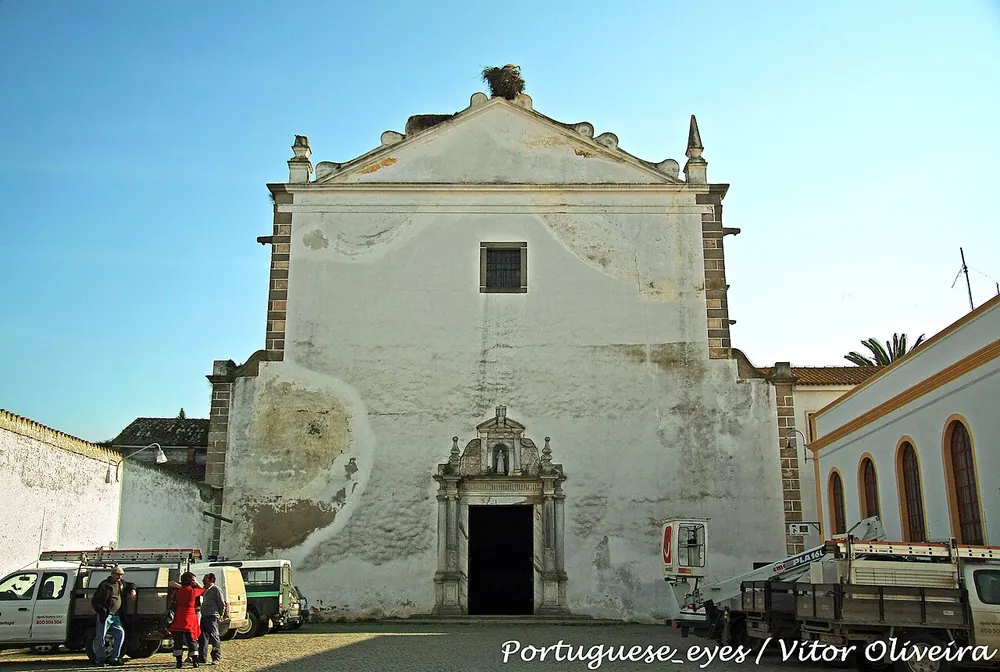
Convento de São Francisco
The Convento de São Francisco is a remarkable historical and religious landmark located in the heart of the Alentejo region. Originally established by the Franciscan order, this former monastery stands as a testament to the deep-rooted religious history and architectural evolution of Portugal. The building's exterior presents a solemn and austere facade, characteristic of the mendicant orders, while hiding a surprisingly rich and spiritually significant interior.
Visitors to the convent can admire a blend of architectural styles that reflect the various periods of its construction and renovation. The complex typically features a serene cloister, which once served as the center of monastic life, offering a quiet space for contemplation and prayer. Inside the adjoining church, one can often find beautiful examples of traditional Portuguese azulejos (hand-painted tiles), intricately carved gilded wood altarpieces, and vaulted ceilings that inspire awe.
Exploring the Convento de São Francisco is not only an architectural journey but also a peaceful retreat. The site provides a profound sense of tranquility and offers valuable insights into the daily lives of the friars who once inhabited it. It remains an essential stop for those interested in religious heritage and the historical charm of the Alentejo landscape.
Weather…
Best time to visit & climate
The most pleasant time to visit is May, Jun, Sep.
| Jan | Feb | Mar | Apr | May | Jun | Jul | Aug | Sep | Oct | Nov | Dec | |
|---|---|---|---|---|---|---|---|---|---|---|---|---|
| Avg °C | 9 | 10 | 12 | 15 | 19 | 24 | 27 | 27 | 24 | 19 | 13 | 10 |
| Rain mm | 50 | 47 | 57 | 55 | 32 | 10 | 2 | 4 | 25 | 72 | 78 | 58 |
Practical info
Tips
- Take your time to study the intricate details of the azulejo tiles adorning the interior walls.
- The cloister provides a perfect, shaded spot to sit down for a few moments of quiet contemplation.
FAQ
What is the Convento de São Francisco?
What are the main architectural features to look out for?
Is the building still used as an active monastery today?
When is the best season to visit?
Route planner — Car & Motorhome
Where do you start? We build the route here, with stops and country notes along the way.
© OpenStreetMap contributors · OpenRouteService