Plizio Visual Lab
National Botanic Gardens Glasnevin
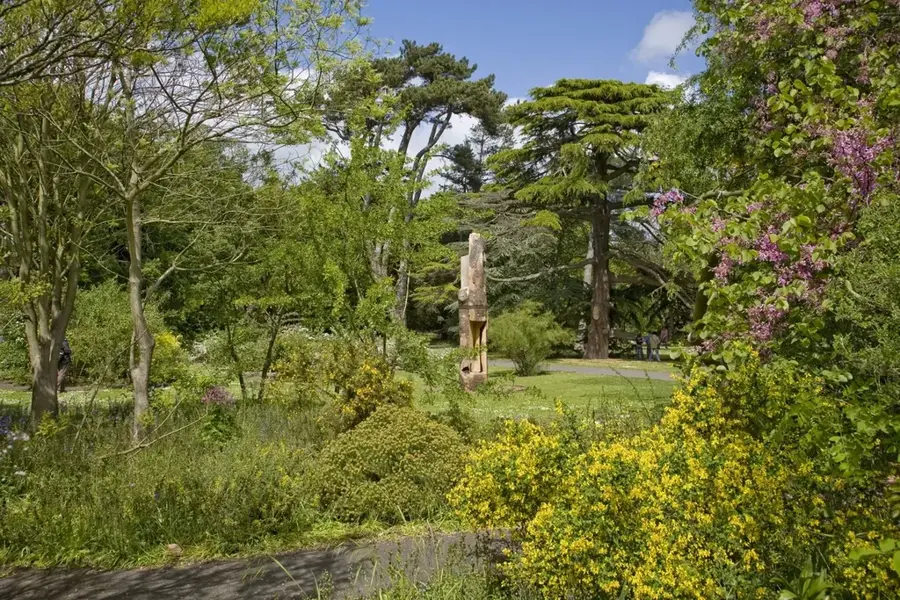
The National Botanic Gardens in Glasnevin, Dublin, were established in 1795 by the Dublin Society and serve as a premier center for botany and plant conservation in Ireland. Spanning 19.5 hectares, the gardens house over 15.000 plant species from diverse habitats worldwide. An architectural highlight is the Curvilinear Range, a wrought-iron and glass conservatory complex built between 1843 and 1869 by the renowned architect Richard Turner. The gardens play a vital role in preserving endangered flora and conducting scientific research, including the management of the National Herbarium. In addition to the impressive plant collections, the site gives tranquil walks along the River Tolka and features several historical monuments. As a public space, the gardens promote awareness of biodiversity and climate change through exhibitions and educational programs for all ages.
- Location: Ireland
- Top sights: Reconstructed viking house · National Botanic Gardens · The O'Connell Tower
- Nearby: Swords (10 km)
Best time to visit & climate
The most pleasant time to visit is Jun–Aug.
| Jan | Feb | Mar | Apr | May | Jun | Jul | Aug | Sep | Oct | Nov | Dec | |
|---|---|---|---|---|---|---|---|---|---|---|---|---|
| Avg °C | 6 | 6 | 6 | 8 | 11 | 14 | 15 | 15 | 14 | 11 | 8 | 7 |
| Rain mm | 86 | 70 | 70 | 61 | 67 | 76 | 80 | 91 | 76 | 102 | 106 | 97 |
📋 Practical info
Geography
Facts
- The gardens were officially founded on March 1, 1795.
- The Great Palm House was completed in 1884 and stands 20 meters tall.
- The National Herbarium on site contains over 600,000 dried plant specimens.
- Addison's Walk is one of the oldest parts of the garden, dating back to the 18th century.
- The gardens have been managed by the Office of Public Works (OPW) since 1992.
- Over 500,000 visitors visit the Glasnevin site every year.
Explore nearby
Notable places around




Route planner — Car & Motorhome
Where do you start? We build the route here, with stops and country notes along the way.
© OpenStreetMap contributors · OpenRouteService
Sights in the town National Botanic Gardens Glasnevin (10)
The O'Connell Tower
Round tower in Glasnevin Cemetery, Dublin, built in 1869.
Former swimming area
Former swimming spot on the River Tolka in Dublin, now a viewpoint.
Arts and Business Campus
Arts and business campus in Dublin, housing creative enterprises.
Irish Volunteers memorial
Memorial in Dublin for the Irish Volunteers, a republican militia.
St Peter's
Roman Catholic church in Dublin, Ireland, in the Phibsborough area.
Saint John the Baptist
Church building in Dublin, Ireland, dedicated to John the Baptist.
Sights nearby
Frequently asked questions
Is entry to the Botanic Gardens free?
Are the glasshouses worth seeing?
Are picnics allowed in the gardens?
Is there a connection to Glasnevin Cemetery?
What are the opening hours?
National Botanic Gardens Glasnevin: where is it located?
National Botanic Gardens Glasnevin: what is there to see?
National Botanic Gardens Glasnevin: when is the best time to visit?
National Botanic Gardens Glasnevin: why is it worth visiting?

Nearby cities