Plizio Visual Lab
Temple of Hephaestus
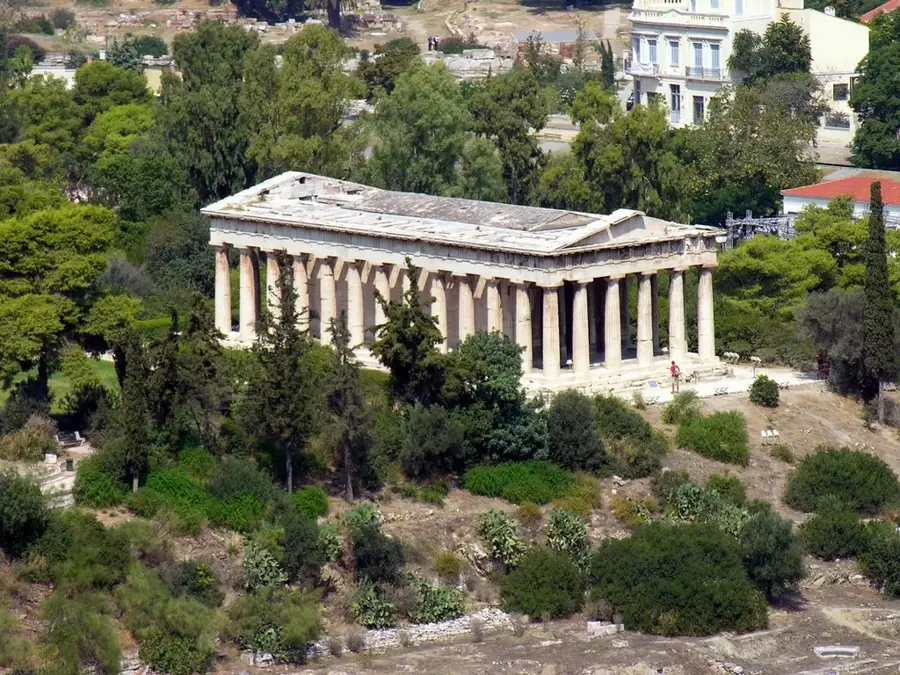
The Temple of Hephaestus, also known as the Hephaisteion, is the best-preserved ancient Greek temple in the world. It is located on the northwestern edge of the Ancient Agora of Athens on the Agoraios Kolonos hill. Built between 449 and 415 BC, the temple is a classic example of the Doric order and was constructed using precious Pentelic marble. It was dedicated to Hephaestus, the god of metalworking, and Athena Ergane, the patroness of crafts, which was particularly appropriate as the surrounding area was a hub for metalworkers and potters. The reason the temple remains so remarkably intact today is largely due to its conversion into a Christian church (St. George) from the 7th century until 1834. The temple's metopes depict the labors of Hercules and the exploits of Theseus, which led to it being incorrectly called the 'Theseion' in the past. Today, visitors can admire the impressive architecture, which has preserved almost all its columns, pediments, and even parts of the roof, making it an essential subject of study for classical Greek architecture.
- Location: Greece
- Top sights: Temple of Hephaestus · Arsenal · New Bouleuterion
- Nearby: South Athens (5 km)
Best time to visit & climate
The most pleasant time to visit is May, Sep, Oct.
| Jan | Feb | Mar | Apr | May | Jun | Jul | Aug | Sep | Oct | Nov | Dec | |
|---|---|---|---|---|---|---|---|---|---|---|---|---|
| Avg °C | 9 | 10 | 12 | 15 | 20 | 25 | 28 | 27 | 24 | 19 | 15 | 11 |
| Rain mm | 66 | 58 | 53 | 30 | 21 | 20 | 12 | 8 | 29 | 49 | 69 | 86 |
📋 Practical info
Geography
Facts
- The architect of the temple was likely the same person who designed the Temple of Ares.
- The temple features 6 columns on the narrow sides and 13 on the long sides.
- In 1834, the temple served as the first location for the National Archaeological Museum.
- The bronze statues of Hephaestus and Athena that stood inside have unfortunately been lost.
- It is one of the few ancient temples to retain a large portion of its original ceiling.
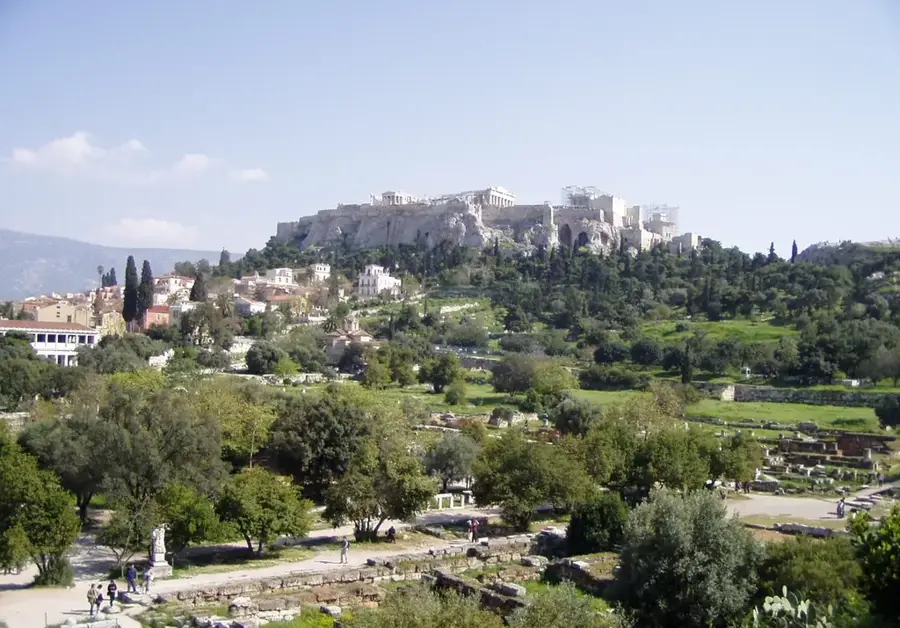
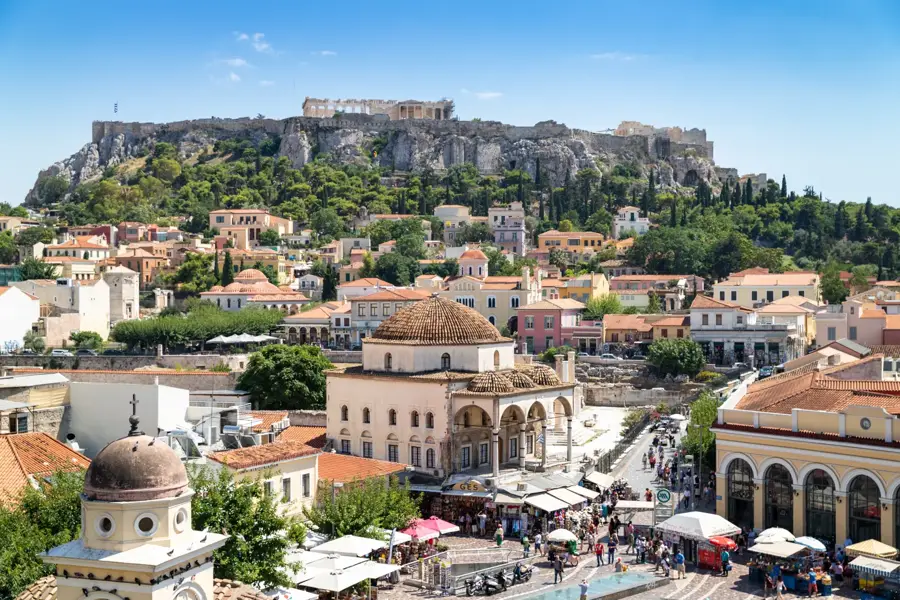
- The Agoraios Kolonos hill offers an outstanding view of the Acropolis.
Explore nearby
Notable places around
Route planner — Car & Motorhome
Where do you start? We build the route here, with stops and country notes along the way.
© OpenStreetMap contributors · OpenRouteService
Sights in the town Temple of Hephaestus (9)
Temple of Apollo Patroos
Temple of Apollo Patroos, the mythical ancestor of the Athenians, in the Agora.
Monument of the Eponymous Heroes
Base with statues of the ten tribal heroes of Athens, used for public notices.
Odeon of Agrippa
Large covered theatre for musical performances in the Athenian Agora.
Herakleidon Museum (Annex - Now closed)🏛 museum
Former museum of ancient Greek technology and art, currently closed.
Hole in the ground
Undefined archaeological pit within the ancient Agora area.
Sights nearby
Frequently asked questions
Where exactly is the temple located?
Why is this temple so well preserved?
Do I need a separate ticket for this temple?
Is there shade there?
What do the temple friezes depict?
Temple of Hephaestus: where is it located?
Temple of Hephaestus: what is there to see?
Temple of Hephaestus: when is the best time to visit?
Temple of Hephaestus: why is it worth visiting?

Nearby cities



History & landmarks