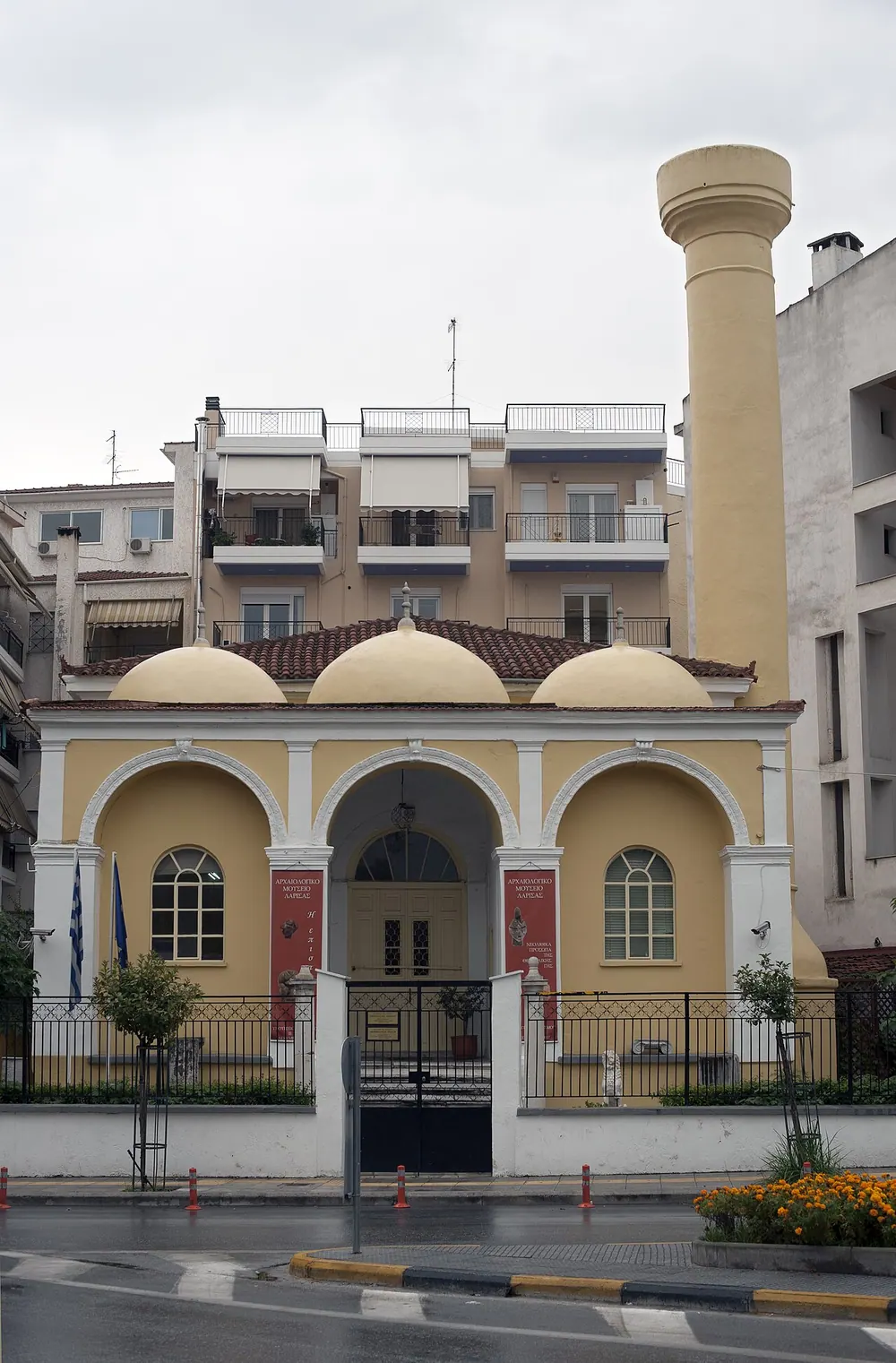
Geni Tzami
The Yeni Mosque (Yeni Tzami), located in the heart of Larissa, Greece, is a prominent historical monument that stands as a testament to the city's diverse cultural and architectural heritage. Constructed in the late 19th to early 20th century during the final period of Ottoman rule in the region, its name literally translates to "New Mosque." It was built to serve the religious needs of the local Muslim community before the demographic shifts of the 20th century. Architecturally, the mosque is notable for its blend of traditional Ottoman design with neoclassical elements, reflecting the transitional aesthetic of its era. Following the departure of the Muslim population, the building found new life and significance within the Greek community. For decades, it proudly served as the home of the Archaeological Museum of Larissa, housing invaluable regional artifacts and preserving Thessalian history before the museum relocated to a modern facility. Today, the Yeni Mosque is recognized as an important archaeological and cultural site. Its elegant facade, distinctive windows, and historical aura make it a captivating landmark for visitors exploring Larissa, offering a tangible link to the multifaceted history of Thessaly.
Weather…
Best time to visit & climate
The most pleasant time to visit is May, Jun, Sep.
| Jan | Feb | Mar | Apr | May | Jun | Jul | Aug | Sep | Oct | Nov | Dec | |
|---|---|---|---|---|---|---|---|---|---|---|---|---|
| Avg °C | 6 | 7 | 10 | 14 | 20 | 25 | 28 | 28 | 23 | 17 | 12 | 7 |
| Rain mm | 49 | 43 | 50 | 33 | 36 | 29 | 29 | 22 | 48 | 54 | 48 | 60 |
Practical info
Tips
- Take a walking tour of the city center to see how this monument fits into Larissa's multi-layered history.
- Enjoy a coffee in one of the nearby cafes while taking in the view of the building.
FAQ
What is the Yeni Mosque in Larissa?
Can visitors enter the building today?
Why is the architecture unique?
Where is it located?
Route planner — Car & Motorhome
Where do you start? We build the route here, with stops and country notes along the way.
© OpenStreetMap contributors · OpenRouteService