Plizio Visual Lab
San Antonio de Palé
ℹ️Practical info — San Antonio de Palé
▾
🌤 Weather — 5 days
📍 Nearby
Sights nearby
💡 Tips
- Prepare for a very basic infrastructure; electricity and running water are not always guaranteed.
- Bring all necessary medications and specialized travel gear with you.
- Transport (flights or boats) from the mainland is highly irregular; plan for flexible travel dates.
- Bring plenty of cash (CFA franc) as there are no reliable ATMs on the island.
🍽 Food
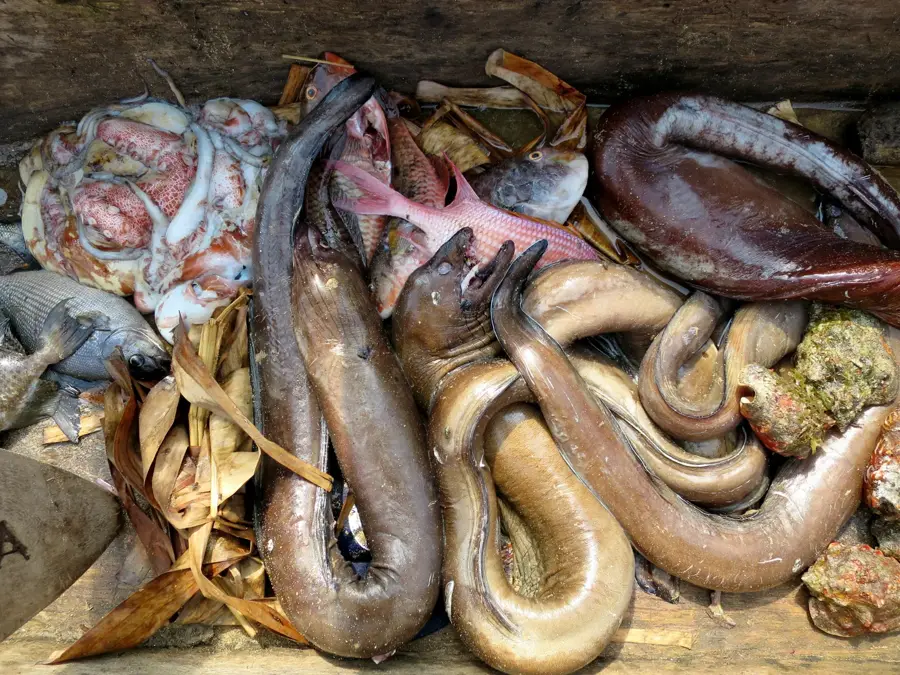
Buy fresh fish directly at the small harbor or try it prepared in local family kitchens.
The island's staple foods, often served as a simple but filling side dish.
Check the tiny grocery shops for basic supplies shipped in from Malabo.
🛍 Shopping · 🧘 Quiet spots
Handmade woven goods can be purchased directly from local artisans in the village.
The best (and only) place for daily supplies; always pay with cash.
A quiet volcanic crater lake, excellent for a solitary nature hike.
Remote, untouched stretches of sand far from the main settlement.
Water temperature…
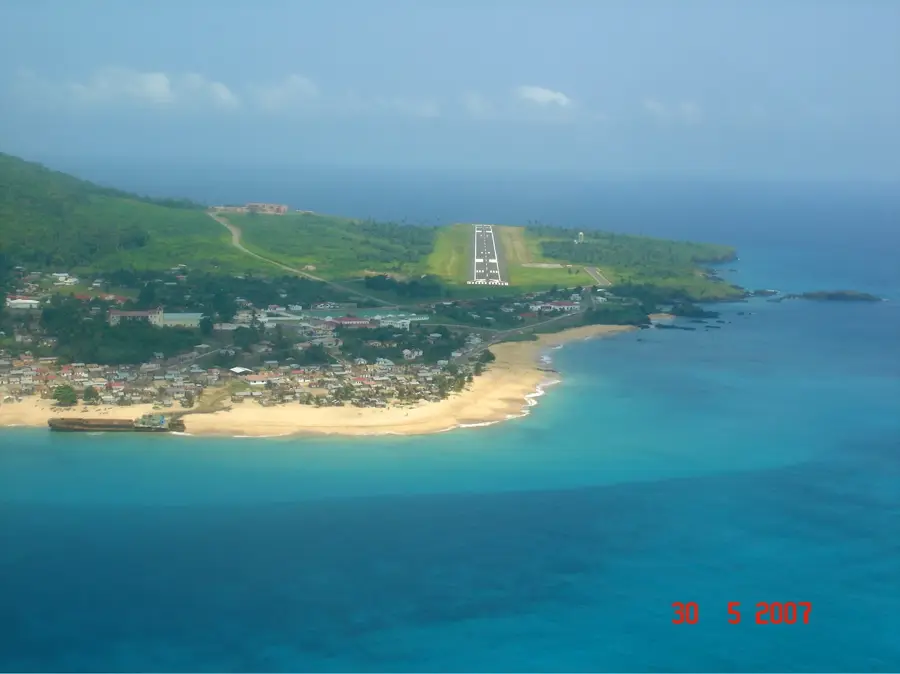
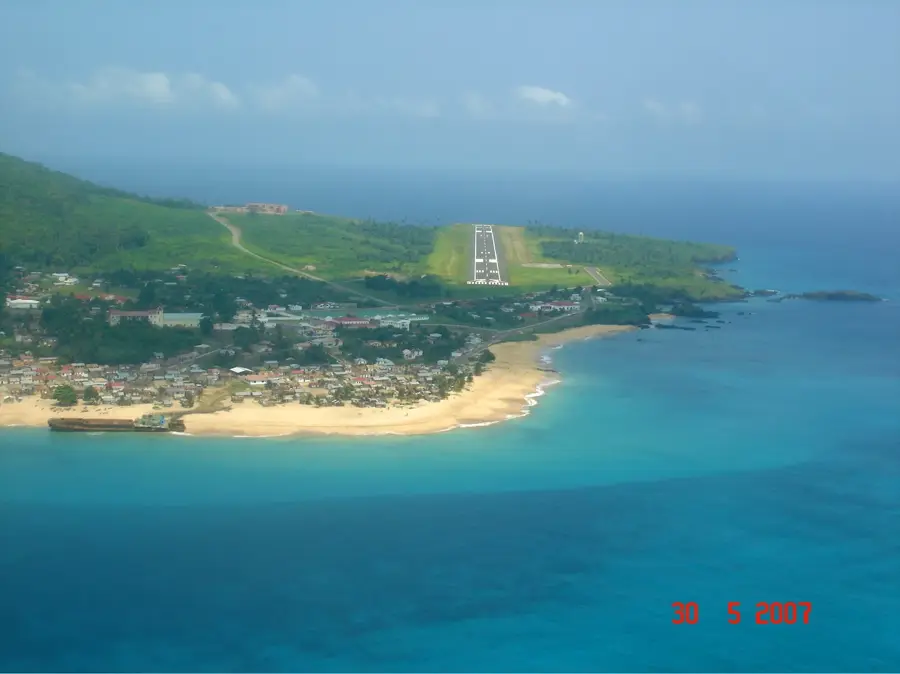
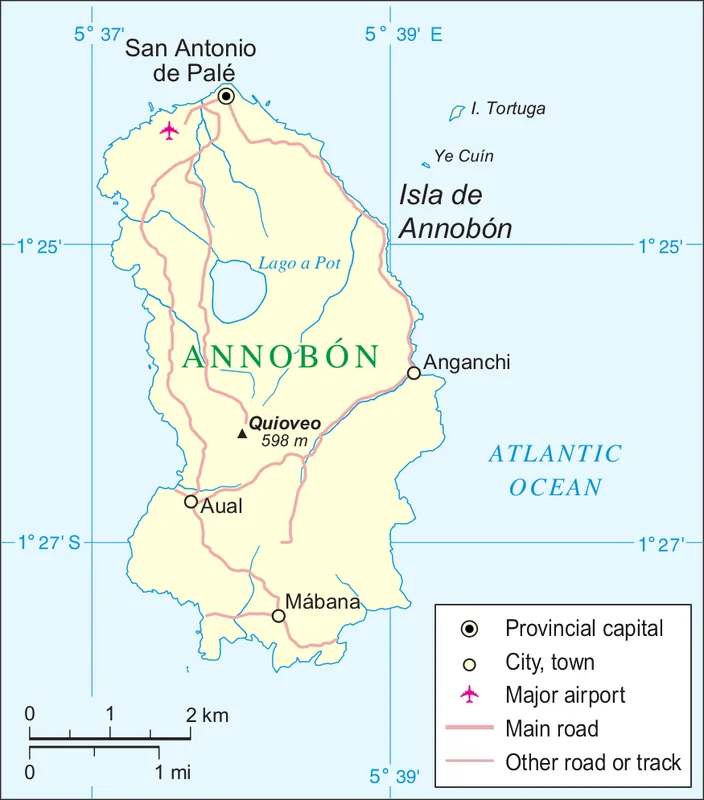
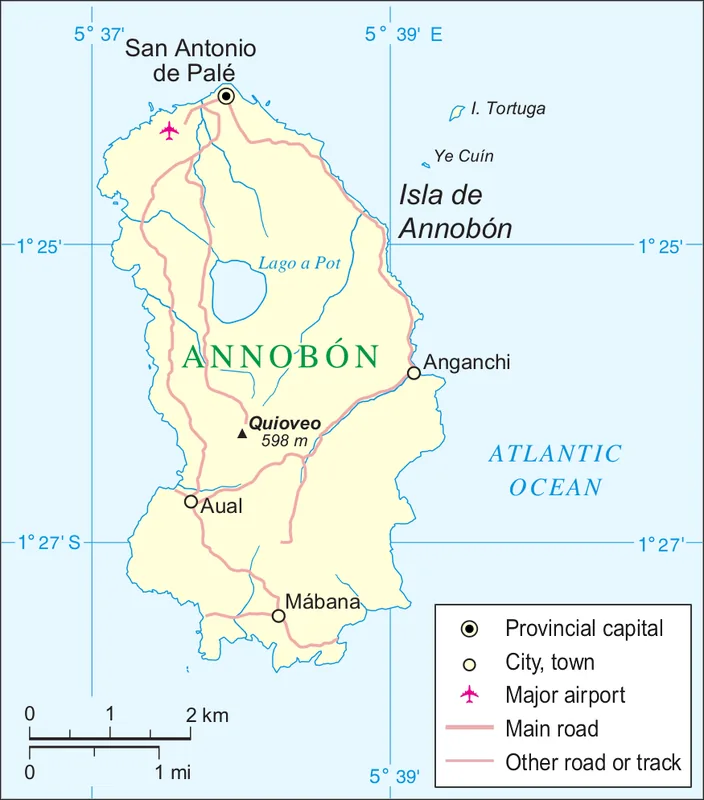
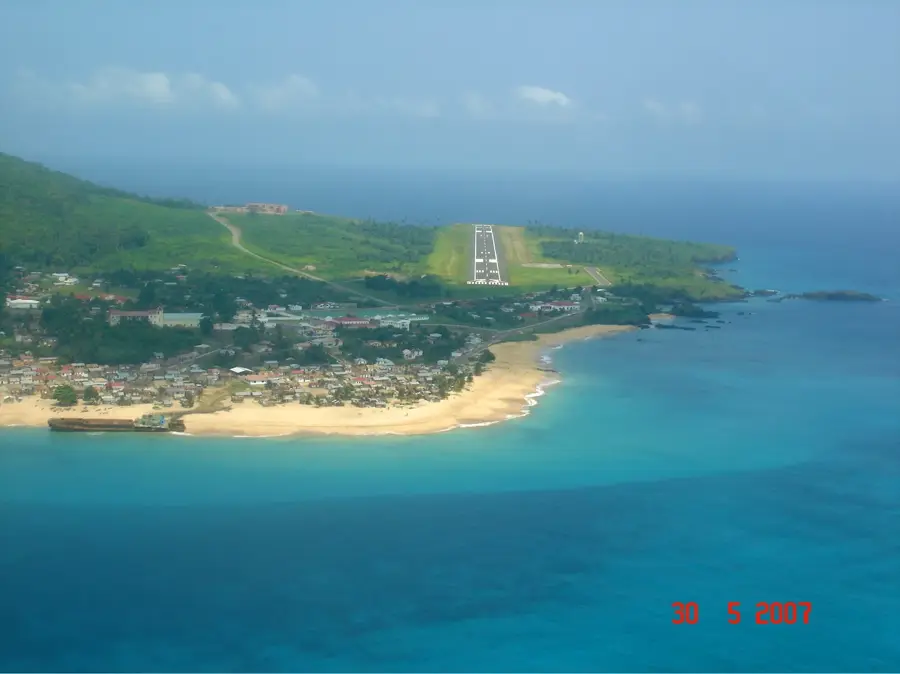
San Antonio de Palé is the remote and scenic capital of Annobón Island, the southernmost province of Equatorial Guinea. Located in the South Atlantic Ocean, south of the equator, the town serves as the primary gateway to this isolated volcanic island. Founded during the period of Portuguese exploration in the 15th century, the town's history is deeply intertwined with the colonial maritime routes. This legacy is preserved in the local language, Fá d'Ambô, a unique Portuguese-based creole that distinguishes the islanders from the Spanish-speaking mainland. The town is situated on a narrow coastal strip on the island's northern shore, characterized by dark volcanic sands and rugged cliffs. Life in San Antonio de Palé is intimately connected to the sea, with fishing being the primary economic activity and source of sustenance for its inhabitants. The town's architecture has seen significant modernization in recent years, with the construction of a new deep-water port and an expanded airport runway that has reduced the island's historical isolation. Despite these developments, San Antonio de Palé retains a tranquil, slow-paced atmosphere where community bonds are paramount. The surrounding landscape is dominated by lush green volcanic peaks and the crater lake known as Lago A Pot, which provides a dramatic contrast to the blue expanse of the Atlantic. The climate is tropical maritime, characterized by high humidity and consistent temperatures, moderated by oceanic breezes. Culturally, the town is known for its animated religious festivals and traditional music that reflects a mix of African and Iberian influences. The waters around the town are famous for their rich marine life, particularly as a sanctuary for humpback whales during their seasonal migrations. As the administrative center of Annobón, San Antonio de Palé houses the provincial government offices and basic social services, serving as a resilient outpost of Equatorial Guinean sovereignty in the vastness of the Atlantic Ocean.
- Location: Equatorial Guinea
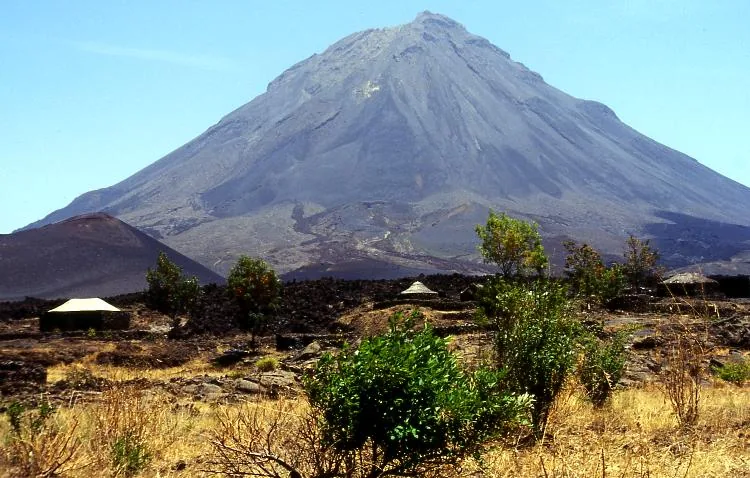
- Top sights: Playa del Palmar · Playa de Amor · Pico del Fuego
- Population: ~4.433 (2025)
Best time to visit & climate
The most pleasant time to visit is Jun–Aug.
| Jan | Feb | Mar | Apr | May | Jun | Jul | Aug | Sep | Oct | Nov | Dec | |
|---|---|---|---|---|---|---|---|---|---|---|---|---|
| Avg °C | 27 | 27 | 28 | 28 | 27 | 24 | 23 | 24 | 25 | 26 | 26 | 27 |
| Rain mm | 143 | 133 | 163 | 150 | 67 | 9 | 4 | 4 | 6 | 28 | 79 | 129 |
Geography
Facts
- San Antonio de Palé is the smallest provincial capital in Equatorial Guinea.
- The town is located roughly 600 kilometers south of the national capital, Malabo.
- The island of Annobón is only 17 square kilometers in total area.
- The local creole language contains elements of 15th-century Portuguese.
- San Antonio de Palé recently received 24-hour electricity through a new solar plant.
- The port expansion has allowed larger supply ships to dock for the first time.
- Humpback whales can often be seen from the shore between July and September.
- The town's population is almost entirely of mixed African and Portuguese descent.
Explore nearby
Notable places around
Route planner — Car & Motorhome
Where do you start? We build the route here, with stops and country notes along the way.
© OpenStreetMap contributors · OpenRouteService
Sights in the town San Antonio de Palé (4)
Frequently asked questions
Where is San Antonio de Palé located?
How can you get to Annobón Island?
When is the best time to visit San Antonio de Palé?
Are there tourist services there?
What are the highlights of the island?
San Antonio de Palé: where is it located?
San Antonio de Palé: what is there to see?
San Antonio de Palé: when is the best time to visit?
San Antonio de Palé: why is it worth visiting?

History & landmarks
More places