Plizio Visual Lab
Yungang Grottoes
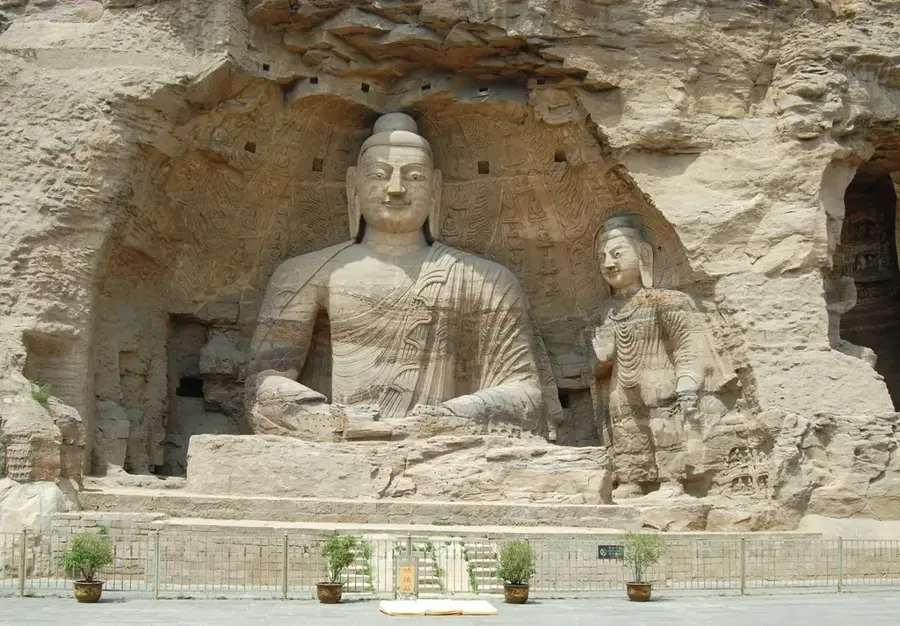
The Yungang Grottoes, located in Shanxi Province near Datong, represent one of the most magnificent examples of early Chinese Buddhist cave art from the 5th and 6th centuries. Construction began around 460 AD under the direction of the monk Tan Yao and the patronage of the Northern Wei Dynasty, continuing for several decades as a symbol of imperial authority. The site contains 252 caves carved into the sandstone cliffs, housing more than 51,000 statues ranging from tiny figures to a monumental 17-meter-tall Buddha. Architecturally, the grottoes showcase a unique blend of South Asian, Central Asian, and even Hellenistic influences integrated with traditional Chinese styles, reflecting the cultural exchange along the Silk Road. In 2001, the complex was inscribed as a UNESCO World Heritage site, recognized for its exceptional preservation and artistic significance. Despite centuries of environmental erosion and historical damage, the grottoes remain a vital archaeological site providing deep insights into the social history, music, and religious life of ancient Northern China.
- Location: China
- Top sights: Cave 39 · Cave 21 · Cave 16
- Nearby: Datong (19 km)
Best time to visit & climate
The most pleasant time to visit is Jun–Aug.
| Jan | Feb | Mar | Apr | May | Jun | Jul | Aug | Sep | Oct | Nov | Dec | |
|---|---|---|---|---|---|---|---|---|---|---|---|---|
| Avg °C | -11 | -6 | 0 | 8 | 15 | 20 | 22 | 20 | 15 | 7 | -2 | -10 |
| Rain mm | 3 | 5 | 9 | 22 | 36 | 62 | 103 | 88 | 65 | 26 | 11 | 3 |
📋 Practical info
Geography
Facts
- Construction began in 460 AD during the Northern Wei Dynasty.
- The site features 252 caves housing more than 51,000 statues.
- The largest Buddha statue stands at a height of 17 meters.
- UNESCO added the site to the World Heritage List in 2001.
- The grottoes span a distance of approximately one kilometer.
- The project was largely completed between 460 and 524 AD.
Explore nearby
Notable places around
Route planner — Car & Motorhome
Where do you start? We build the route here, with stops and country notes along the way.
© OpenStreetMap contributors · OpenRouteService
Sights in the town Yungang Grottoes (5)
Sights nearby
Frequently asked questions
What are the Yungang Grottoes?
Where are the grottoes located?
How old are the sculptures?
Are you allowed to take photos inside the caves?
How much time should you plan for the visit?
Yungang Grottoes: where is it located?
Yungang Grottoes: what is there to see?
Yungang Grottoes: when is the best time to visit?
Yungang Grottoes: why is it worth visiting?

Nearby cities

History & landmarks
More places