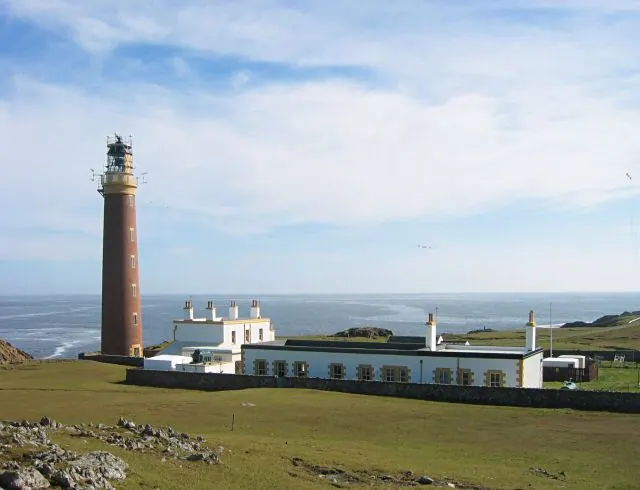
Butt of Lewis Lighthouse
The Butt of Lewis Lighthouse stands at the northern tip of the Isle of Lewis in the Outer Hebrides, Scotland. Constructed in 1862 by the renowned engineer David Stevenson, this towering structure has guided mariners safely past the rugged North Atlantic coastline for over a century. Unlike most traditional Scottish lighthouses which are painted white, it is notable for its unpainted red brick exterior, giving it a striking appearance against the stormy Hebridean sky.
Rising 37 meters, the lighthouse sits atop dramatic sea cliffs that drop precipitously into the churning ocean. The location is legendary for its wild weather and is frequently cited in the Guinness Book of Records as the windiest place in the UK. The power of nature is palpable here, with colossal waves crashing against the rocks during Atlantic gales, making it a thrilling destination for storm watchers.
Beyond the lighthouse, the surrounding area is rich in coastal wildlife and spectacular scenery. The cliffs provide nesting sites for seabirds, and the expansive ocean views offer opportunities to spot marine mammals like seals, dolphins, and whales. A visit provides a profound sense of isolation and raw natural beauty.
Weather…
Practical info
Tips
- Bring binoculars for spotting seabirds and marine life.
- Check the weather forecast closely before your visit.
- Keep a safe distance from the cliff edges at all times.
FAQ
What is the Butt of Lewis Lighthouse?
Why is the lighthouse red?
Can visitors go inside the lighthouse?
Is it really the windiest place in the UK?
What wildlife can be seen there?
Route planner — Car & Motorhome
Where do you start? We build the route here, with stops and country notes along the way.
© OpenStreetMap contributors · OpenRouteService
Attractions nearby
- Dùn Èistean 2 km
- Arnish Point Lighthouse 37 km