Plizio Visual Lab
Cristo Rei Macaque Habitat
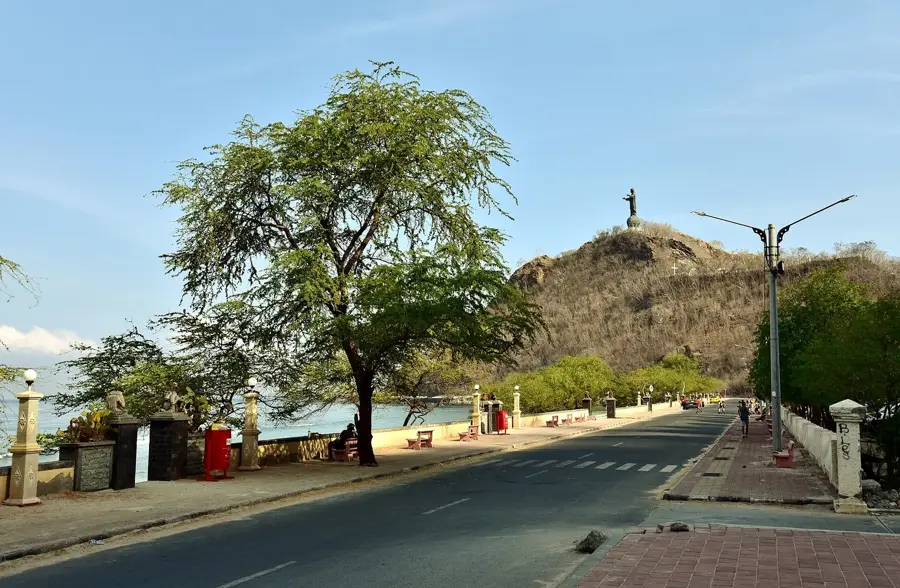
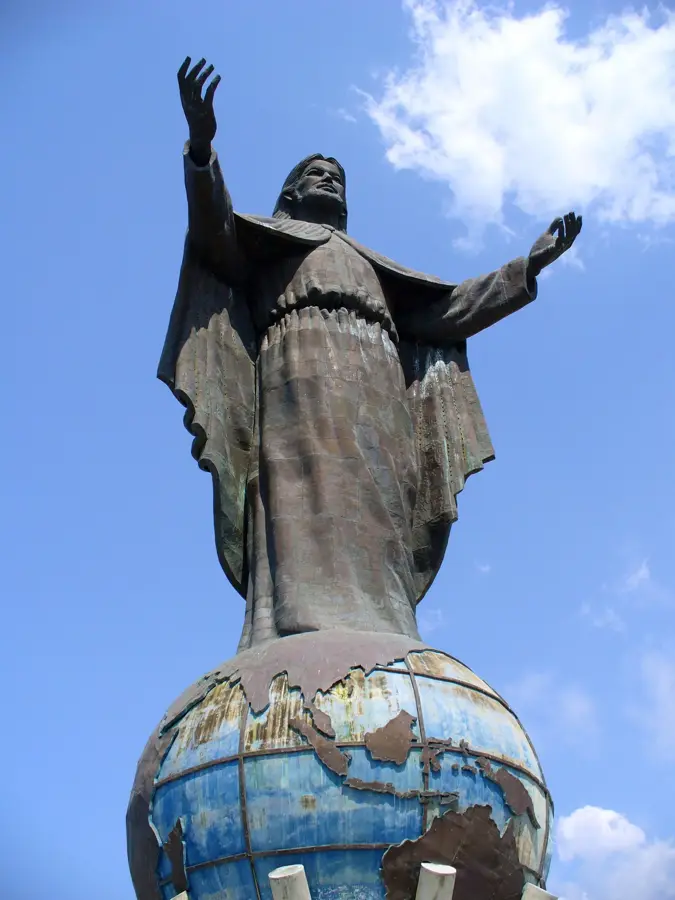
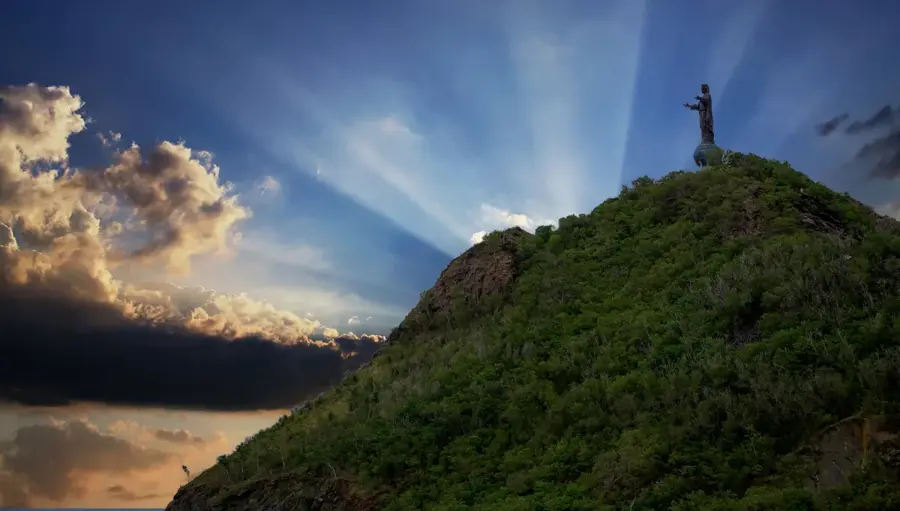
The macaque habitat at Cristo Rei spans the forested slopes of the Fatucama Peninsula, situated directly behind the monumental Christ statue in Dili. This area supports a significant population of long-tailed macaques (Macaca fascicularis), which have adapted to the rugged coastal landscape and human proximity. These primates play a crucial role in the local ecosystem by facilitating seed dispersal for native vegetation. Historically, the area around Fatucama was largely undisturbed, but the development of the Cristo Rei site in 1996 led to increased interactions between macaques and visitors. The animals are renowned for their agility in climbing steep cliffs and utilize both forest resources and occasionally the coastal zone for foraging. Conservation efforts focus on maintaining a balance between the recreational use of the trail and the protection of natural habitats. Visitors are strongly encouraged not to feed the animals to prevent aggressive behavior and ecological disruption.
- Location: Timor-Leste
- Top sights: Praia · Station IV
- Nearby: Aileu (14 km)
Best time to visit & climate
The most pleasant time to visit is Jun–Aug.
| Jan | Feb | Mar | Apr | May | Jun | Jul | Aug | Sep | Oct | Nov | Dec | |
|---|---|---|---|---|---|---|---|---|---|---|---|---|
| Avg °C | 27 | 26 | 27 | 27 | 27 | 26 | 26 | 26 | 27 | 29 | 29 | 28 |
| Rain mm | 243 | 203 | 120 | 54 | 33 | 21 | 8 | 4 | 5 | 13 | 54 | 167 |
📋 Practical info
Geography
Facts
- The species Macaca fascicularis is widely distributed across Southeast Asia.
- The macaque population at Cristo Rei is estimated to consist of several dozen individuals.
- The statue and the access path were officially inaugurated in 1996.
- Long-tailed macaques can live for up to 30 years in the wild.
- The primates frequently use the 597 steps of the path as a thoroughfare.
- Their diet consists mainly of fruits, seeds, and occasionally small crabs found along the shore.
Explore nearby
Notable places around


Route planner — Car & Motorhome
Where do you start? We build the route here, with stops and country notes along the way.
© OpenStreetMap contributors · OpenRouteService
Sights in the town Cristo Rei Macaque Habitat (2)
Sights nearby
Frequently asked questions
Can you safely observe monkeys at Cristo Rei?
What time are the monkeys active?
Is the area safe for children?
Is access free?
What should you not do?
Cristo Rei Macaque Habitat: where is it located?
Cristo Rei Macaque Habitat: what is there to see?
Cristo Rei Macaque Habitat: when is the best time to visit?
Cristo Rei Macaque Habitat: why is it worth visiting?
Nearby cities
History & landmarks

Nature
More places