Plizio Visual Lab
Mito
ℹ️Practical info — Mito
▾
🌤 Weather — 5 days
📍 Nearby
Sights nearby
💡 Tips
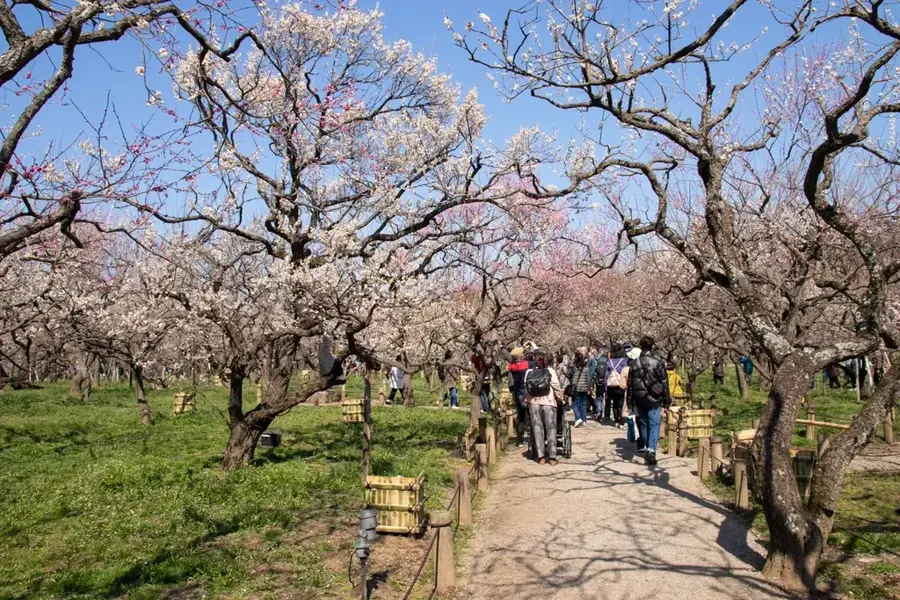
- Visit Kairakuen Garden early in the morning, especially during the plum blossom season (late Feb to March), to avoid the biggest crowds.
- Use the city loop bus, which conveniently connects Mito Station to the main historical attractions.
- Be sure to try natto (fermented soybeans), the city's most famous specialty, even if the smell takes some getting used to.
- If you're looking for souvenirs, the station building has an excellent selection of regional products.
🍽 Food
Fermented soybeans, often served for breakfast or easily bought at local grocery stores.
A hearty noodle soup with root vegetables, typically found in traditional restaurants near the station.
Anglerfish hot pot, a warming winter specialty of Ibaraki prefecture, often found in local izakayas.
🛍 Shopping · 🧘 Quiet spots
Ibaraki is famous for plum wine. Look for local bottles in liquor stores around the city.
Handy for last-minute souvenirs, especially natto-flavored snacks and local sweets.
A calm lake just below Kairakuen, featuring a scenic walking path and plenty of swans.
The former school of the Tokugawa clan, offering a quiet, historical atmosphere away from the main parks.
Water temperature…
Mito, the capital of Ibaraki Prefecture, is a historic city located on the northern edge of the Kanto Plain, deeply tied to the heritage of the Tokugawa Shogunate. During the Edo period, it served as the seat of the Mito branch of the Tokugawa clan, one of the three prestigious families allowed to produce a shogun. This legacy is most vibrantly preserved in Kairakuen Garden, ranked as one of Japan's three finest landscape gardens. Established in 1842 by the ninth lord, Tokugawa Nariaki, the garden features over 3,000 plum trees and was uniquely designed for public enjoyment, a revolutionary concept at the time. Adjacent to the garden lies the Kodokan, which was the largest han (fief) school in Japan, emphasizing both literary and martial arts and giving rise to the 'Mito School' of thought that significantly influenced the Meiji Restoration. Geographically, the city is situated along the Naka River and centers around Lake Senba, a scenic body of water that provides a sanctuary for swans and diverse birdlife. Economically, Mito is Japan's most famous producer of natto (fermented soybeans), a tradition that started in the late 19th century and remains a staple of the local economy and identity. The skyline features the Art Tower Mito, a 100-meter-tall titanium helix tower that acts as a beacon for the city's commitment to contemporary arts and music. With a population of about 270,000, Mito serves as the administrative and cultural heart of Ibaraki, hosting the annual Mito Plum Festival, which attracts millions of visitors. The city's blend of Confucian educational traditions, exquisite garden aesthetics, and modern artistic venues makes it a key destination for understanding Japan's transition from feudalism to a modern nation.
- Location: Japan
- Top sights: Mito Shrine · Remains of Kawawada Castle · Kashima Shrine
- Nearby: Hitachinaka (8 km)
- Population: ~270.685 (2024)
Best time to visit & climate
The most pleasant time to visit is May, Jun, Sep.
| Jan | Feb | Mar | Apr | May | Jun | Jul | Aug | Sep | Oct | Nov | Dec | |
|---|---|---|---|---|---|---|---|---|---|---|---|---|
| Avg °C | 4 | 4 | 7 | 12 | 17 | 20 | 24 | 25 | 22 | 17 | 12 | 6 |
| Rain mm | 63 | 54 | 96 | 119 | 133 | 151 | 176 | 144 | 184 | 203 | 89 | 66 |
Live webcam – Mito
See what it looks like near Mito right now.
Mito · 0.2 km · Open webcam on Windy · Webcams provided by Windy.com
Geography
Facts
- Mito is located at an elevation of about 30 meters above sea level.
- The Kairakuen Garden features the Kobuntei, a traditional three-story villa.
- Natto production in Mito exceeds 10,000 tons annually.
- The Mito Plum Festival attracts more than 1 million visitors each year.
- Mito City was officially incorporated on April 1, 1889.
- The city's climate is humid subtropical with warm summers and cool winters.
- Tokugawa Nariaki wrote the 'Kairakuen-ki' to explain the garden's philosophy.
- The Naka River flows into the Pacific Ocean at Oarai, near Mito.
Explore nearby
Notable places around
Route planner — Car & Motorhome
Where do you start? We build the route here, with stops and country notes along the way.
© OpenStreetMap contributors · OpenRouteService
Sights in the town Mito (14)
The Tokugawa Museum🏛 museum
This museum preserves the legacy of the Mito branch of the Tokugawa family with historic armor and documents.
Frequently asked questions
What is the main attraction of Mito?
When should you visit Kairakuen?
What food is Mito famous for?
How far is Mito from Tokyo?
Are there museums in Mito?
Mito: where is it located?
Mito: what is there to see?
Mito: when is the best time to visit?
Mito: why is it worth visiting?

Nearby cities