Da Zhong Yi Ji
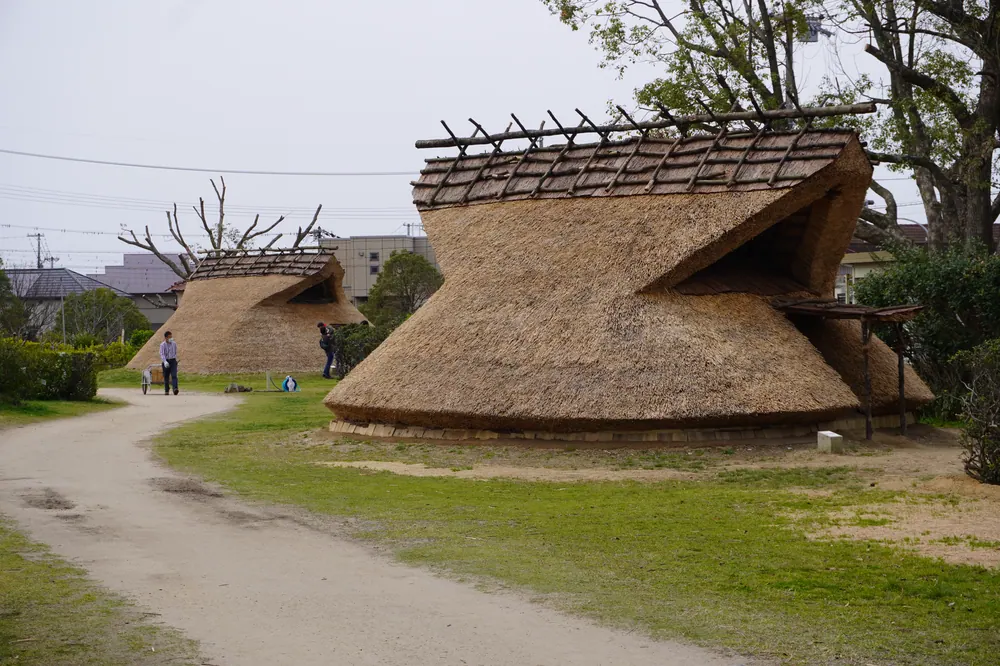
The Ōnaka Site is a significant archaeological area located in Harima, Hyogo Prefecture, Japan, offering a fascinating window into the country's ancient history. Discovered in 1962, this extensive site primarily preserves the remains of a large-scale settlement dating back to the late Yayoi period and the early Kofun period. It was designated as a National Historic Site by the Japanese government in 1967 due to its remarkable state of preservation and historical value. Visitors to the Ōnaka Site can explore a carefully reconstructed ancient village landscape. The grounds feature numerous life-sized replicas of traditional pit dwellings (tateana-jukyo) that demonstrate how people lived, worked, and built their homes thousands of years ago. The layout of the village provides crucial insights into the social structure and daily routines of early Japanese agrarian communities. Today, the site functions as an expansive historical park where visitors can walk freely among the reconstructed buildings and excavated areas. It is closely associated with the nearby Hyogo Prefectural Museum of Archaeology, where many of the artifacts unearthed from the Ōnaka Site are displayed.
Weather…
Best time to visit & climate
The most pleasant time to visit is May, Oct, Nov.
| Jan | Feb | Mar | Apr | May | Jun | Jul | Aug | Sep | Oct | Nov | Dec | |
|---|---|---|---|---|---|---|---|---|---|---|---|---|
| Avg °C | 7 | 7 | 10 | 14 | 18 | 22 | 26 | 27 | 24 | 19 | 14 | 9 |
| Rain mm | 56 | 71 | 101 | 112 | 138 | 191 | 204 | 149 | 194 | 159 | 80 | 72 |
Practical info
Tips
- Combine your outdoor walk with a visit to the Hyogo Prefectural Museum of Archaeology.
- Wear comfortable walking shoes as the site covers a wide open area.
- Look out for local information boards to learn more about the architectural details of the pit dwellings.
FAQ
What is the Ōnaka Site?
What historical period do the ruins belong to?
Is there a museum nearby?
Is the site easily accessible?
Route planner — Car & Motorhome
Where do you start? We build the route here, with stops and country notes along the way.
© OpenStreetMap contributors · OpenRouteService