Plizio Visual Lab

Qutb Minar

Plizio editorial teamData Sources
monument
—°17
Qutb Minar (India)

Weather…

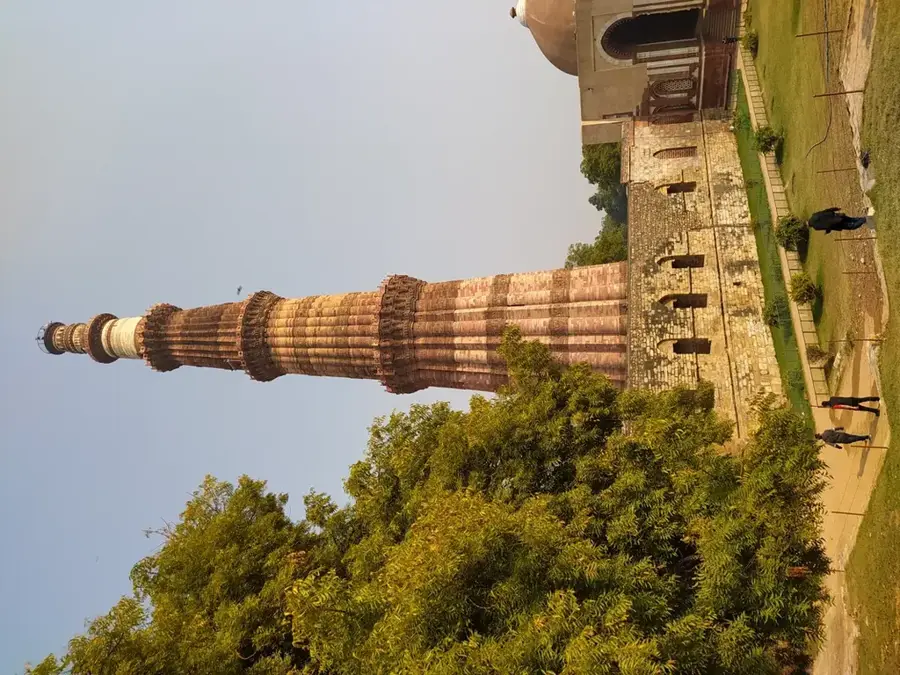
The Qutb Minar in Delhi stands at a height of 72.5 meters, making it one of the tallest brick minarets in the world and a seminal example of early Indo-Islamic architecture. Construction was initiated in 1192 by Qutb-ud-din Aibak, the founder of the Delhi Sultanate, and was completed by his successors Iltutmish and Firoz Shah Tughlaq over the 13th and 14th centuries. The tower features five distinct storeys, tapering towards the top, and is decorated with intricate carvings of Quranic verses and floral motifs etched into red sandstone and marble. It functioned as both a victory tower and a minaret for the adjacent Quwwat-ul-Islam Mosque, symbolizing the establishment of Muslim rule in northern India. Within the complex lies the famous 4th-century iron pillar, which has remained largely rust-free for over 1,600 years. Designated as a UNESCO World Heritage Site in 1993, the monument is a testament to the synthesis of diverse artistic traditions and historical layers of the capital.

Best time to visit & climate

The most pleasant time to visit is Feb, Mar, Nov.

JanFebMarAprMayJunJulAugSepOctNovDec
Avg °C141724303536333029262015
Rain mm1420181634711781751001147

📋 Practical info

🚪
Visiting
Qutb Minar is a publicly accessible minaret and part of the Qutb complex in Delhi. You can visit the entire grounds and the surrounding ruins during opening hours.
🕒
Typical hours
The Qutb complex typically has fixed opening hours, usually from sunrise to sunset. It is advisable to inquire on-site for exact timings.
📷
Photography
Photography is allowed throughout the complex, but without flash inside the mosque. For the best shots of the minaret, use the perspective from the back of the complex.
⏱️
Time needed
Allow about one to one and a half hours for a thorough visit of the Qutb complex. If you also want to visit the adjoining archaeological museum, plan for two hours.
Combine with
Combine the visit with the nearby Mehrauli Archaeological Park, which has many more historical ruins. The Lodi dynasty gardener's house is also worth a visit.
🧭
Getting there
Qutb Minar is easily reachable by Delhi Metro (Qutb Minar station). From the station, it is about a 10-minute walk to the complex.
💡
Insider tip
Visit the complex in the late afternoon when the light bathes the sandstone structures in warm tones. Bring water as it can get hot in the outdoor area.

Geography

Coordinates
28.52450, 77.18550

Facts

  • The minaret reaches a total height of 72.5 meters.
  • Construction began in 1192 under the orders of Qutb-ud-din Aibak.
  • The tower has a base diameter of 14.3 meters, tapering to 2.7 meters.
  • The top two storeys were added or repaired using white marble in 1368.
  • A total of 379 steps lead to the summit of the tower.
  • The entire complex was designated a UNESCO World Heritage Site in 1993.

Explore nearby

Notable places around

Route planner — Car & Motorhome

Where do you start? We build the route here, with stops and country notes along the way.

Vehicle
Only stops with (optional):

© OpenStreetMap contributors · OpenRouteService

Sights in the town Qutb Minar (17)

Kiran Nadar Museum of Art🏛 museum

India's first private modern art museum, housing a significant collection of contemporary South Asian works.

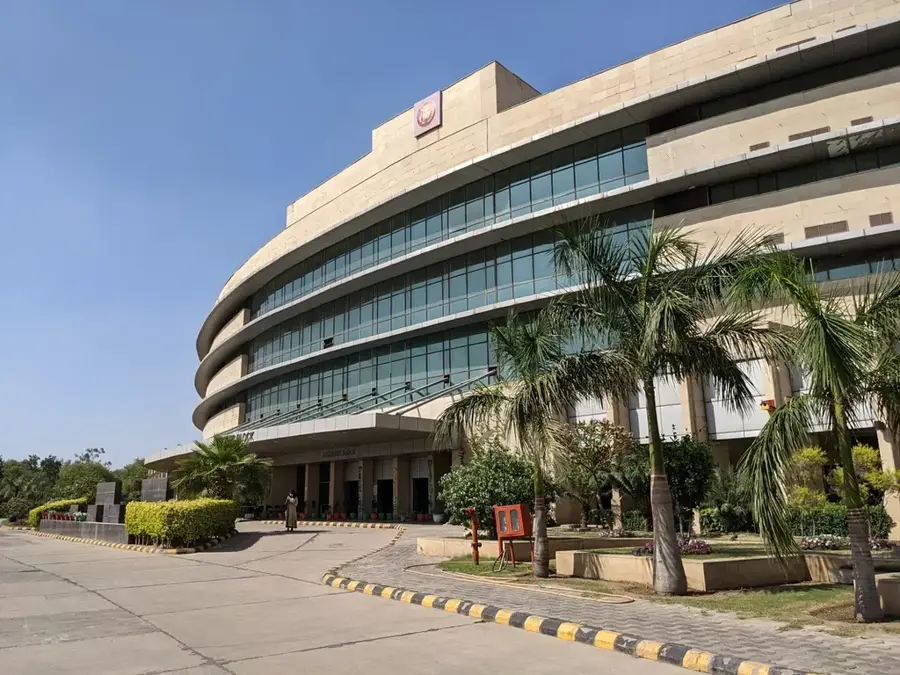
🕒 Tu-Su 10:30-18:30; PH closed

Titus Museum🏛 museum

A private museum in Delhi exhibiting an impressive collection of vintage cars and historical memorabilia.

Jahaz Mahal🏺 historical

A Lodi-era monument in Mehrauli known as the 'Ship Palace' due to its reflection in the adjacent lake.

Jamali Kamali Tomb🏺 historical

A magnificent 16th-century red sandstone tomb and mosque dedicated to the Sufi poet Jamali.

Iron Pillar🏺 historical

A 7-meter tall ancient pillar from the Gupta era, famous for its rust-resistant iron composition.

Qila Rai Pithora🛡️ fortress

The first fortified city of Delhi, featuring massive 12th-century stone ramparts built by Prithviraj Chauhan.

Yogmaya Temple⛪ religious

An ancient Hindu temple dedicated to the sister of Krishna, serving as the focal point of the Phool Walon Ki Sair festival.

Moti Masjid⛪ religious

A small white marble mosque located within the religious complex of Qutbuddin Bakhtiar Kaki.

St. Mary Orthodox Cathedral⛪ religious

A prominent orthodox church serving the Malankara Syrian community in the Hauz Khas area.

Siri Fort Auditorium🎭 culture

A major government cultural center and theater located near the 14th-century ruins of Siri Fort.

Qutub Minar Complex📍 landmark

A UNESCO site encompassing the famous Iron Pillar and ruins of the first Muslim structures in India.

Chor Minar📍 landmark

A 13th-century tower with 225 holes once used to display the severed heads of executed thieves.

Khirki Masjid📍 landmark

An unusual, fortress-like mosque featuring roofed courtyards and 81 small domes on its roof.

Lal Kot🏰 castle

The original citadel of the first city of Delhi, marked by its massive, weathered stone ramparts.

ASI Children's Museum🏛 museum

A museum for children featuring replicas of famous Indian sculptures and archaeological exhibits.

Deer Park🌳 park

A green oasis in Hauz Khas featuring a lake, walking paths, and a large herd of spotted deer.

The Garden of Five Senses🌳 park

A 20-acre landscaped park designed to stimulate all five senses through sculptures, flowers, and fragrances.

Sights nearby

Frequently asked questions

Can you climb to the top of Qutb Minar?
No, climbing the tower has been closed to the public for safety reasons since 1981.
What is the Iron Pillar in the complex?
An ancient pillar famous for its incredible rust-resistance, having remained corrosion-free for over 1,600 years.
How to reach Qutb Minar by metro?
The nearest station is 'Qutub Minar' on the Yellow Line, about 1.5 km away (a short rickshaw ride is recommended).
Is there a light show in the evening?
The complex is beautifully illuminated at night, offering great photo ops, though a formal sound and light show is not always held.
How tall is Qutb Minar?
The tower stands 72.5 meters tall and is the tallest brick minaret in the world.
Qutb Minar: where is it located?
Qutb Minar is located in India.
Qutb Minar: what is there to see?
Highlights include Kiran Nadar Museum of Art, Titus Museum, Jahaz Mahal.
Qutb Minar: when is the best time to visit?
The most pleasant time to visit is Feb, Mar, Nov.
Qutb Minar: why is it worth visiting?
The Qutb Minar in Delhi stands at a height of 72.5 meters, making it one of the tallest brick minarets in the world and a seminal example of early Indo-Islamic architecture.
View on map → The Top 50 Attractions → OpenStreetMap →
Asia
Explore with Plizio Discover more places in Asia
More places in India →

Nearby cities

Nature

More places