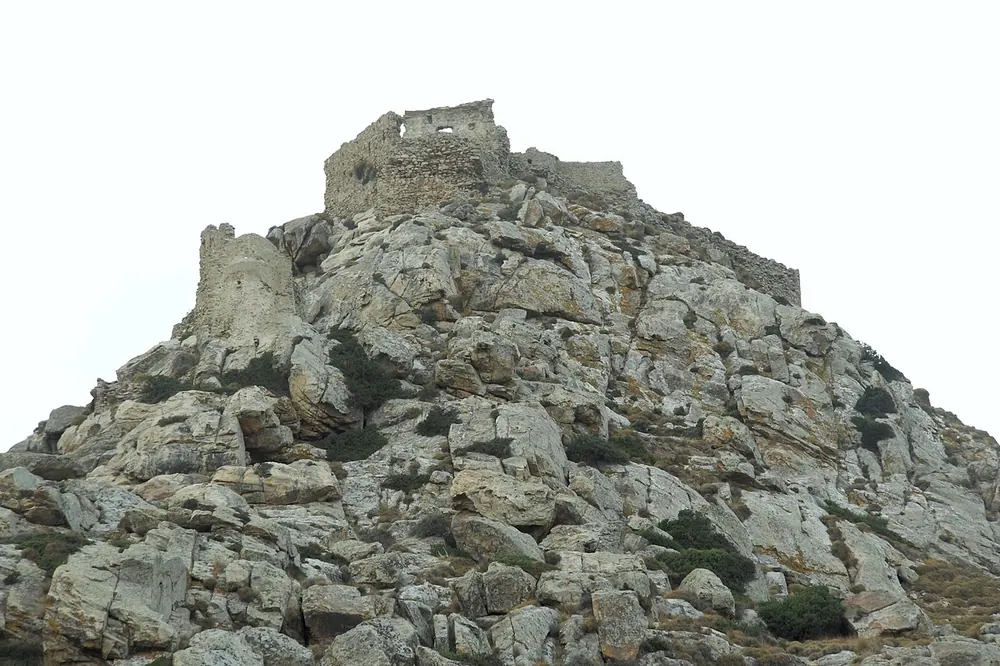
Apano Kastro
Apano Kastro (Upper Castle) is an impressive fortress ruin situated in the heart of the Greek island of Naxos. The complex majestically crowns a prominent, rocky hill between the traditional villages of Tsikalario and Potamia, offering a spectacular panoramic view over the expansive Tragea plateau and the surrounding mountains. The history of this site reaches far back; the castle was built upon the remains of an ancient Cyclopean wall to protect the fertile inland territories from pirate attacks.
Today, the site is a highly sought-after destination for hikers and history enthusiasts eager to explore the rugged, untouched natural landscapes of Naxos. The ascent can be quite challenging, but it rewards visitors with well-preserved wall fragments, old cisterns, and a mystical atmosphere.
The strategic location makes it immediately clear why this stronghold held such great military significance for centuries. Surrounded by wild vegetation, Apano Kastro remains an ideal place to experience the rich Byzantine and Venetian past of the Cyclades.
Weather…
Best time to visit & climate
The most pleasant time to visit is May, Jun, Oct.
| Jan | Feb | Mar | Apr | May | Jun | Jul | Aug | Sep | Oct | Nov | Dec | |
|---|---|---|---|---|---|---|---|---|---|---|---|---|
| Avg °C | 13 | 13 | 14 | 16 | 19 | 23 | 25 | 25 | 24 | 21 | 17 | 14 |
| Rain mm | 96 | 82 | 45 | 26 | 19 | 5 | 2 | 2 | 17 | 43 | 63 | 85 |
Practical info
Tips
- Wear proper hiking shoes to navigate the loose stones safely.
- Bring sufficient water, as there are no facilities along the trail or at the ruins.
FAQ
What is Apano Kastro?
How do I get to the castle?
Are there entrance fees or opening hours?
What should I bring for the visit?
What else is there to see nearby?
Route planner — Car & Motorhome
Where do you start? We build the route here, with stops and country notes along the way.
© OpenStreetMap contributors · OpenRouteService
Attractions nearby
- Agia Triada Tower 43 km
- Çeşme Kalesi 158 km
- Agios Nikolaos Pallon 172 km
- Dominican Monastery of Saint Peter 194 km
- Pharos Mpouza 196 km