Plizio Visual Lab
Tartu Observatory
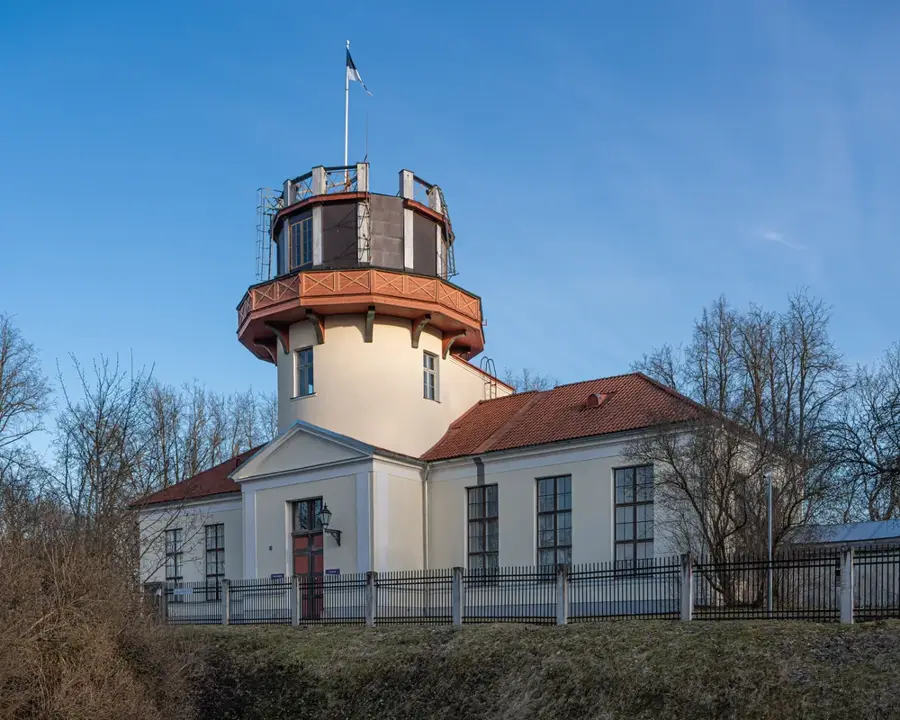
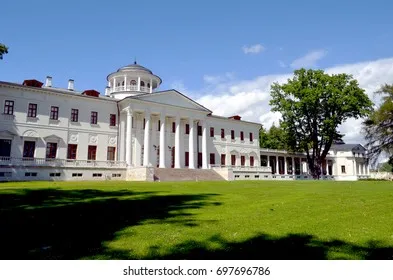
The Tartu Observatory, established in 1810, is a cornerstone of global astronomical history and scientific advancement. Under the directorship of Friedrich Georg Wilhelm Struve from 1820 to 1839, it became world-renowned for pioneering measurements of stellar parallax and the exact shape of the Earth. In 1824, the observatory installed the Great Fraunhofer Refractor, which was the world's largest and most powerful telescope at the time. The site serves as the starting point for the Struve Geodetic Arc, a UNESCO World Heritage site since 2005. Currently, the historical building operates as a museum under the University of Tartu, showcasing an extensive collection of 19th-century scientific instruments. Its Neoclassical design by architect Johann Wilhelm Krause features a functional rotating dome that symbolizes the era of Enlightenment science.
- Location: Estonia, Estonia
- Top sights: Tartu Old Observatory · Tiigi Seltsimaja · Juri Lotman
- Nearby: Elva (25 km)
Best time to visit & climate
The most pleasant time to visit is Jun–Aug.
| Jan | Feb | Mar | Apr | May | Jun | Jul | Aug | Sep | Oct | Nov | Dec | |
|---|---|---|---|---|---|---|---|---|---|---|---|---|
| Avg °C | -7 | -7 | -3 | 4 | 11 | 15 | 19 | 17 | 12 | 5 | 0 | -4 |
| Rain mm | 51 | 44 | 42 | 46 | 56 | 88 | 74 | 86 | 58 | 69 | 69 | 59 |
📋 Practical info
Geography
Facts
- Founded in 1810 as part of the University of Tartu.
- F.G.W. Struve directed the facility between 1820 and 1839.
- The 24-cm Fraunhofer refractor was the world's largest in 1824.
- UNESCO listed the site as part of the Struve Geodetic Arc in 2005.
- The first successful stellar parallax measurement occurred here in 1837.
- The building was designed by architect Johann Wilhelm Krause.
Explore nearby
Notable places around



Route planner — Car & Motorhome
Where do you start? We build the route here, with stops and country notes along the way.
© OpenStreetMap contributors · OpenRouteService
Sights in the town Tartu Observatory (10)
Angel's Bridge
Footbridge in Tartu, connects parts of Toome hill.
St. Luke's Church
Church building in Tartu, Estonia, used by the Lutheran congregation.
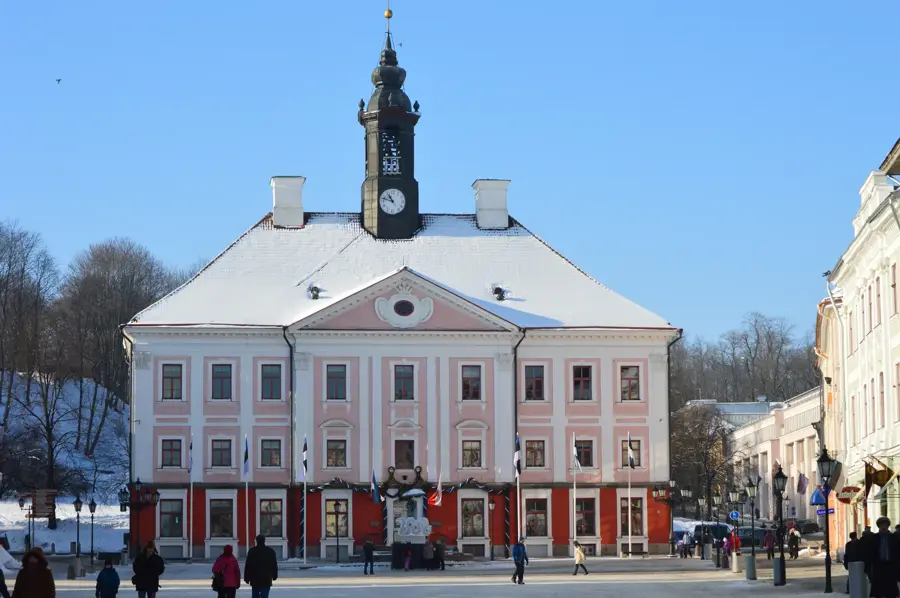
Town Hall
Town hall in Tartu, Estonia, a historic building on the square.
Devil's Bridge
Bridge in Tartu, a footbridge on Toome hill.
Maarja kirik
Church building in Tartu, Estonia, a historic church.
Toome hill🌳 park
Hill in Tartu, Estonia, with parks and historic buildings.
Vanemuine
Theatre in Tartu, one of the oldest Estonian theatres.
Sights nearby
Frequently asked questions
What is the historical significance of the observatory?
Is there a museum there?
Where is the observatory located?
Can you observe stars?
Is there a discount for students?
Tartu Observatory: where is it located?
Tartu Observatory: what is there to see?
Tartu Observatory: when is the best time to visit?
Tartu Observatory: why is it worth visiting?

Nearby cities