Plizio Visual Lab
Kakunodate Samurai District
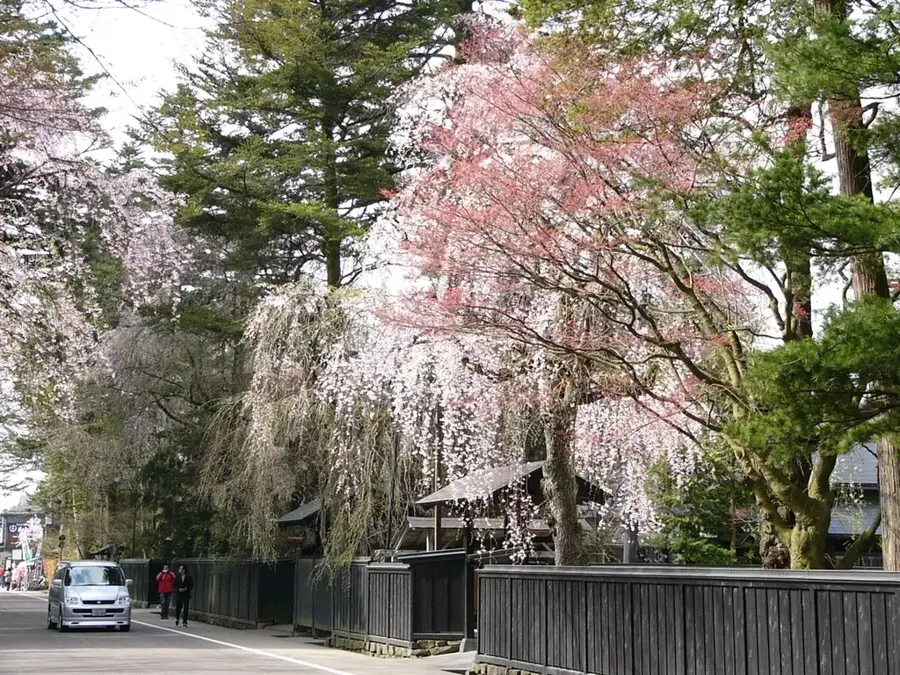
Kakunodate, located in Akita Prefecture, is often called the 'Little Kyoto of Tohoku' due to its remarkably well-preserved samurai district. The town was founded in 1620 by the Ashina family and later came under the rule of the Satake-Hokke clan. Its layout features a strict division between the samurai district (Uchimachi) to the north and the merchant district (Tomachi) to the south. The samurai quarters are famous for their wide streets lined with traditional black wooden fences and ancient weeping cherry trees (shidare-zakura), many of which were originally brought from Kyoto in the 17th century. Several prominent residences, such as the Aoyagi and Ishiguro houses, remain open to the public, showcasing authentic Edo-period architecture and family heirlooms. Kakunodate is also the birthplace of Kabazaiku, a unique local craft involving polished wild cherry bark. The blend of martial architectural heritage and seasonal natural beauty makes it one of the most significant historical destinations in northern Japan.
- Location: Japan
- Top sights: Samurai District · Iwahashi Samurai House · Aoyagi Samurai House
- Nearby: Yurihonjo (60 km)
Best time to visit & climate
The most pleasant time to visit is Jun, Jul, Sep.
| Jan | Feb | Mar | Apr | May | Jun | Jul | Aug | Sep | Oct | Nov | Dec | |
|---|---|---|---|---|---|---|---|---|---|---|---|---|
| Avg °C | -4 | -4 | 0 | 6 | 13 | 17 | 21 | 22 | 18 | 11 | 5 | -1 |
| Rain mm | 113 | 83 | 99 | 102 | 106 | 114 | 199 | 182 | 148 | 150 | 144 | 148 |
📋 Practical info
Geography
Facts
- The town was established in 1620 as a castle town under the Ashina family.
- The Ishiguro House is the oldest surviving samurai residence in Kakunodate.
- Over 160 weeping cherry trees in the district are designated national monuments.
- Kabazaiku is a local craft that uses wild cherry bark to create lacquerware.
- The Aoyagi House contains a collection of over 30,000 historical items.
- The town layout strictly separated the samurai and merchant classes in the Edo period.
Explore nearby
Notable places around
Route planner — Car & Motorhome
Where do you start? We build the route here, with stops and country notes along the way.
© OpenStreetMap contributors · OpenRouteService
Sights in the town Kakunodate Samurai District (6)
Kakunodate Onsen🎡 recreation
A public hot spring bath in the center of the historic town of Kakunodate.
Sights nearby
Frequently asked questions
What is the Kakunodate Samurai District famous for?
Can you enter the samurai houses?
When is the best time to visit Kakunodate?
How do you reach the district from the station?
Are there local handicrafts available for purchase?
Kakunodate Samurai District: where is it located?
Kakunodate Samurai District: what is there to see?
Kakunodate Samurai District: when is the best time to visit?
Kakunodate Samurai District: why is it worth visiting?

Nearby cities