Plizio Visual Lab

Kwango Plateau
Plizio editorial teamData Sources
Relief
—°
Kwango Plateau (Congo - Kinshasa)

Weather…

The Kwango Plateau is a significant geographical formation in the southwestern part of the Democratic Republic of the Congo, extending into Angola. Geologically, the plateau is part of the vast Congo Basin and is primarily composed of Mesozoic and Cenozoic sandstone layers deposited over millions of years. It is bordered to the west by the powerful Kwango River, which serves as an important waterway and lifeline for the region. The topography is characterized by gently rolling plains, dissected by numerous small rivers and valleys, reaching an altitude of approximately 500 to 1000 meters above sea level. The climate is tropical savanna, marked by a distinct wet and dry season, which dominates the vegetation, consisting mainly of savanna grassland and gallery forests along the watercourses. Historically, the area is home to various ethnic groups, particularly the Yaka and Suku, whose kingdoms shaped the region for centuries. The plateau's economy relies mainly on agriculture, with cassava, maize, and peanuts being the primary crops for local consumption. Alluvial diamond mining is also practiced in some areas, often under artisanal conditions.

Best time to visit & climate

The most pleasant time to visit is Jun–Aug.

JanFebMarAprMayJunJulAugSepOctNovDec
Avg °C232424232423242525242323
Rain mm168150201164651473998184212195

📋 Practical info

🧭
Getting there
Traveling to this high plateau typically involves arranging a reliable 4x4 vehicle from the capital or major southwestern cities, as regional roads are often unpaved and subject to heavy rutting. Local drivers with regional knowledge are highly recommended.
📅
Best season
The most practical time for exploration is during the dry season, generally from June to September, when the deep river valleys are less muddy and the extensive dirt tracks spanning the plateau become significantly more passable for sturdy vehicles.
⛰️
Terrain & paths
The geography is characterized by expansive, elevated grassy plains dramatically furrowed by deep, densely vegetated river valleys. Hiking or driving here means navigating steep descents into these ravines and challenging, uneven surfaces throughout.
🎒
What to bring
Expedition-level preparation is often necessary for extended trips. This includes bringing significant reserves of fuel, spare tires, a comprehensive first-aid kit, water purification equipment, and rugged outdoor clothing suitable for dense bush terrain.
🅿️
Parking
Formal parking infrastructure does not exist outside of major settlements. Vehicles are typically secured near local village chief compounds or designated missionary outposts, provided that prior respectful arrangements and local greetings have been made.
⚠️
Safety
Visitors must be acutely aware of extreme remoteness, meaning emergency services are practically non-existent. Traveling in a multi-vehicle convoy with satellite communication devices and experienced local guides is strongly advised to mitigate severe risks.
⏱️
Time needed
Reaching and properly exploring even a small section of the plateau is a major undertaking that usually requires a commitment of several days to a week or more, factoring in the inherently slow pace of travel on degraded regional routes.

Geography

Coordinates
-6.50000, 17.50000

Facts

  • The plateau covers an area of several tens of thousands of square kilometers.
  • The geological layers consist mainly of sandstone from the Karoo Supergroup.
  • The Kwango River is a left tributary of the Kasai River.
  • The average annual rainfall ranges between 1,200 and 1,600 mm.
  • The Yaka Kingdom was founded in the 16th century in this region.
  • The altitude of the plateau varies between 500 and 1000 meters.

Route planner — Car & Motorhome

Where do you start? We build the route here, with stops and country notes along the way.

Vehicle
Only stops with (optional):

© OpenStreetMap contributors · OpenRouteService

Sights nearby

Frequently asked questions

Where is the Kwango Plateau located?
In the southwest of DR Congo, on the border with Angola.
What characterizes the region?
Deep river valleys cut into the sandstone plateau.
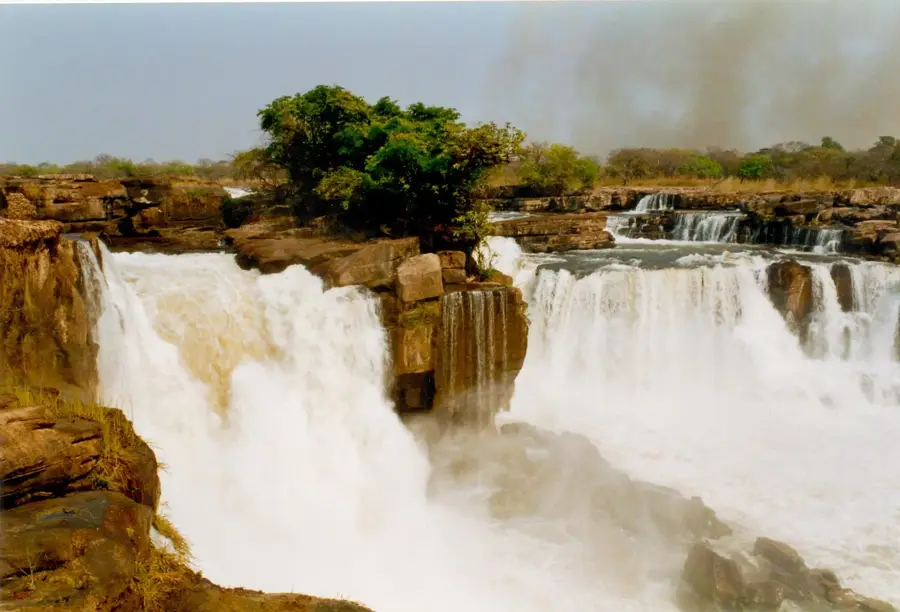
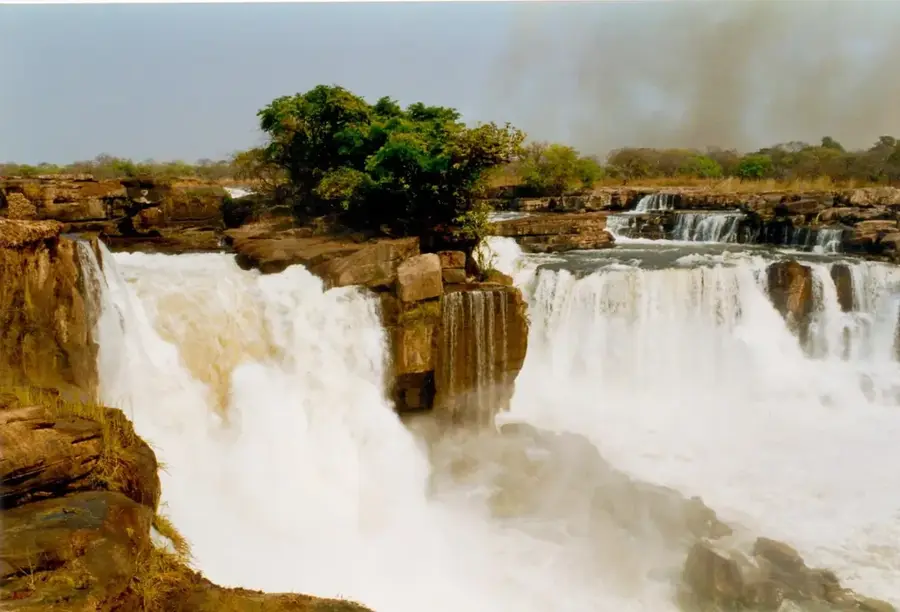
Are there waterfalls there?
Yes, the Kwango River forms several impressive falls.
What is the vegetation like?
Savannas dominate the plateau, while forests are found in the valleys.
What do the people there live on?
Agriculture and diamond mining are important economic sectors.
Kwango Plateau: where is it located?
Kwango Plateau is located in Congo - Kinshasa.
Kwango Plateau: when is the best time to visit?
The most pleasant time to visit is Jun, Aug.
Kwango Plateau: why is it worth visiting?

The Kwango Plateau is a significant geographical formation in the southwestern part of the Democratic Republic of the Congo, extending into Angola.
View on map → The Top 50 Attractions → OpenStreetMap →
Africa
Explore with Plizio Discover more places in Africa
More places in Congo - Kinshasa →

Nature